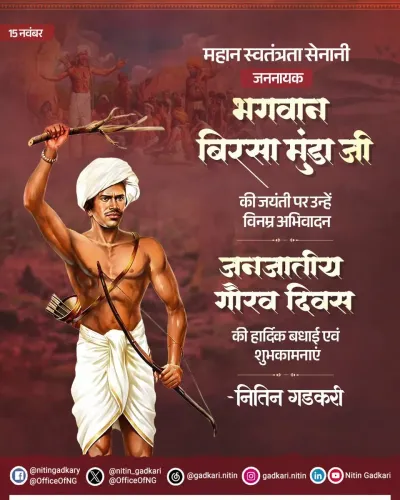
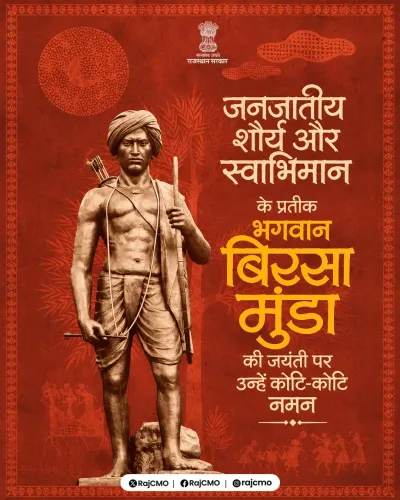
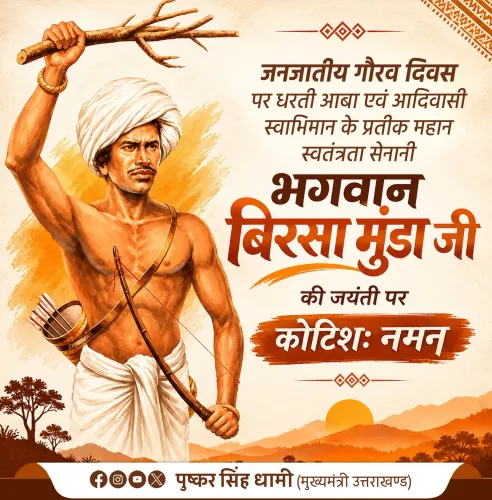
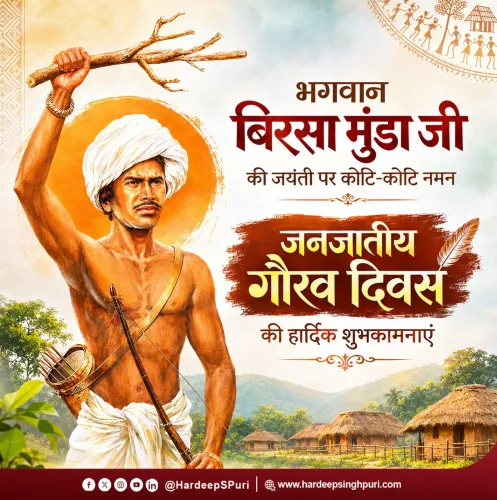
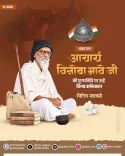
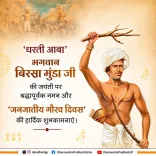
Dharmendra Pradhan Marks Janjatiya Gaurav Divas, Tributes Birsa Munda
Synopsis
Union Education Minister Dharmendra Pradhan marked Janjatiya Gaurav Divas on 15 November 2026 with a tribute to Bhagwan Birsa Munda, the 19th-century Munda tribal leader whose Ulgulan rebellion challenged British colonial rule in the Chota Nagpur region.
Key Takeaways
Dharmendra Pradhan paid tribute to Bhagwan Birsa Munda on 15 November 2026 , Munda's birth anniversary.
The day is observed nationally as Janjatiya Gaurav Divas , declared by the Government of India in 2021 .
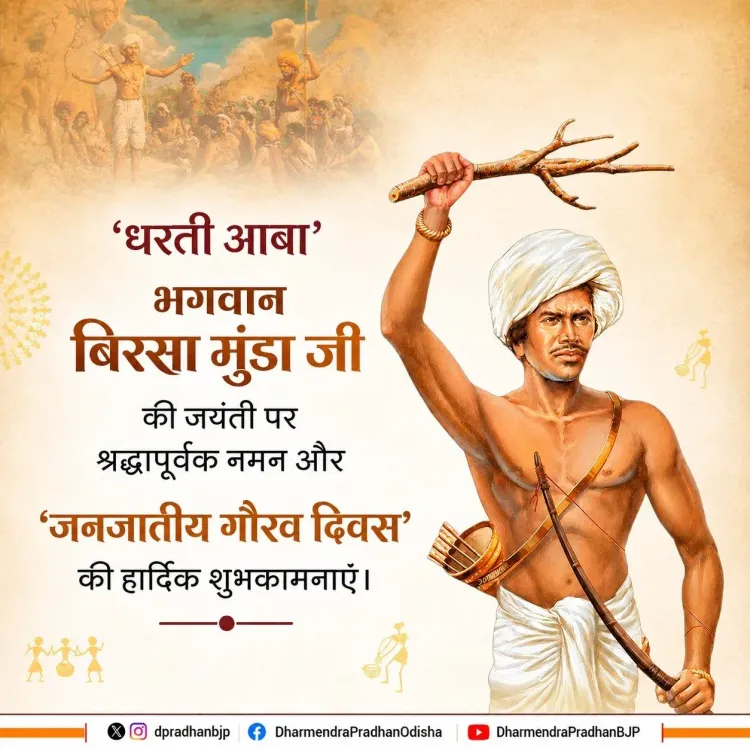
Birsa Munda, known as 'Dharti Aaba' (Father of the Earth), led the Ulgulan rebellion against British colonial land policies in the Chota Nagpur region in the 1890s .
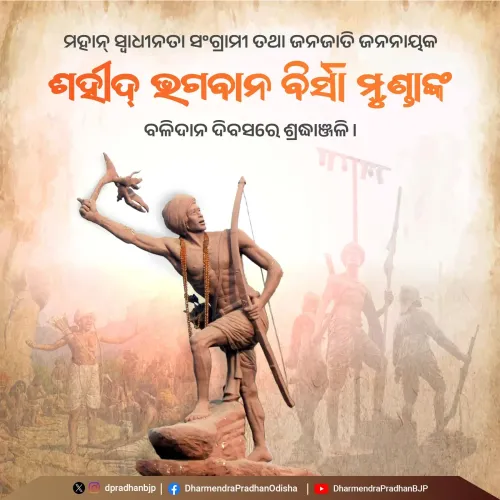
Pradhan posted in both Hindi and Odia , reflecting the day's significance across eastern India's tribal belt.
Birsa Munda was born on 15 November 1875 and died in Ranchi jail in 1900 at the age of 25 .
On the birth anniversary of Bhagwan Birsa Munda — the tribal icon who shook British colonial power in the heartland of Chota Nagpur — Union Education Minister Dharmendra Pradhan paid tribute on Sunday, 15 November 2026, extending greetings to the nation on Janjatiya Gaurav Divas, the national day established to honour India's tribal freedom fighters.
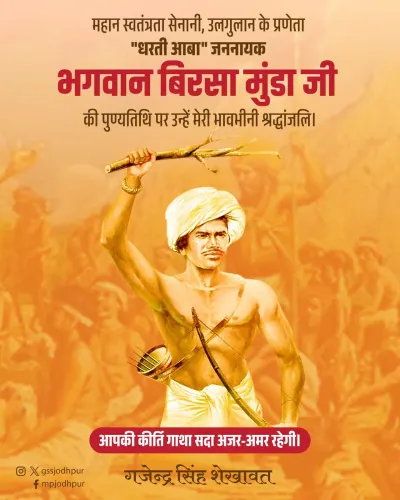
Posting in both Hindi and Odia, Pradhan offered koti-koti naman (a million-fold salutations) to Birsa Munda, whom he referred to by the reverential title 'Dharti Aaba' — meaning 'Father of the Earth' in the Munda community's tradition. He wrote that Birsa Munda 'awakened a new consciousness of self-respect and rights within tribal society,' and that 'his patriotism will continue to inspire the people of this nation forever.'
Who was 'Dharti Aaba' — and why he endures
Bhagwan Birsa Munda, born on 15 November 1875 in the Chota Nagpur plateau region of present-day Jharkhand, led the Ulgulan — meaning 'The Great Tumult' — a rebellion that mobilised the Munda tribal community against British land-grab policies and the exploitative diku (outsider) landlord system in the 1890s. He was arrested in 1900 and died in Ranchi jail at just 25 years of age, but his legacy outlasted the empire he defied.
For generations, Birsa Munda remained a towering figure in the oral tradition of Jharkhand's tribal communities. His elevation into the national freedom narrative has gathered momentum in recent years as policymakers have sought to broaden the mainstream account of India's independence struggle beyond its urban, upper-caste centres.
Janjatiya Gaurav Divas: from declaration to national observance
The Government of India formally declared 15 November as Janjatiya Gaurav Divas in 2021, anchoring the commemoration to Birsa Munda's birth anniversary and using it as an occasion to recognise the contributions of tribal martyrs across the country's freedom struggle. The observance has since grown into a multi-ministry affair, with events typically spanning tribal-majority states including Jharkhand, Odisha, Chhattisgarh, and Madhya Pradesh.
Pradhan's decision to post in both Hindi and Odia underscores the day's resonance across eastern India — the minister himself representing Odisha, a state with one of the country's largest scheduled tribe populations and its own deep tradition of tribal resistance movements.
Rewriting the freedom story, one anniversary at a time
Birsa Munda's commemoration is part of a wider pattern: central governments have increasingly used annual observances to place regional tribal leaders alongside figures like Gandhi, Nehru, and Ambedkar in the national consciousness. For the Ministry of Education, whose mandate includes how history is taught in classrooms, the minister's tribute carries an implicit signal about the emphasis being placed on these narratives in the curriculum.
Birsa Munda was barely a quarter-century old when he died — younger than most of the students who now read about him. That gap between a brief life and an enormous legacy is perhaps the sharpest measure of what the Ulgulan set in motion.
Point of View
Where both parties compete intensely. For the Ministry of Education, the minister's public emphasis on Birsa Munda is consistent with ongoing discussions about how tribal history features in the national curriculum. The elevation of Munda to near-mythic national status also reflects a broader pattern of competitive identity politics around tribal heritage, where commemorations serve both cultural and electoral purposes.
NationPress
15 Nov 2026
Frequently Asked Questions
What is Janjatiya Gaurav Divas and why is it celebrated on 15 November?
Janjatiya Gaurav Divas is a national observance held every year on 15 November — the birth anniversary of tribal freedom fighter Bhagwan Birsa Munda . The Government of India declared the day in 2021 to honour the contributions of tribal communities and martyrs to India's independence struggle.
Who was Bhagwan Birsa Munda?
Bhagwan Birsa Munda was a 19th-century tribal leader from the Munda community in the Chota Nagpur region of present-day Jharkhand. He led the Ulgulan rebellion in the 1890s against British land policies and was revered as 'Dharti Aaba' — Father of the Earth. He died in Ranchi jail in 1900 , aged 25 .
What did Dharmendra Pradhan say on Janjatiya Gaurav Divas 2026?
Dharmendra Pradhan said that Birsa Munda 'awakened a new consciousness of self-respect and rights within tribal society' and that 'his patriotism will continue to inspire the people of this nation forever.' He posted in both Hindi and Odia on 15 November 2026 .
When was Janjatiya Gaurav Divas declared a national day?
The Government of India declared 15 November as Janjatiya Gaurav Divas in 2021 to coincide with Bhagwan Birsa Munda's birth anniversary.
What was the Ulgulan rebellion?
The Ulgulan — meaning 'The Great Tumult' — was a tribal uprising led by Bhagwan Birsa Munda in the 1890s in the Chota Nagpur plateau. It mobilised the Munda community against British colonial land-grab policies and exploitative landlord systems, and remains one of the most significant tribal resistance movements in Indian history.