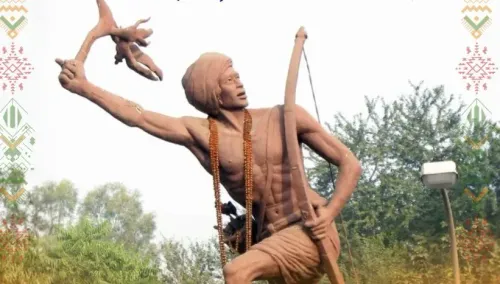
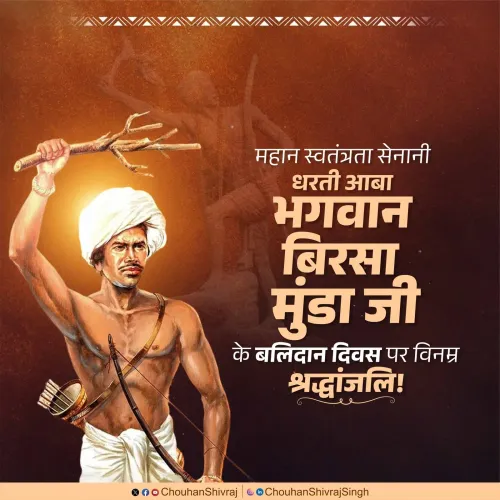
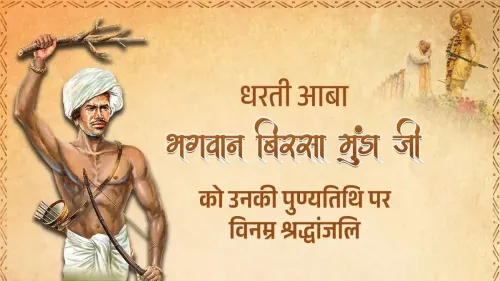
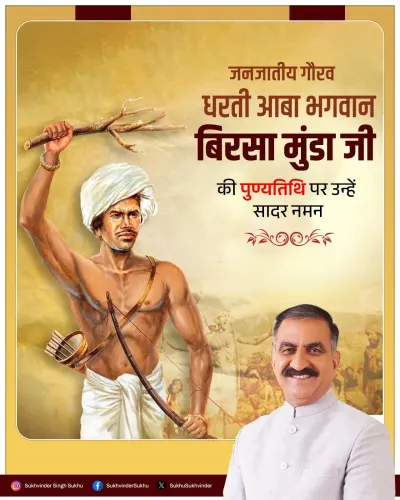
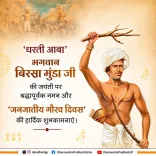
CM Himanta pays tribute to Birsa Munda on Janjatiya Gaurav Diwas

Synopsis
Assam CM Himanta Biswa Sarma honoured Bhagwan Birsa Munda on his birth anniversary — observed nationally as Janjatiya Gaurav Diwas — saluting the 19th-century tribal revolutionary whose Ulgulan uprising challenged British colonial rule over forest and land rights.
Key Takeaways
Assam CM Himanta Biswa Sarma paid tribute to Bhagwan Birsa Munda on his birth anniversary, 15 November 2026 .
The day is observed nationally as Janjatiya Gaurav Diwas (Tribal Pride Day), declared so by the Government of India in 2021 .
Birsa Munda led the Ulgulan uprising in the Chotanagpur region in the 1890s , fighting for tribal rights over water, forests, and land.
Munda died in British custody in 1900 , aged 25 , but his resistance contributed to the Chotanagpur Tenancy Act of 1908 .
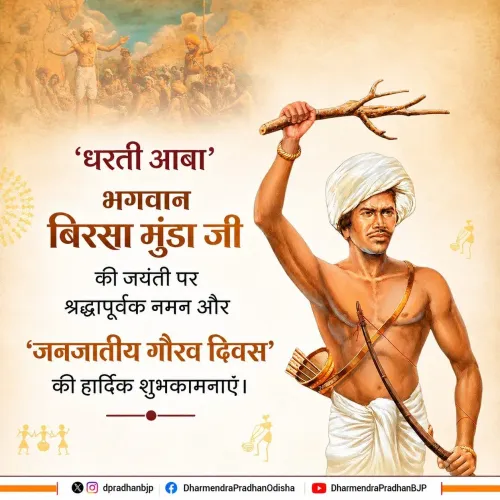
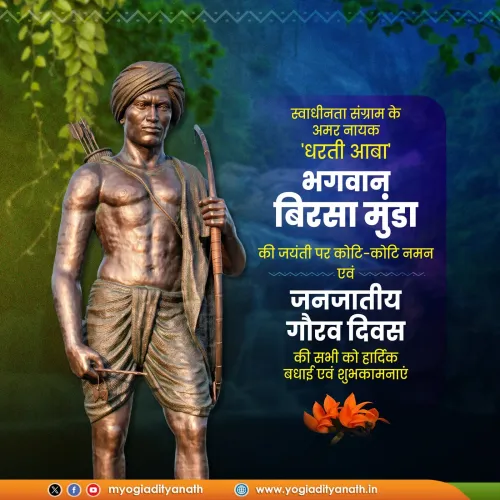
CM Sarma referred to Munda as 'Dharti Aaba' (Father of the Earth), crediting him with awakening self-respect and freedom in tribal society.
On the birth anniversary of Bhagwan Birsa Munda — the tribal icon who shook British colonial power with his Ulgulan uprising — Assam Chief Minister Himanta Biswa Sarma offered a heartfelt tribute on Sunday, 15 November 2026, saluting the revolutionary's enduring legacy of tribal dignity and resistance.
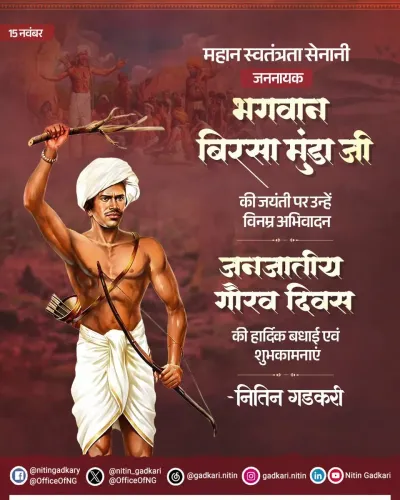
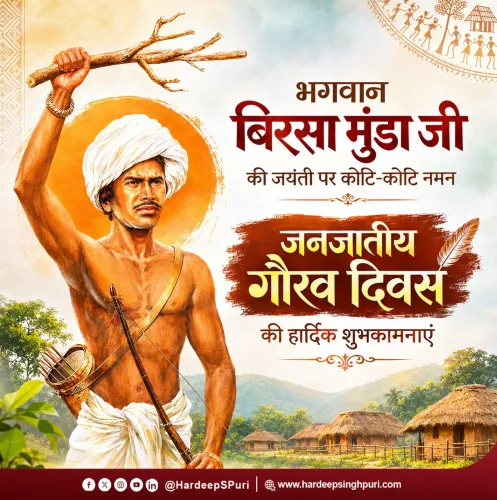
Writing in Hindi, CM Sarma paid his respects — 'कोटि-कोटि नमन' (a salute of a hundred million) — to the leader he called 'Dharti Aaba' (Father of the Earth), honouring Munda's historic battle for the rights of tribal communities over jal, jungle, zameen — water, forests, and land. He credited Munda's 'indomitable courage, leadership and struggle' with awakening a new consciousness of self-respect and freedom in tribal society.
The Ulgulan: a revolt that rewrote colonial history
Birsa Munda, born on 15 November 1875 in the Chotanagpur region of present-day Jharkhand, led the Ulgulan — meaning 'The Great Tumult' — in the 1890s against British exploitation of indigenous land and forest rights. The movement galvanised the Munda community and forced colonial authorities to enact the Chotanagpur Tenancy Act of 1908, which offered some protections for tribal land ownership. Munda died in British custody in 1900, aged just 25, but left behind a legacy that would outlast the empire he defied.
Janjatiya Gaurav Diwas: a national reckoning with tribal history
In 2021, the Government of India formally declared 15 November as Janjatiya Gaurav Diwas — Tribal Pride Day — to mark Munda's birth anniversary and honour the broader contribution of Adivasi communities to India's freedom struggle. The day has since become a fixture in the political calendar, with leaders across states holding events that spotlight tribal welfare, land rights, and indigenous cultural heritage.
CM Sarma's tribute fits a wider pattern of BJP-governed states, particularly those with significant tribal populations, foregrounding Munda as a symbol of nationalist resistance — weaving indigenous icons into the mainstream narrative of India's independence movement. As NEDA convenor, Sarma's outreach to tribal identity carries particular weight across the North-East, a region home to dozens of indigenous communities with their own distinct histories of resistance and self-governance.
Birsa Munda's sacrifice, CM Sarma wrote, 'will continue to inspire generations in their dedication to the nation and society.' On a day India pauses to remember a 25-year-old who made an empire blink, that is not a ceremonial line — it is a living challenge.
Point of View
Particularly in Jharkhand, Odisha, and the North-East. For CM Sarma — the NEDA convenor whose political remit spans states with deep indigenous identities — the tribute also signals his role as a bridge between BJP's national agenda and the region's tribal constituencies. The 2021 declaration of Janjatiya Gaurav Diwas was itself a policy move that institutionalised this symbolic embrace. Whether the symbolic acknowledgement translates into concrete land-rights or forest-rights protections for Adivasi communities remains the sharper political question that follows every anniversary.
NationPress
15 Nov 2026
Frequently Asked Questions
Who was Birsa Munda and why is he celebrated?
Birsa Munda was a tribal revolutionary born on 15 November 1875 in the Chotanagpur region. He led the Ulgulan uprising against British colonial exploitation of tribal land and forest rights in the 1890s and is revered as 'Dharti Aaba' — Father of the Earth — across Adivasi communities in India.
What is Janjatiya Gaurav Diwas?
Janjatiya Gaurav Diwas, or Tribal Pride Day, is observed on 15 November every year. The Government of India declared it in 2021 to mark Birsa Munda's birth anniversary and honour the contribution of tribal communities to India's freedom struggle.
What was the Ulgulan uprising?
The Ulgulan — meaning 'The Great Tumult' — was a tribal uprising led by Birsa Munda in the Chotanagpur region in the late 1890s. It challenged British colonial authority and the exploitation of indigenous land, forest, and water resources, and is considered one of the most significant tribal resistance movements in Indian history.
Why did Himanta Biswa Sarma pay tribute to Birsa Munda?
Assam CM Himanta Biswa Sarma paid tribute on Birsa Munda's birth anniversary, observed as Janjatiya Gaurav Diwas, saluting Munda's legacy of tribal self-respect and anti-colonial resistance. Such tributes are a regular practice among political leaders, especially in BJP-governed states with significant tribal populations.
What is the significance of 'Dharti Aaba' as a title for Birsa Munda?
'Dharti Aaba' means 'Father of the Earth' in the Munda language and is an honorific given to Birsa Munda by tribal communities to honour his role as a protector of indigenous land and a spiritual-political leader of the Munda people.