US Transportation Secretary Duffy seeks $50 billion after nationwide flight halt
Synopsis
A nationwide ground stop that halted over 3,500 US flights on 14 November — triggered by overloaded legacy switches and routers in the FAA's air traffic control network — has prompted Transportation Secretary Sean Duffy to call on Congress for $50 billion in modernisation funding. With Thanksgiving travel approaching and no cyberattack confirmed, the episode lays bare how fragile ageing infrastructure can be when it fails at peak load.
Key Takeaways
US Transportation Secretary Sean Duffy called on Congress for $50 billion in additional FAA air traffic control funding on 14 November 2026 .
A nationwide ground stop began at 3:36 p.m.
EST , disrupting more than 3,500 aircraft in the air at the time of the failure.
The FAA lifted the ground stop at 8:19 p.m.
EST ; full flight normalisation was expected to take additional hours.
Homeland Security Secretary Markwayne Mullin said no evidence of a cyberattack had been found but investigations were continuing.
Congress has already allocated $12.5 billion for modernisation; Duffy's fresh request is not yet an approved appropriation.
Duffy warned further failures are possible while older equipment remains in service, ahead of the high-traffic Thanksgiving travel season.
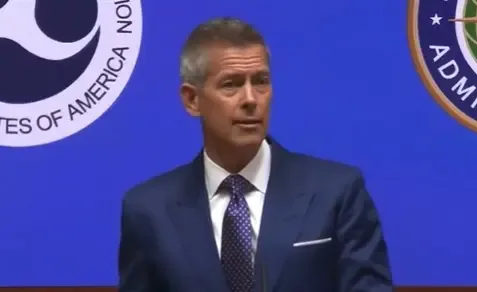
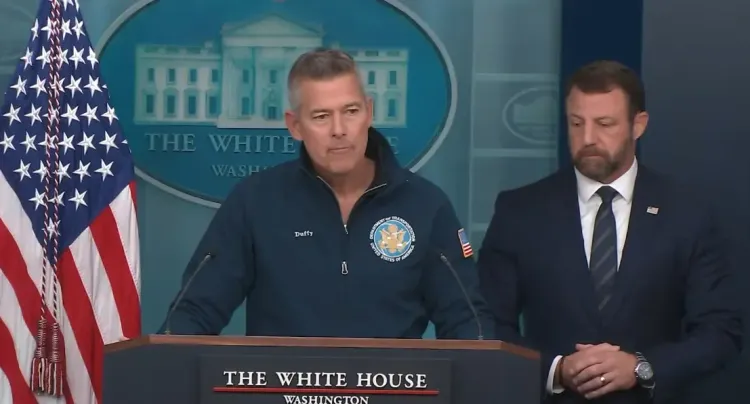
US Transportation Secretary Sean Duffy on Friday, 14 November 2026 urged Congress to approve $50 billion in fresh funding to overhaul the country's ageing air traffic control infrastructure, hours after a nationwide ground stop grounded thousands of flights and stranded passengers across the United States. The appeal came at a late-night briefing after one of the most widespread aviation disruptions the country has seen in recent years.
What Triggered the Ground Stop
The disruption began at approximately 3:36 p.m. EST when radar and communications turned unstable at air traffic control centres and terminal radar approach facilities, known as TRACONs. Duffy said older switches and routers carrying telecommunications data had become overloaded, causing inconsistent radar and communications feeds at facilities responsible for managing aircraft across the country.
More than 3,500 aircraft were airborne when the failure began. Controllers and pilots followed established emergency procedures to bring all aircraft down safely. Duffy confirmed that radar and communications were never completely lost during the episode.
When the Ground Stop Was Lifted
The Federal Aviation Administration (FAA)'s command centre issued a notice cancelling the nationwide ground stop at 8:19 p.m. EST. However, Duffy cautioned passengers that flights would not immediately normalise — airlines still had to determine crew availability, and some travellers might not reach their destinations until the following day.
Emergency medical, organ transport, and law enforcement flights were permitted to continue operating throughout the disruption.
Cyberattack Ruled Out — For Now
Homeland Security Secretary Markwayne Mullin said investigators had found no evidence of a cyberattack at the time of the briefing but stressed that the probe was ongoing and that nothing had been formally ruled out. He also clarified there was no connection to a separate Microsoft outage that coincided with the disruption.
When asked whether an FAA system-patching effort had inadvertently caused the outage, Duffy said it had not, though he later cautioned that his team was still examining the full sequence of events and that he did not want to provide incorrect information about the root cause.
The Funding Call and What It Means
Congress has already allocated $12.5 billion for air traffic control modernisation, Duffy noted, but described that figure as insufficient to complete the broader overhaul. His call for an additional $50 billion is a funding request, not an approved appropriation, and will require Congressional action.
Duffy acknowledged that newer equipment that had already been installed did not experience the same failure, lending weight to arguments that the ageing legacy network is the core vulnerability. He warned that further failures were possible while older equipment remained in service, but said he expected operations to be fully restored before the busy Thanksgiving travel period.
What Passengers Should Do
Duffy urged all passengers to check directly with their airlines for the latest flight status, as carriers work through crew scheduling and aircraft repositioning in the wake of the disruption. The FAA outage adds pressure to an aviation system already stretched thin ahead of one of the highest-traffic weeks of the year in the United States.
Point of View
However, is a clear timeline and procurement accountability framework: Congress has already handed over $12.5 billion with limited public evidence of measurable progress. Without a credible modernisation roadmap tied to that money, a larger appropriation risks repeating the same cycle of funding announcements and infrastructure drift.
NationPress
14 Nov 2026
Frequently Asked Questions
What caused the US nationwide flight ground stop on 14 November 2026?
Older switches and routers carrying telecommunications data became overloaded, causing inconsistent radar and communications feeds at FAA air traffic control centres and TRACONs across the country. The disruption began at 3:36 p.m. EST and affected more than 3,500 aircraft in the air at the time.
Was the US flight disruption caused by a cyberattack?
No evidence of a cyberattack had been found at the time of the late-night briefing, according to Homeland Security Secretary Markwayne Mullin. Investigators were continuing to examine the incident and had not formally ruled anything out.
How much is Sean Duffy asking Congress to fund for FAA modernisation?
Transportation Secretary Sean Duffy called on Congress to provide $50 billion to overhaul the air traffic control system. Congress had already allocated $12.5 billion for modernisation, but Duffy said further funding was needed to complete the broader upgrade.
When was the nationwide ground stop lifted?
The FAA's command centre cancelled the nationwide ground stop at 8:19 p.m. EST on Friday, 14 November. However, full flight normalisation took additional hours as airlines worked through crew availability and aircraft repositioning.
Will there be more US flight disruptions before Thanksgiving 2026?
Transportation Secretary Duffy warned that further failures are possible while older equipment remains in service. He said he expected operations to be fully restored before the Thanksgiving travel period, but urged passengers to check their flight status directly with their airlines.