Giriraj Singh: India RMG exports surge 20% in Oct 2026
Synopsis
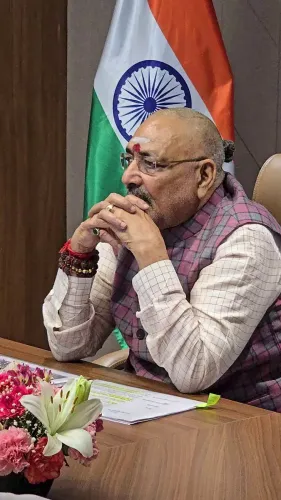
Union Textiles Minister Giriraj Singh hailed a 20% dollar-terms and 30% rupee-terms surge in India's RMG exports in October 2026, crediting rising global demand for 'Made in India' apparel and underpinned by PLI and RoSCTL policy support.
Key Takeaways
India's RMG exports rose 20% in dollar terms and 30% in rupee terms in October 2026 , per Union Textiles Minister Giriraj Singh.
Minister Giriraj Singh attributed the surge to rising international demand for 'Made in India' garments.
The PLI scheme for textiles (approved 2021) and the RoSCTL scheme (operational since 2019) form the fiscal backbone supporting export competitiveness.
The growth aligns with global buyers accelerating China-plus-one sourcing strategies, with India as a key beneficiary.
Key garment export hubs — Tiruppur, Surat, Ludhiana — and their workforce stand to gain directly from sustained order growth.
The next Ministry of Commerce monthly data release will be crucial to confirm whether October's spike represents a durable trend.
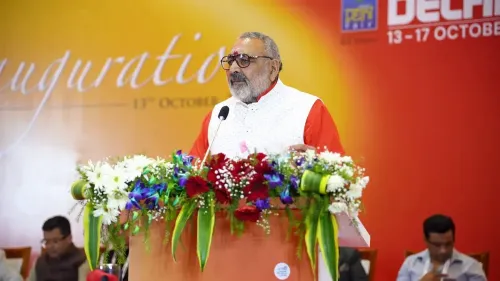
India's readymade garment sector is riding one of its sharpest export waves in recent memory. Union Textiles Minister Giriraj Singh announced on Sunday, November 15, 2026, that Ready-Made Garment (RMG) exports surged 20% in dollar terms — and a striking 30% in rupee terms — in October 2026, signalling a powerful momentum shift for one of the country's most labour-intensive industries.
Posting in Hindi on X, the Minister declared it 'shandar khabar' ('spectacular news') for the Indian apparel industry, attributing the spike to rising global appetite for 'Made in India' garments. 'The growing demand for Indian apparel in international markets is a symbol of the strength and new flight of the country's textile sector,' he wrote.What is driving October's export spike
The numbers carry real weight. A 20% dollar-denominated jump in a single month is not a rounding error — it reflects buyers in the United States, European Union, and other major markets actively redirecting orders to Indian manufacturers. The 30% rupee-terms growth amplifies that signal: when domestic currency gains outpace dollar figures, it points to genuine volume expansion rather than just currency arithmetic.
Two policy pillars underpin this trajectory. The Production Linked Incentive (PLI) scheme for textiles, approved in 2021, was designed precisely to push apparel and man-made fibre exports upward by rewarding incremental production. Alongside it, the RoSCTL (Rebate of State and Central Taxes and Levies) scheme, operational since 2019, has worked to strip cost-distortions out of garment shipments by rebating embedded taxes — making Indian exports structurally more competitive on the global price sheet.
India's bet on the China-plus-one shift
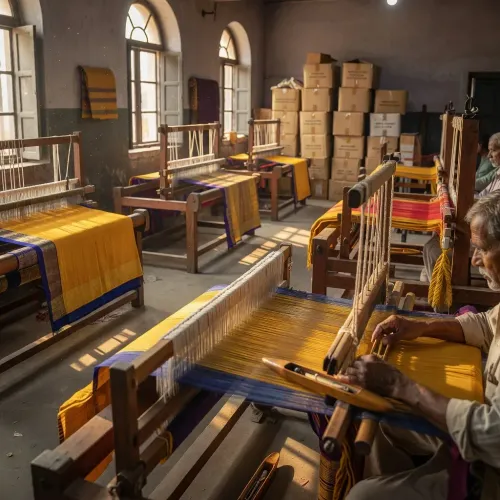
The broader story here is a supply-chain reshuffling that successive governments have courted for over a decade. As global buyers — particularly large Western retail chains — accelerate their 'China-plus-one' sourcing strategies, India has positioned itself as the credible alternative: a large, skilled labour pool, an established textile value chain from fibre to finished garment, and a clutch of fiscal incentives designed to close the price gap with South-East Asian competitors.
RMG exporters and textile manufacturers across hubs like Tiruppur, Surat, and Ludhiana stand to be the immediate beneficiaries. For workers on the factory floor — the sector directly employs tens of millions — a sustained export upcycle translates into job security and, over time, wage growth.
What the next data release will confirm
The October figure is one month's reading. The critical test is whether it holds into the November–December holiday-season shipment window — historically the heaviest order cycle for apparel. The next monthly export data from the Ministry of Commerce, along with any updates on PLI disbursements or RoSCTL scheme extensions, will tell whether October was a breakout or a blip.
If the trajectory holds, India's share in the roughly $450 billion global apparel trade — currently in the low single digits — could see a meaningful step-up. That is the ambition Giriraj Singh's announcement is signalling. The garment sector is not just stitching clothes; it is stitching India's case as a global manufacturing alternative.
Point of View
As cited by Minister Giriraj Singh, land at a strategically significant moment: they give the BJP government tangible data to defend its textile PLI and RoSCTL interventions ahead of potential policy renewal discussions. A 20% dollar-terms jump is the kind of headline figure that strengthens the case for extending or deepening fiscal support for the sector. More broadly, the announcement feeds into the government's 'Make in India' narrative at a time when supply-chain diversification away from China is an active boardroom conversation among global retailers. The real political and economic test, however, is consistency — a single month of strong numbers is a talking point; three consecutive months would be a turning point.
NationPress
15 Nov 2026
Frequently Asked Questions
How much did India's RMG exports grow in October 2026?
India's readymade garment exports grew by 20% in dollar terms and 30% in rupee terms in October 2026, according to Union Textiles Minister Giriraj Singh.
What is the PLI scheme for textiles in India?
The Production Linked Incentive (PLI) scheme for textiles was approved in 2021 to incentivise incremental production and boost exports of apparel and man-made fibre products by rewarding manufacturers who cross specified output thresholds.
What is the RoSCTL scheme and how does it help garment exporters?
The RoSCTL (Rebate of State and Central Taxes and Levies) scheme , operational since 2019 , rebates embedded state and central taxes on garment exports, making Indian apparel more price-competitive in global markets.
Why are global buyers sourcing more garments from India?
Many global retailers are pursuing a 'China-plus-one' sourcing strategy to diversify supply chains. India benefits from a large skilled labour pool, an established textile value chain, and fiscal incentives that have narrowed the price gap with competing nations.
Which Indian cities are major garment export hubs?
Key Indian RMG export hubs include Tiruppur in Tamil Nadu (knitwear), Surat in Gujarat (man-made fabrics and garments), and Ludhiana in Punjab (woollens and hosiery).