Shekhawat Marks Janjatiya Gaurav Diwas, Hails Tribal Welfare Push
Synopsis
On Janjatiya Gaurav Diwas — Birsa Munda's birth anniversary — Union Minister Gajendra Singh Shekhawat highlighted the Modi government's tribal welfare arc, from financial aid and education to skill development and startups, calling it a transformative shift for long-marginalised communities.
Key Takeaways
Janjatiya Gaurav Diwas is observed on 15 November every year, declared by the Government of India in 2021 to mark the birth anniversary of tribal leader Birsa Munda .
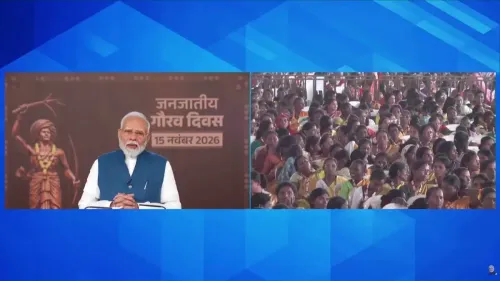
Union Minister Gajendra Singh Shekhawat posted a video message on 16 November 2026 highlighting tribal welfare schemes spanning financial aid, education, skill development and startups.
The minister stated that tribal heroes who were 'neglected for decades' are now receiving 'national recognition, honour and reverence.' Birsa Munda , born in 1875 in present-day Jharkhand , led the 19th-century tribal resistance movement known as the 'Ulgulan' against colonial land dispossession.
The central government has since 2014 pursued targeted interventions for Scheduled Tribe populations across education, vocational training and enterprise support.
India's ST population exceeds 10 crore , concentrated in states including Jharkhand, Chhattisgarh, Odisha and the North-East .
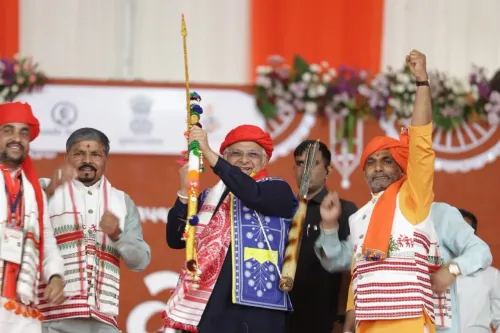
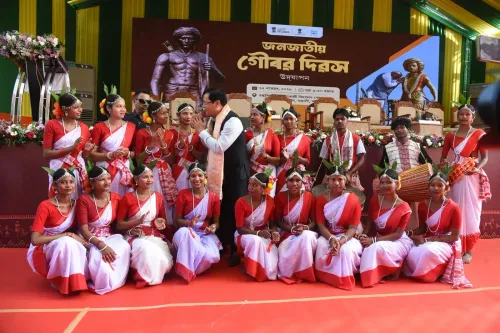
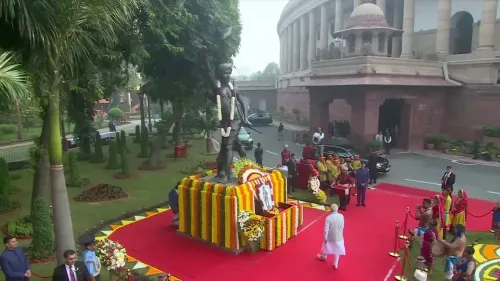
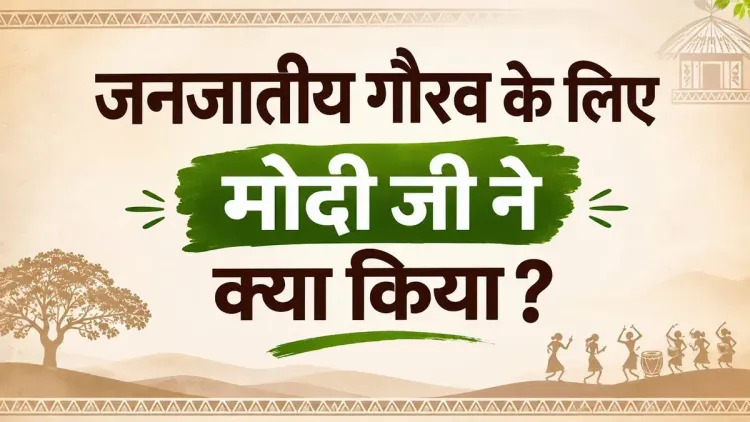
On Janjatiya Gaurav Diwas — 15 November, the birth anniversary of tribal icon Birsa Munda — Union Culture and Tourism Minister Gajendra Singh Shekhawat invoked a sweeping arc of change: from financial aid to education, from skill development to startups, the Modi government's welfare programmes, he argued, are finally pulling tribal communities into the national mainstream. Decades of neglect, one post suggested, are giving way to recognition.
Posting in Hindi on 16 November 2026, Shekhawat wrote: 'आर्थिक सहायता से शिक्षा तक, कौशल विकास से स्टार्टअप तक...' — 'From financial assistance to education, from skill development to startups... the Modi government's welfare schemes are empowering tribal society and connecting it to the mainstream of development.' He added that tribal heroes, long ignored for decades, are today receiving 'national recognition, honour and reverence.'Birsa Munda, the Man Behind the Date
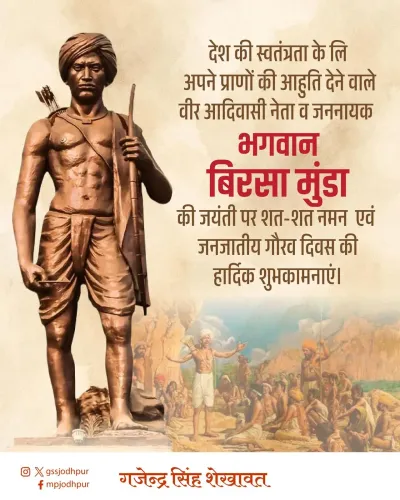
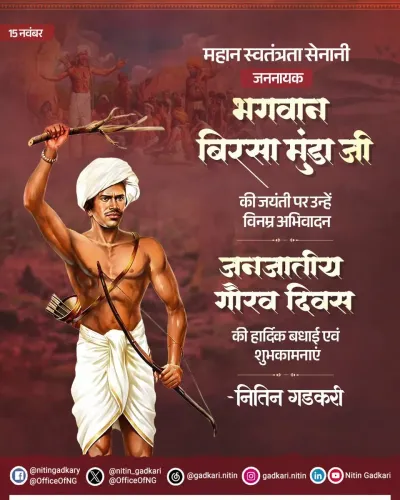
Birsa Munda, born on 15 November 1875 in present-day Jharkhand, led a fierce indigenous resistance movement against colonial land dispossession in the late 19th century. His 'Ulgulan' — the Great Tumult — galvanised tribal communities across the Chota Nagpur plateau and left an enduring imprint on India's freedom movement. For decades, however, Munda remained a figure celebrated within tribal communities but largely absent from the broader national narrative. That changed in 2021, when the Government of India formally declared 15 November as Janjatiya Gaurav Diwas — Tribal Pride Day — to honour his legacy and spotlight the role of tribal communities in nation-building. The observance has since become an annual platform to review and announce tribal welfare initiatives.Education, Skills, Enterprise: The Policy Frame
Since 2014, the central government has pursued a consistent expansion of targeted interventions for Scheduled Tribe populations — spanning educational scholarships, vocational training, and enterprise support. The stated goal: reduce structural gaps that have kept tribal districts among India's most economically lagging regions. Shekhawat's post, accompanied by a video, frames these programmes as a connected continuum rather than isolated schemes — a deliberate 'from-to' narrative designed to signal systemic rather than piecemeal uplift. The minister's framing also carries a cultural dimension. The recovery of tribal heroes into the official national canon — Birsa Munda being the most prominent — is presented not merely as symbolic but as restorative, correcting what the government characterises as decades of deliberate marginalisation in mainstream history.Who Janjatiya Gaurav Diwas Is Meant to Reach
India's Scheduled Tribe population numbers over 10 crore, concentrated heavily in states such as Jharkhand, Chhattisgarh, Odisha, Madhya Pradesh and the North-East. These communities have historically recorded lower outcomes on health, literacy and income indicators compared to national averages. Bridging that gap — through both material schemes and symbolic recognition — is the dual axis on which the government's tribal outreach operates. Janjatiya Gaurav Diwas, now an established annual fixture, has become the high-visibility moment to showcase progress on that front. Whether scheme rollouts are matching the ambition of the messaging is a question that subsequent implementation reports will need to answer. The momentum, for now, is unmistakably communicative.Point of View
A constituency it has aggressively courted since 2014. The institutionalisation of Janjatiya Gaurav Diwas in 2021 gave the government an annual high-visibility platform that blends policy communication with identity politics. With tribal-majority constituencies spread across swing states like Jharkhand, Odisha and Chhattisgarh, the optics of recognition matter as much as the schemes themselves. The effectiveness of the outreach, however, will ultimately be judged by measurable outcomes on literacy, income and land rights — metrics that remain contested.
NationPress
16 Nov 2026
Frequently Asked Questions
What is Janjatiya Gaurav Diwas and when is it celebrated?
Janjatiya Gaurav Diwas is an annual national observance celebrated on 15 November , the birth anniversary of tribal leader Birsa Munda . The Government of India formally declared the day in 2021 to honour tribal contributions to India's freedom struggle and cultural heritage.
Who was Birsa Munda?
Birsa Munda was a 19th-century tribal leader born on 15 November 1875 in present-day Jharkhand . He led the 'Ulgulan' resistance movement against colonial land dispossession, mobilising tribal communities across the Chota Nagpur plateau and leaving a lasting legacy in India's independence history.
What did Gajendra Singh Shekhawat post on Janjatiya Gaurav Diwas 2026?
Union Culture and Tourism Minister Gajendra Singh Shekhawat shared a video post on 16 November 2026 highlighting the Modi government's tribal welfare programmes — covering financial aid, education, skill development and startup support — and stated that long-neglected tribal heroes are now receiving national recognition.
What welfare schemes does the Modi government run for tribal communities?
Since 2014 , the central government has pursued targeted interventions for Scheduled Tribe populations spanning educational scholarships, vocational skill training and enterprise or startup support, aimed at integrating tribal communities into national development frameworks.
How large is India's Scheduled Tribe population?
India's Scheduled Tribe population exceeds 10 crore people , with large concentrations in states including Jharkhand, Chhattisgarh, Odisha, Madhya Pradesh and the North-East .