Dr. Jitendra Singh visits ICGEB headquarters in Trieste, Italy

Synopsis
Union Science and Technology Minister Dr. Jitendra Singh visited the ICGEB headquarters in Trieste, Italy on 16 November 2026, highlighting India's pivotal founding-member role in the biotech institution and meeting Indian scholars enriching its research programmes.
Key Takeaways
Jitendra Singh visited the ICGEB headquarters in Trieste, Italy on 16 November 2026 .
ICGEB was established under UNIDO in 1983 ; India is a founding member and operates one of its three global components in New Delhi (since 1987) .
The minister called ICGEB 'the only of its kind' and cited India's 'pivotal role' in its global research and scientific collaboration.
Singh met Indian students and scholars at the Trieste campus, noting their contribution to the institution's academic excellence.
The visit reinforces India's broader strategy of using multilateral science bodies to advance its domestic biotech ecosystem and bilateral S&T ties with European partners.
No new agreements or formal announcements from the visit have been confirmed.
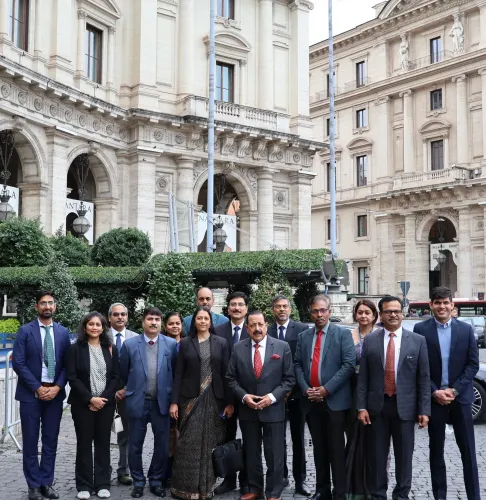
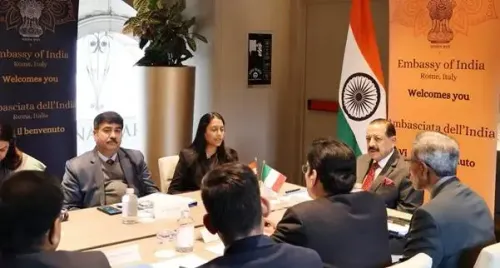
India's scientific footprint in Europe was on full display on Monday, 16 November 2026, as Union Science and Technology Minister Dr. Jitendra Singh visited the headquarters of the International Centre for Genetic Engineering and Biotechnology (ICGEB) in Trieste, Italy — a rare multilateral research body where India is not merely a member, but a founding architect.
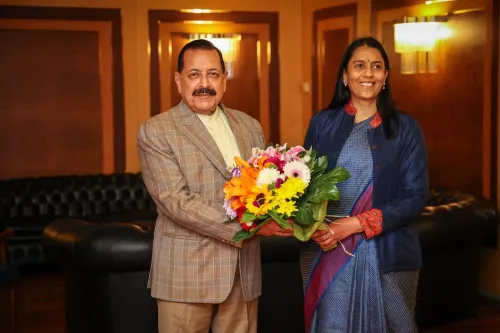
Describing the institution as 'the only of its kind,' Dr. Singh noted India's 'pivotal role' in ICGEB's global research and scientific collaboration. He also met several Indian students and scholars at the centre, calling them part of the institution's academic excellence.
A founding partnership that stretches back to 1983
ICGEB was established under the United Nations Industrial Development Organisation (UNIDO) in 1983, with India among its founding members. Four years later, in 1987, India opened its own ICGEB component in New Delhi — one of only three in the world alongside Trieste and Cape Town — cementing a relationship that goes well beyond ordinary membership dues. The New Delhi component has since become a significant hub for life-sciences research on the subcontinent.
That founding commitment is precisely why a ministerial visit to Trieste carries institutional weight: India does not just fund a seat at the table, it co-owns the table. The minister's presence signals that New Delhi remains invested in keeping that legacy alive and productive.
Indian scholars enriching ICGEB's research floors
One of the more vivid details from Dr. Singh's post was the encounter with Indian students and scholars working at the Trieste campus. The observation fits a larger pattern: India has consistently used multilateral science bodies as talent pipelines, sending researchers abroad who return — or collaborate — with sharpened expertise in areas like gene therapy, genomics, and vaccine development, all priority zones under India's Department of Biotechnology.
These visits also serve a diplomatic function. High-level ministerial outreach to partner institutions in Italy and other European science hubs reinforces bilateral S&T ties and keeps the door open for joint research calls and expanded exchange programmes under existing India-Italy science and technology agreements.
Biotech diplomacy as a strategic instrument
The Trieste visit fits neatly into a broader arc: India has increasingly treated multilateral science engagement as a foreign-policy tool, not just an academic courtesy. As the country accelerates its domestic biotech ecosystem — through the BioE3 policy framework and related missions — international partnerships with bodies like ICGEB provide both credibility and access to cutting-edge research networks that no single national programme can replicate alone.
No new agreements or announcements from this visit have been confirmed. But in science diplomacy, the ministerial presence itself is the message — and in Trieste on 16 November 2026, India's message was unmistakable: the founding commitment holds.
Point of View
Visible ministerial engagement with ICGEB signals to the global research community that India's founding commitment is active, not archival. It also reinforces the India-Italy S&T corridor at a moment when European science partnerships have become a quiet but growing priority for the Modi government. The presence of Indian scholars on ICGEB's research floors underlines a talent-diplomacy dimension that often goes unnoticed in coverage of such visits.
NationPress
16 Nov 2026
Frequently Asked Questions
What is ICGEB and where is it located?
ICGEB, the International Centre for Genetic Engineering and Biotechnology, is a UNIDO-established multilateral research body founded in 1983. It operates three global components: its headquarters in Trieste, Italy, and components in New Delhi, India, and Cape Town, South Africa.
What is India's role in ICGEB?
India is a founding member of ICGEB and opened its own component in New Delhi in 1987, making it one of only three countries to host a full ICGEB research centre. India plays an active role in the institution's governance, research, and scientific collaboration.
Why did Dr. Jitendra Singh visit Trieste in November 2026?
Dr. Singh visited the ICGEB headquarters in Trieste on 16 November 2026 as part of India's high-level outreach to multilateral science institutions and European S&T partners. He met Indian scholars at the campus and reaffirmed India's pivotal role in the institution.
Were any new agreements signed during Dr. Jitendra Singh's ICGEB visit?
No new formal agreements or announcements from the November 2026 visit have been confirmed. The visit is seen as part of ongoing diplomatic and scientific engagement between India and its European partners.
How does ICGEB fit into India's biotechnology policy?
ICGEB's New Delhi component supports India's domestic biotech capacity and complements national missions under the Department of Biotechnology, including the BioE3 policy framework focused on gene therapy, genomics, and life-sciences innovation.