Amit Shah Launches Maratha History Digitisation Portal in Pune
Synopsis
Union Home Minister Amit Shah launched the Bharat Itihas Sanshodhak Mandal's Maratha History Digitisation Project in Pune on 16 November 2026, making over 10 lakh archival pages accessible online. An MoU was also signed under ASI's Smarak Saathi scheme for Shaniwar Wada's facility upgradation.
Key Takeaways
Union Home Minister Amit Shah inaugurated the Maratha History Digitisation Project and online portal in Pune on 16 November 2026 .
The project, developed by the Bharat Itihas Sanshodhak Mandal (BISM) , will digitise and publish over 10 lakh pages of Maratha-era documents online.
BISM was founded in 1914 and has preserved rare Maratha heritage artefacts and manuscripts for 110 years .
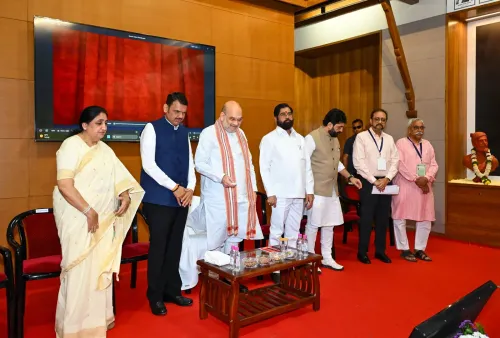
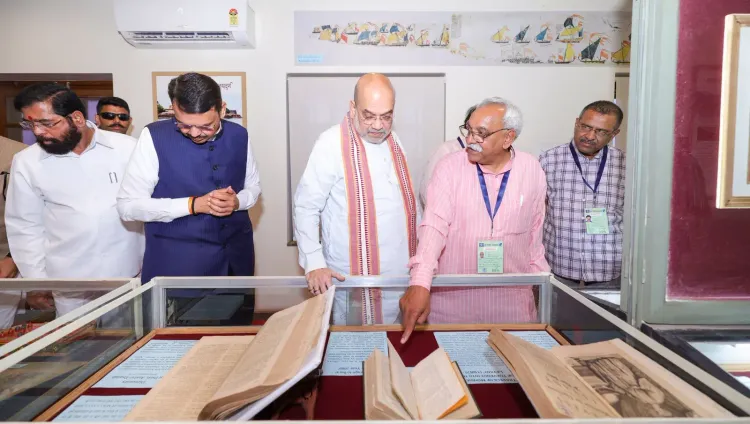
Shah also viewed an exhibition of rare heritage objects curated by the Mandal over its century-long history.
An MoU was signed under ASI's Smarak Saathi scheme to upgrade facilities at the 18th-century Shaniwar Wada fort complex in Pune.
The portal aims to give researchers and historians worldwide direct digital access to primary Maratha historical sources.
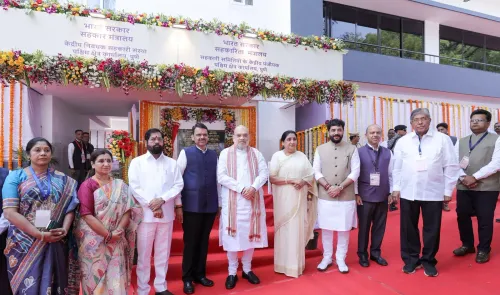
Over a million pages of Maratha-era history moved online on Monday, 16 November 2026 — and the man who pressed the button in Pune wants the world to feel the weight of what just changed. Union Home Minister Amit Shah inaugurated the Maratha History Digitisation Project and its online access portal, developed by the Bharat Itihas Sanshodhak Mandal (BISM), calling the archive 'an invaluable documentary treasure of our glorious history' now reachable with a single click.
Shah wrote on X: 'आज पुणे में भारत इतिहास संशोधक मंडल द्वारा विकसित मराठा इतिहास डिजिटाइजेशन प्रोजेक्ट और ऑनलाइन एक्सेस पोर्टल का लोकार्पण किया।' ('Today in Pune, I inaugurated the Maratha History Digitisation Project and online access portal developed by the Bharat Itihas Sanshodhak Mandal.') He added that more than 10 lakh pages from the Maratha period are being digitised and made available online for researchers and historians across the globe.
BISM's 110-year archive steps into the digital age
The Bharat Itihas Sanshodhak Mandal, founded in 1914, has spent 110 years accumulating rare manuscripts, documents and artefacts relating to the Maratha period — one of the most consequential chapters in pre-colonial Indian history. Shah also viewed an exhibition of rare heritage objects preserved by the Mandal over that century-long span. That collection, locked inside institutional shelves for decades, now has a pathway to global scholarship.
The scale is striking: 10 lakh-plus pages digitised and placed behind a single access portal. For historians reconstructing Maratha administration, diplomacy and society, this is a primary-source windfall. For students in Maharashtra — or researchers in London and Los Angeles — the barrier of physical travel to Pune's archives effectively disappears.
Shaniwar Wada MoU: ASI's 'Smarak Saathi' scheme comes to Pune's icon
The day carried a second significant announcement. A Memorandum of Understanding was signed under the Archaeological Survey of India's 'Smarak Saathi' scheme for the upgradation of facilities at Shaniwar Wada — the 18th-century Maratha palace-fort complex that anchors Pune's historical identity. The Smarak Saathi model pairs ASI's conservation authority with institutional or private partners to fund and implement visitor-facility improvements at protected monuments.
Shaniwar Wada, built in 1732 as the seat of the Peshwa rulers, draws large numbers of visitors each year. An MoU under this scheme signals structural improvements — better visitor infrastructure, possibly interpretive displays — without altering the monument's protected character. The convergence of the digitisation launch and the Shaniwar Wada MoU in a single event frames the day as a two-pronged push: preserve the physical, democratise the digital.
A pattern of Maratha heritage politics and policy
The event sits inside a wider, deliberate pattern. Central government engagement with Maratha cultural institutions — from the Peshwa-era forts to manuscript archives — has intensified in recent years, carrying both genuine heritage value and clear political resonance in Maharashtra. Pune is the symbolic heartland of that history, and a senior Union minister personally inaugurating a digitisation portal there sends a signal that is simultaneously archival and electoral.
What the portal actually delivers — depth of search, language accessibility, image quality, metadata standards — will determine whether the project fulfils its scholarly promise. The roadmap to watch: how quickly the remaining pages are uploaded, whether the portal opens fully to international researchers without paywalls, and how the Shaniwar Wada MoU translates into on-ground upgrades.
A million pages of Maratha history are now theoretically one click away. The question is whether the portal makes that click count.
Point of View
Particularly in Maharashtra's politically pivotal Pune belt. By personally presiding over both, Shah signals that heritage preservation is not a peripheral bureaucratic task but a top-tier ministerial priority. The Smarak Saathi model for Shaniwar Wada also extends ASI's public-partnership playbook to one of Maharashtra's most emotionally loaded sites. Whether the portal achieves lasting scholarly credibility — through open access, robust metadata and sustained uploading — will ultimately determine if this is a durable policy achievement or a well-staged launch.
NationPress
16 Nov 2026
Frequently Asked Questions
What is the Maratha History Digitisation Project launched by Amit Shah?
It is a project developed by the Bharat Itihas Sanshodhak Mandal (BISM) in Pune to digitise over 10 lakh pages of Maratha-period documents and make them freely accessible to researchers and historians worldwide through an online portal. Union Home Minister Amit Shah inaugurated it on 16 November 2026.
What is the Bharat Itihas Sanshodhak Mandal (BISM)?
BISM is a Pune-based organisation founded in 1914 dedicated to the research and preservation of Maratha history. It has accumulated rare manuscripts, documents and artefacts over 110 years, forming one of India's most significant regional historical archives.
What is the ASI Smarak Saathi scheme and how does it relate to Shaniwar Wada?
The Archaeological Survey of India's 'Smarak Saathi' scheme pairs ASI with institutional or private partners to fund and implement facility upgrades at centrally protected monuments. An MoU under this scheme was signed at the same event in Pune to upgrade visitor facilities at Shaniwar Wada, the 18th-century Peshwa palace-fort complex.
Where is Shaniwar Wada and why is it historically significant?
Shaniwar Wada is an 18th-century fort-palace complex located in Pune, Maharashtra. Built in 1732, it served as the seat of the Peshwa rulers of the Maratha Empire and remains one of India's most important historical landmarks.
Will the Maratha history online portal be accessible to international researchers?
According to Union Home Minister Amit Shah's statement at the launch, the portal is intended to allow anyone across the world to access the digitised Maratha-era documents 'with a single click.' The full terms of access — including whether it is open or requires registration — are to be determined as the portal rolls out.