Amit Shah Visits Pune Jain Org, Foundation HQs
Synopsis
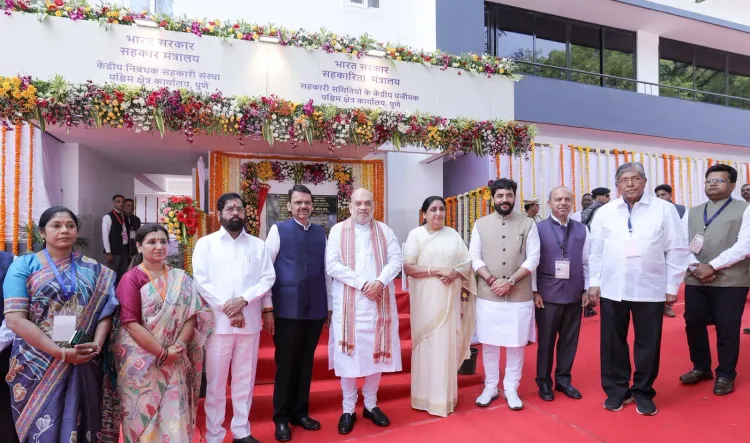
Union Home Minister Amit Shah visited the Pune headquarters of Bharatiya Jain Sanghatana and Shantilal Mutha Foundation on 16 November 2026, publicly recognising their decades of disaster relief, school reconstruction since the 1993 Latur earthquake, and value-based education for lakhs of students.
Key Takeaways
Amit Shah visited both headquarters in Pune, Maharashtra on 16 November 2026 and watched a presentation on their national-building work.
Bharatiya Jain Sanghatana , founded in 1985 , has conducted relief, rehabilitation, and school reconstruction after multiple Indian disasters, including the 1993 Latur earthquake .
Shantilal Mutha Foundation runs the 'Mulyavardhan' programme, delivering Indian-values-based education aimed at character formation for lakhs of students.
Shah posted in both Hindi and Marathi , signalling direct outreach to Maharashtra audiences.
The Home Ministry oversees the National Disaster Management Authority (NDMA) , giving Shah's endorsement of these organisations institutional significance beyond symbolic recognition.
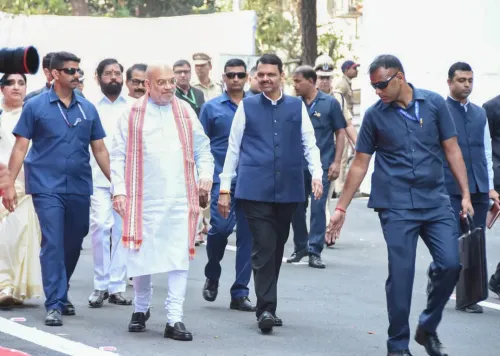
Two Pune-based organisations — one that has rebuilt schools after every major Indian disaster since the 1993 Latur earthquake, and another quietly shaping the values of millions of schoolchildren — received a high-profile endorsement on Monday, 16 November 2026, when Union Home Minister Amit Shah visited their headquarters and sat through a detailed presentation on their national-building work.
Shah, posting in both Hindi and Marathi, described the visit to the Bharatiya Jain Sanghatana (BJA) and the Shantilal Mutha Foundation in Pune, Maharashtra. 'वर्ष 1985 में स्थापित भारतीय जैन संघटना ने लातूर भूकंप से लेकर अब तक देश की अनेक आपदाओं में राहत, पुनर्वास और स्कूलों के पुनर्निर्माण का उल्लेखनीय कार्य किया है,' he wrote — meaning: 'Founded in 1985, the Bharatiya Jain Sanghatana has done remarkable work in relief, rehabilitation, and school reconstruction across the nation's many disasters, from the Latur earthquake to the present day.'
Bharatiya Jain Sanghatana: from Latur's rubble to a national footprint
The Bharatiya Jain Sanghatana, founded in 1985, built its reputation in the aftermath of the devastating 30 September 1993 Latur earthquake in Maharashtra — a disaster that killed tens of thousands and flattened entire villages. The organisation moved into destroyed communities not just to distribute relief but to rebuild schools, anchoring recovery in education. That model — physical reconstruction tied to community revival — has since been replicated after subsequent Indian calamities.
What makes the BJA distinct is consistency over decades: when most relief surges and retreats with the news cycle, the organisation has sustained a presence across multiple disaster cycles. Shah's visit and his public acknowledgement on X signals formal recognition of that long record from one of the country's most senior policymakers.
Shantilal Mutha Foundation's 'Mulyavardhan' and the character-education push
The second organisation Shah visited — the Shantilal Mutha Foundation — operates on a quieter but equally significant front: its flagship 'Mulyavardhan' (मूल्यवर्धन, meaning 'value enhancement') programme delivers Indian-values-based education to lakhs of students, aiming at character formation rather than curriculum coverage alone. Shah described it as contributing to 'charitrya nirman' — the building of character — among the next generation.
Value-based and character education has found increasing space in national policy conversations in India, making the foundation's programme aligned with a broader governmental emphasis on integrating ethics and civic values into schooling.
Civil society and the state: a pattern of recognition
Senior ministers visiting and publicly spotlighting NGOs engaged in disaster response and value education is an established pattern — but it carries weight when it comes from the Home Minister, whose ministry oversees the National Disaster Management Authority (NDMA), constituted in 2005 to coordinate relief and reconstruction nationwide. That institutional proximity makes Shah's endorsement more than ceremonial: it places both organisations squarely in the frame of potential formal partnership with state disaster-management and education frameworks.
Decades of civil-society-led school reconstruction and value education, now on record with India's most powerful minister for internal affairs — the next question is whether acknowledgement becomes architecture.
Point of View
Shah is implicitly signalling alignment between the government's disaster-management architecture and established NGO networks. The bilingual Hindi-Marathi post also reflects a deliberate political communication strategy in a state where the BJP and its allies must maintain deep community connect. Watch for whether this visit translates into formalised MoUs or policy integration of the 'Mulyavardhan' model into state school programmes.
NationPress
16 Nov 2026
Frequently Asked Questions
What is Bharatiya Jain Sanghatana and what does it do?
Bharatiya Jain Sanghatana (BJA) is an organisation founded in 1985 that conducts disaster relief, rehabilitation, and school reconstruction work across India. It gained recognition for its response to the 1993 Latur earthquake in Maharashtra and has since worked in multiple national calamities.
What is the Mulyavardhan programme of Shantilal Mutha Foundation?
'Mulyavardhan' ( मूल्यवर्धन ) is the flagship programme of the Shantilal Mutha Foundation that delivers Indian-values-based education to lakhs of school students, focusing on character formation alongside academic learning.
Why did Amit Shah visit Pune on 16 November 2026?
Union Home Minister Amit Shah visited the Pune headquarters of Bharatiya Jain Sanghatana and Shantilal Mutha Foundation to view presentations on their national-building activities, including disaster relief and value-based education work.
What was the 1993 Latur earthquake?
The Latur earthquake struck Maharashtra on 30 September 1993 , causing massive destruction and loss of life across the Marathwada region. It triggered large-scale relief and reconstruction efforts by both government and civil-society organisations, including the Bharatiya Jain Sanghatana.
What is India's National Disaster Management Authority (NDMA)?
The National Disaster Management Authority (NDMA) was constituted in 2005 under the Home Ministry to coordinate disaster relief, rehabilitation, and reconstruction across Indian states. As Home Minister, Amit Shah is the political head overseeing the NDMA's work.