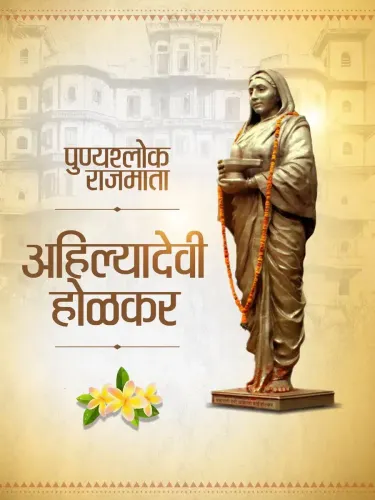
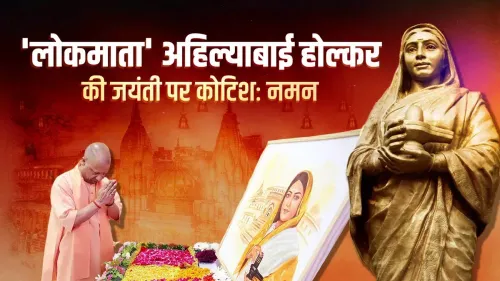
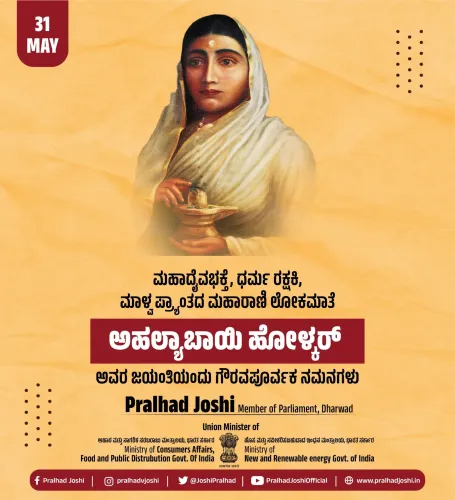
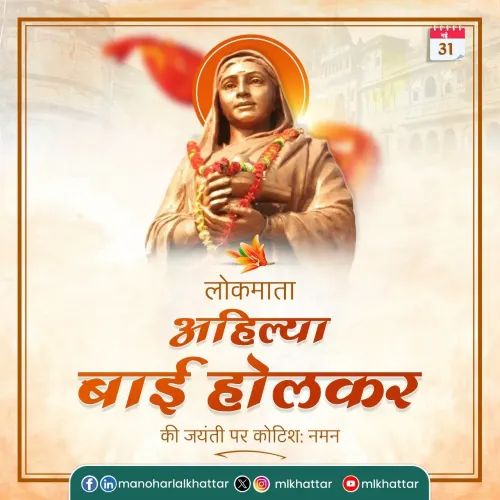
Amit Shah pays tribute to Ahilyabai Holkar on her Jayanti
Synopsis
Union Home Minister Amit Shah paid tribute to Lokmata Ahilyabai Holkar on her birth anniversary, honouring the 18th-century Malwa ruler's contributions to temple restoration, women's education, and widow remarriage in a bilingual Hindi-Marathi post on 31 May 2026.
Key Takeaways
Union Home Minister Amit Shah posted a bilingual Hindi-Marathi tribute to Ahilyabai Holkar on her Jayanti on 31 May 2026 .
Shah credited Ahilyabai with the reconstruction of temples including Somnath (Gujarat) and Kashi Vishwanath (Varanasi), among many others.
He highlighted her role in promoting women's education and widow remarriage as defining acts of social empowerment.
Ahilyabai Holkar ruled the Malwa kingdom from 1767 to 1795 and is revered across Maharashtra and Madhya Pradesh.
The post continues a pattern of BJP leaders invoking her legacy to frame contemporary heritage conservation and women's welfare priorities.
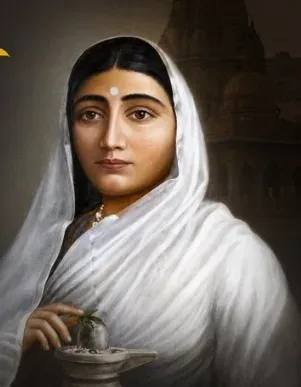
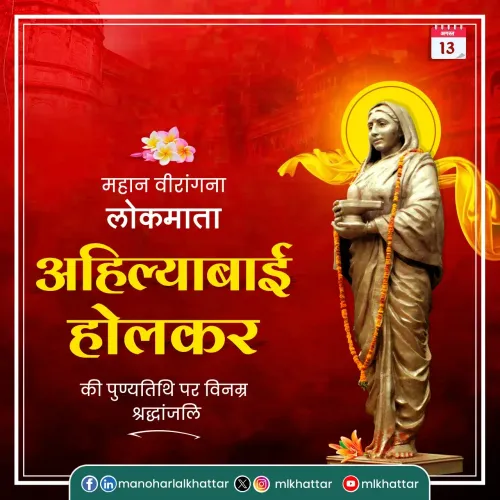
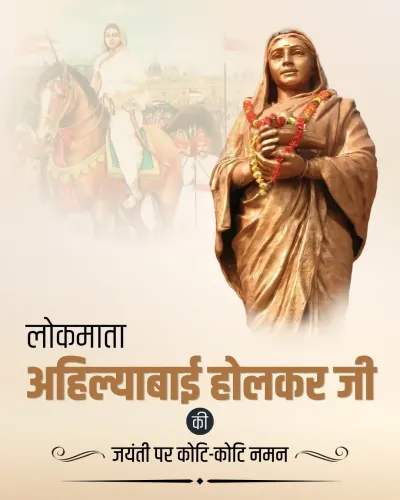
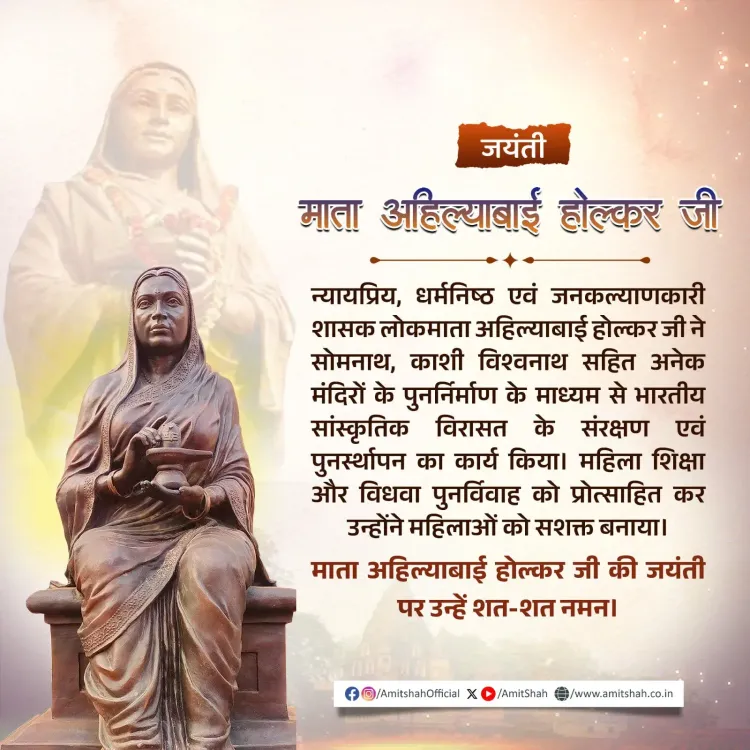
Union Home Minister Amit Shah on Sunday, 31 May 2026, paid tribute to Lokmata Ahilyabai Holkar on her birth anniversary, honouring the 18th-century Malwa ruler as a just, devout, and people-centric administrator who worked to preserve and restore India's cultural heritage.
Context
In a bilingual post in Hindi and Marathi, Shah described Ahilyabai Holkar as न्यायप्रिय, धर्मनिष्ठ एवं जनकल्याणकारी शासक ('a justice-loving, devout and welfare-oriented ruler'). He credited her with the reconstruction of several temples, including Somnath in Gujarat and Kashi Vishwanath in Varanasi, framing her reign as a landmark chapter in the conservation of Indian civilisational heritage. He also highlighted her role in promoting women's education and widow remarriage as acts of social empowerment.
The post concluded with the salutation शत-शत नमन ('a hundredfold salute') in Hindi and कोटी-कोटी प्रणाम ('crores of salutations') in Marathi, reflecting the dual cultural identity associated with the Holkar legacy, which straddles both Maharashtra and Madhya Pradesh.
Policy Backdrop
Ahilyabai Holkar, who ruled the Malwa kingdom from 1767 to 1795, is widely credited with funding the reconstruction of the Somnath Temple in Gujarat and the Kashi Vishwanath Temple in Varanasi, among dozens of other shrines across the subcontinent. The Somnath temple was rebuilt in its current form after independence, inaugurated in 1951 by President Rajendra Prasad following efforts led by Sardar Vallabhbhai Patel and K.M. Munshi. The Kashi Vishwanath Dham corridor was completed and dedicated in 2021, significantly expanding access and facilities at the Varanasi shrine.
Beyond temple restoration, Ahilyabai is remembered in historical accounts for encouraging women's access to education and for supporting widow remarriage at a time when both practices faced social resistance, making her an enduring reference point in discussions of women's empowerment in pre-colonial India.
Stakeholders and Impact
Shah's tribute carries resonance for multiple constituencies: pilgrims and devotees connected to the Somnath and Kashi Vishwanath shrines, communities in Maharashtra and Madhya Pradesh where Ahilyabai holds deep cultural reverence, and advocacy groups focused on women's welfare and heritage conservation. The bilingual format of the post — simultaneously in Hindi and Marathi — signals outreach to audiences across linguistic lines.
BJP leaders have consistently invoked Ahilyabai Holkar's legacy as a historical precedent for contemporary temple restoration projects and women's welfare programmes, connecting 18th-century precedents to present-day policy priorities such as the Beti Bachao Beti Padhao scheme and the expansion of pilgrimage infrastructure.
What's Next
Tributes on Ahilyabai Holkar's Jayanti have in recent years been accompanied by state-level announcements related to heritage site development or women's education initiatives in Madhya Pradesh and Maharashtra. Parliamentary debates on women's reservation and welfare legislation have also seen her cited as a historical touchstone. Whether this year's observance is followed by policy-linked announcements at the central or state level will be closely watched by heritage and women's rights groups alike.
Point of View
Simultaneously addressing devotees of Somnath and Kashi Vishwanath — both sites central to the BJP's temple-restoration narrative — and communities in Maharashtra and Madhya Pradesh where the Holkar legacy commands deep reverence. The bilingual Hindi-Marathi format signals an intentional cross-regional outreach at a time when the party continues to consolidate its footprint in Maharashtra. By foregrounding women's education and widow remarriage alongside temple reconstruction, the tribute also seeks to anchor the BJP's women's welfare agenda in a pre-colonial historical precedent, lending it civilisational weight. This fits a broader pattern in which 18th-century rulers are invoked not merely as historical figures but as ideological forerunners of present-day policy.
NationPress
20 Sept 2026
Frequently Asked Questions
Who was Ahilyabai Holkar and why is she celebrated?
Ahilyabai Holkar was the ruler of the Malwa kingdom from 1767 to 1795, celebrated for reconstructing dozens of temples including Somnath and Kashi Vishwanath, promoting women's education, and supporting widow remarriage, making her one of the most revered figures in Indian history.
Why did Amit Shah post a tribute to Ahilyabai Holkar?
Amit Shah posted the tribute on 31 May 2026 to mark Ahilyabai Holkar's Jayanti (birth anniversary), honouring her contributions to cultural heritage preservation and women's empowerment.
Which temples did Ahilyabai Holkar reconstruct?
Ahilyabai Holkar funded the reconstruction of several major temples including the Somnath Temple in Gujarat and the Kashi Vishwanath Temple in Varanasi, along with numerous other shrines across the Indian subcontinent.
What is the significance of Ahilyabai Holkar's Jayanti in 2026?
Her Jayanti is observed annually as a day to remember her legacy of just governance, temple restoration, and social reform; in 2026, Union Home Minister Amit Shah's tribute drew fresh attention to her contributions to Indian cultural and social history.
What social reforms is Ahilyabai Holkar known for?
Beyond temple reconstruction, Ahilyabai Holkar is historically credited with encouraging women's access to education and supporting widow remarriage at a time when both faced significant social resistance in 18th-century India.