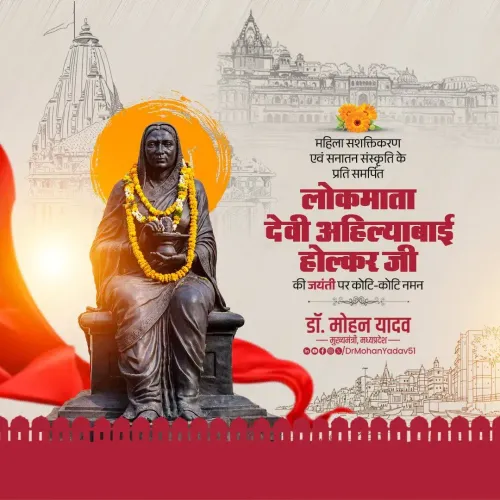
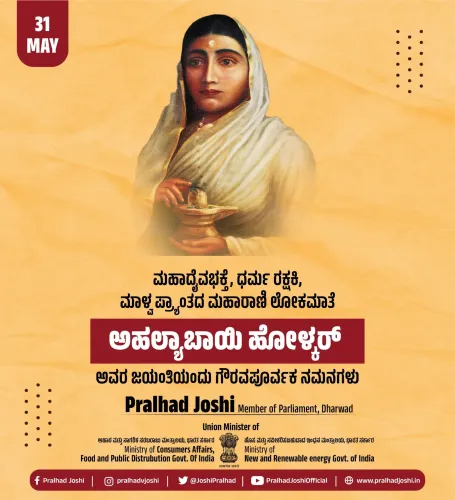
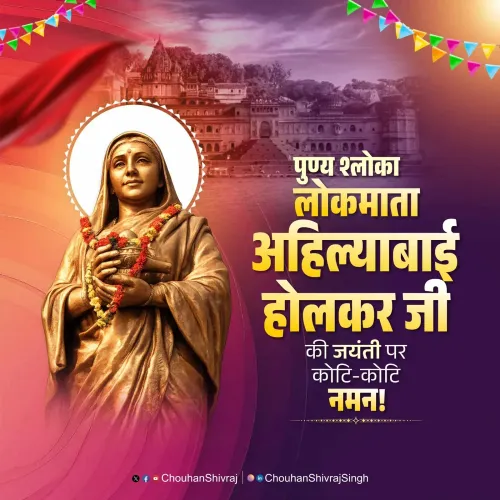
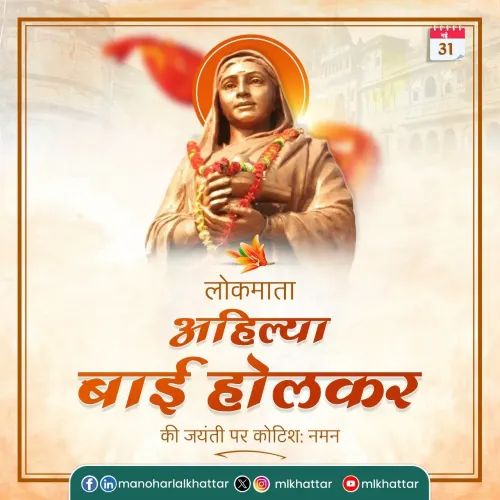
Rijiju pays tribute to Ahilyabai Holkar on her Jayanti
Synopsis
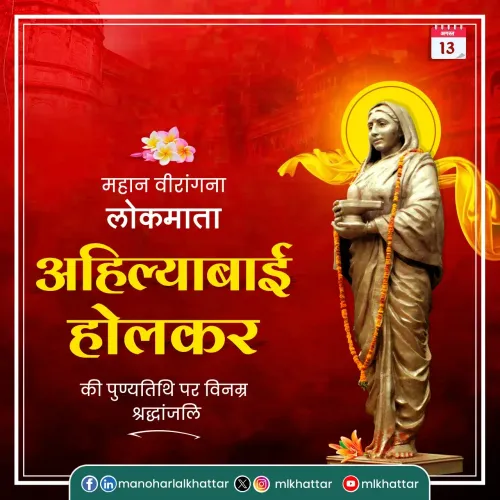
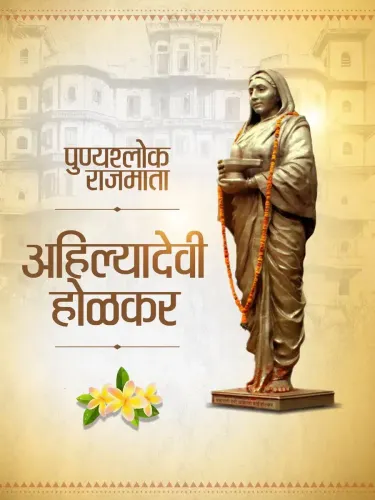
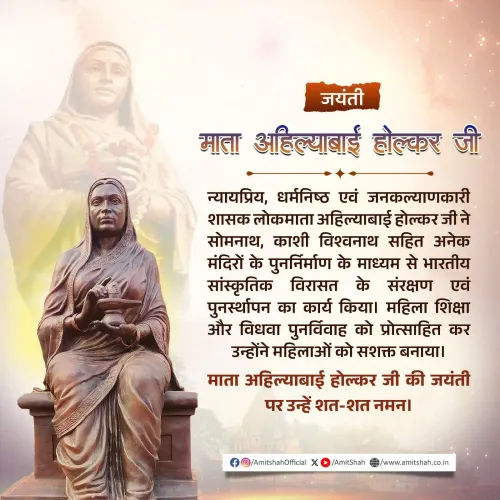
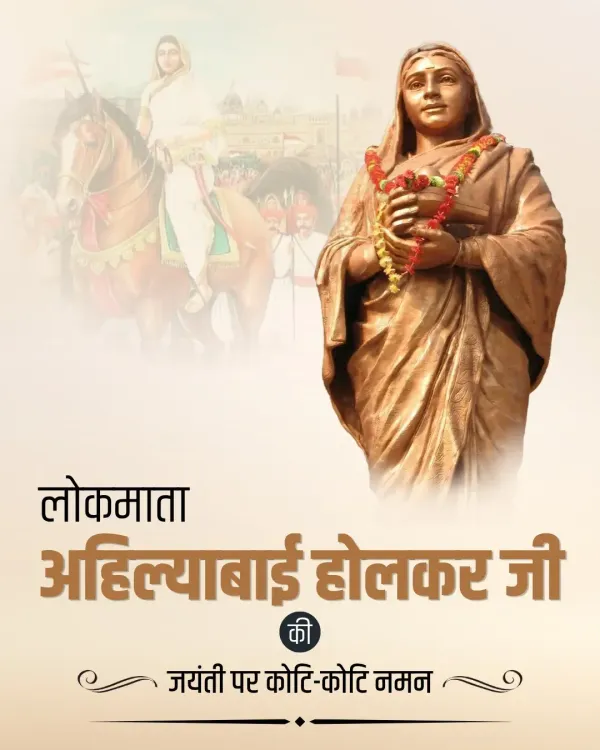
Union Minister Kiren Rijiju on 31 May 2026 paid tribute to Lokmata Ahilyabai Holkar on her birth anniversary, praising her just governance, temple restoration work, and unparalleled contribution to Indian culture and women's empowerment.
Key Takeaways
Kiren Rijiju , Union Minister of Parliamentary Affairs, paid tribute to Ahilyabai Holkar on her birth anniversary on 31 May 2026 .
Rijiju described her dedication to justice, public welfare, and nation-building as a 'golden chapter of Indian history.' Ahilyabai Holkar (born 31 May 1725 ) ruled the Malwa kingdom and commissioned temples, ghats, and dharamshalas across India.
She is honoured with the title Lokmata (Mother of the People) for her welfare-oriented and culturally significant reign.
The tribute is part of a recurring pattern of senior BJP leaders honouring pre-colonial rulers associated with Hindu cultural patronage.
Follow-up events at Malwa heritage sites and possible parliamentary references to her legacy are being watched.
Union Parliamentary Affairs Minister Kiren Rijiju on Sunday, 31 May 2026, paid tribute to Lokmata Ahilyabai Holkar on her birth anniversary, honouring her legacy of just governance, public welfare, and the promotion of women's leadership in Indian history.
Context
Posting in Hindi on his official X account, Rijiju offered 'koti-koti naman' (salutations from millions) to Ahilyabai Holkar, describing her dedication to justice-oriented rule, public welfare, nari shakti (women's empowerment), and nation-building as a 'golden chapter of Indian history.' He specifically highlighted her contributions to the construction and restoration of temples, ghats, and religious sites across the country as an 'unparalleled contribution to the preservation of Indian culture and faith.'
Policy Backdrop
Ahilyabai Holkar (born 31 May 1725) was the ruler of the Malwa kingdom in central India and is widely regarded as one of the most effective administrators of the 18th century. During her reign, she commissioned the construction and renovation of hundreds of temples, ghats, and dharamshalas across the Indian subcontinent — from Varanasi and Dwarka to Puri and Rameshwaram — earning her the honorific Lokmata (Mother of the People). Her administration in Maheshwar, her capital on the banks of the Narmada, was noted for its emphasis on law, equity, and the welfare of ordinary citizens.
Senior BJP leaders regularly mark the jayantis of pre-colonial rulers associated with temple patronage and dharma-related public works, situating such figures within a broader political discourse on civilisational continuity and indigenous women's leadership. Ahilyabai Holkar occupies a prominent place in this tradition, frequently cited alongside figures such as Chhatrapati Shivaji Maharaj as exemplars of Hindu statecraft and cultural preservation.
Stakeholders and Impact
The tribute resonates with Hindu devotees, heritage conservationists, and advocates of women's leadership who regard Ahilyabai Holkar as a symbol of both spiritual patronage and capable female governance. For the BJP, invoking her legacy reinforces its messaging on India's civilisational heritage and the historical agency of Indian women. Communities in the Malwa region of Madhya Pradesh and across pilgrimage circuits that Holkar patronised hold particular reverence for her memory.
The tribute also speaks to a wider audience of women leaders and public figures who have long drawn inspiration from Ahilyabai Holkar's model of governance — one that combined administrative rigor with cultural stewardship at a time when such roles were rarely occupied by women.
What's Next
Observers will watch for follow-up cultural events organised by the Ministry of Culture or state governments — particularly in Madhya Pradesh — around Malwa heritage sites such as Maheshwar. Any references to Ahilyabai Holkar's legacy in forthcoming parliamentary debates on cultural policy or women's empowerment schemes would signal how the tribute translates from social-media commemoration into legislative or administrative action. Her jayanti has in past years prompted calls for greater recognition of her contributions in school curricula and official government commemorations.
Point of View
Particularly those associated with temple patronage and women's agency. By invoking her legacy of cultural preservation alongside nari shakti, the message threads together two of the party's core electoral themes. Such jayanti tributes, while ceremonial in form, serve a cumulative political function — reinforcing a civilisational narrative that positions the BJP as the inheritor and protector of India's indigenous heritage. Whether this translates into substantive policy — expanded heritage conservation at Malwa sites, curriculum inclusion, or dedicated welfare schemes in Holkar's name — remains the more consequential question.
NationPress
19 Sept 2026
Frequently Asked Questions
Who was Ahilyabai Holkar?
Ahilyabai Holkar (born 31 May 1725) was the ruler of the Malwa kingdom in central India, celebrated for her just administration, public welfare projects, and the construction and restoration of temples, ghats, and pilgrimage sites across the subcontinent. She is honoured with the title Lokmata, meaning Mother of the People.
Why is Ahilyabai Holkar Jayanti celebrated on 31 May?
Ahilyabai Holkar Jayanti is observed on 31 May each year to mark the birth anniversary of the 18th-century Malwa ruler, born on 31 May 1725. The day is commemorated by political leaders, cultural organisations, and devotees who regard her as a symbol of just governance and women's leadership.
What did Kiren Rijiju say about Ahilyabai Holkar?
Union Minister Kiren Rijiju posted a tribute in Hindi, offering 'koti-koti naman' to Ahilyabai Holkar and describing her dedication to justice, public welfare, women's empowerment, and nation-building as a golden chapter of Indian history. He specifically praised her role in constructing and restoring temples, ghats, and religious sites.
What temples and ghats did Ahilyabai Holkar build?
Ahilyabai Holkar commissioned the construction or renovation of temples, ghats, and dharamshalas at major pilgrimage centres across India, including Varanasi, Dwarka, Puri, and Rameshwaram, among many others. Her patronage extended across the subcontinent and is considered one of the most extensive programmes of religious infrastructure in 18th-century India.
Why do BJP leaders pay tribute to Ahilyabai Holkar?
Senior BJP leaders regularly honour Ahilyabai Holkar because her legacy of temple construction, just governance, and women's leadership aligns with the party's broader political messaging on civilisational continuity, Hindu cultural heritage, and the historical agency of Indian women. She is frequently cited alongside other pre-colonial rulers as an exemplar of indigenous statecraft.