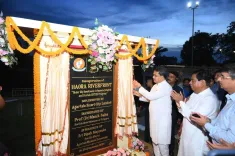
Rajnath Singh pays tribute to Ahilyabai Holkar on her Jayanti
Synopsis
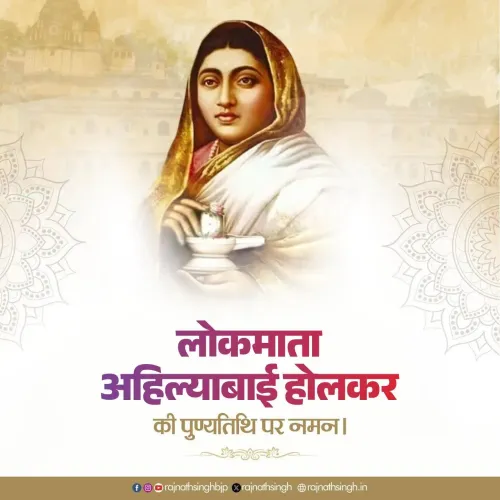
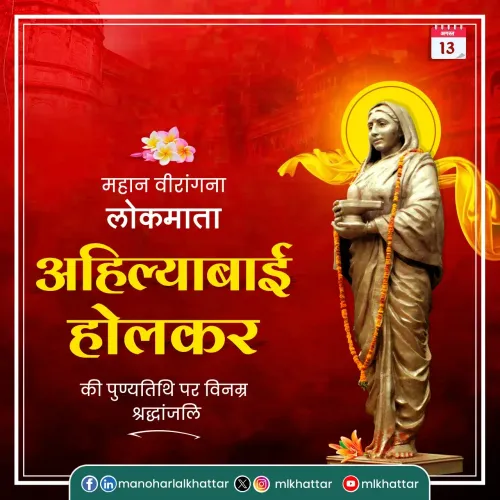
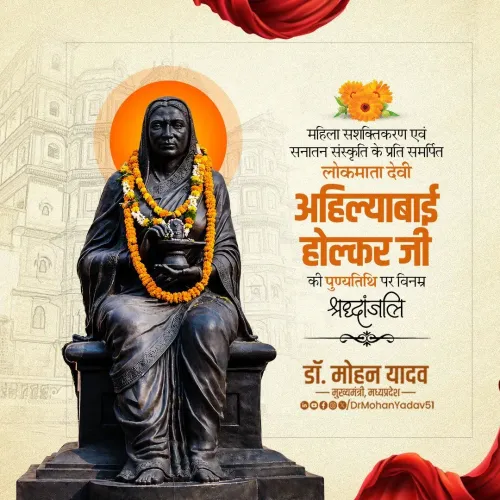
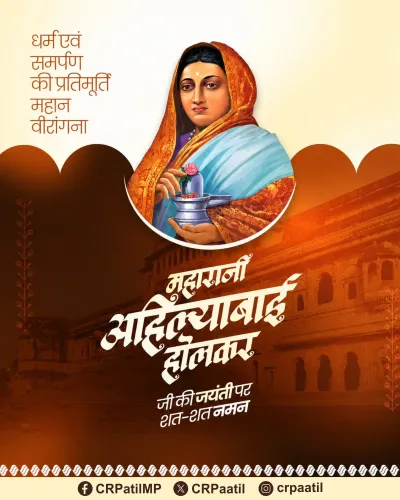
Union Defence Minister Rajnath Singh on 31 May 2026 honoured Lokmata Ahilyabai Holkar on her jayanti, calling her a model of justice and good governance whose work revitalising temples and pilgrimage sites across India continues to inspire generations.
Key Takeaways
Rajnath Singh posted a tribute in Hindi on 31 May 2026 for Ahilyabai Holkar's jayanti .
Ahilyabai Holkar ruled the Malwa kingdom from 1767 to 1795 , governing from Maheshwar in present-day Madhya Pradesh.
She is credited with constructing or renovating temples and ghats at Kashi , Somnath , Rameshwaram , and Ayodhya , among other sites.
Singh described her as having made justice, good governance, and public service the 'core mantra' of her reign.
Senior BJP leaders regularly mark such anniversaries as part of a broader narrative connecting cultural policy to India's civilisational history.
The central government's PRASAD scheme , launched in 2014-15 , funds conservation at pilgrimage centres historically linked to Ahilyabai's patronage.
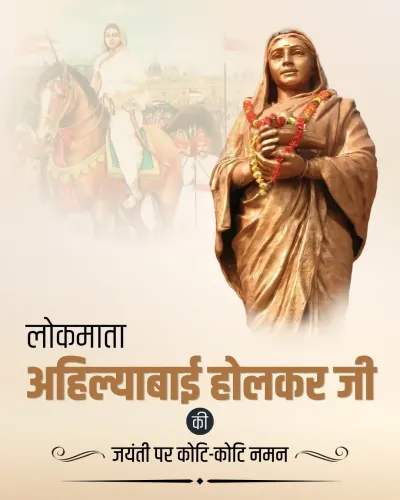
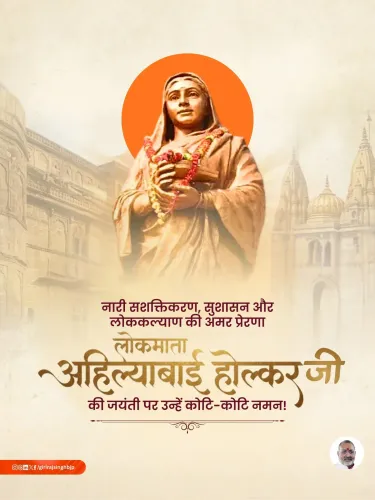
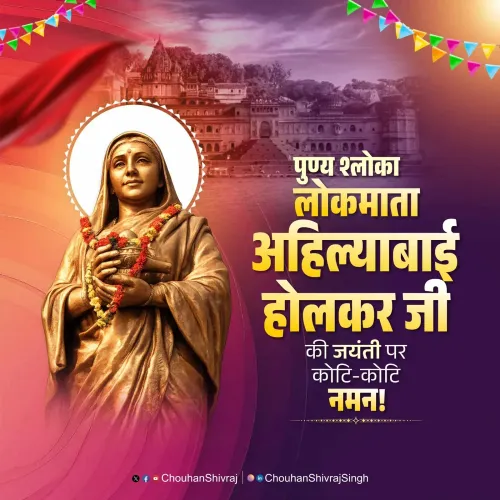
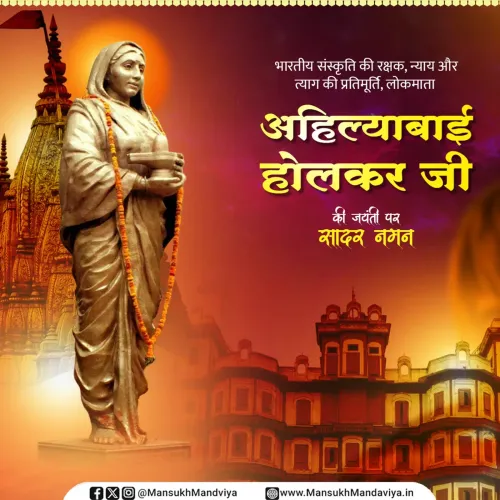
Union Defence Minister Rajnath Singh on Sunday, 31 May 2026 paid tribute to Lokmata Ahilyabai Holkar on her birth anniversary, honouring the 18th-century Malwa queen as an enduring symbol of just governance, public welfare, and the preservation of India's civilisational heritage.
Context
In his post on X, Rajnath Singh offered koti-koti naman (countless salutations) to Ahilyabai Holkar, describing her as having made justice, good governance, and public service the 'core mantra' of her rule. He wrote that through the conservation and reconstruction of pilgrimage sites, temples, and cultural heritage across the country, she gave 'new energy to India's Sanatan consciousness.' The minister added that her spirit of service and dedication to the nation's cultural pride 'will always inspire generations to come.'
The tribute was posted in Hindi and directed at a broad national audience on the occasion of the queen's jayanti, which falls on 31 May.
Policy Backdrop
Ahilyabai Holkar ruled the Malwa kingdom from 1767 to 1795, governing from her capital at Maheshwar in present-day Madhya Pradesh. Historical records credit her with extensive construction and renovation of temples, ghats, and dharmashalas at major pilgrimage centres including Kashi, Somnath, Rameshwaram, and Ayodhya — sites that remain central to India's religious and cultural geography.
Her legacy has acquired renewed policy relevance since 2014, when the central government launched the PRASAD scheme (Pilgrimage Rejuvenation and Spiritual Augmentation Drive) under the Ministry of Tourism, channelling funds toward infrastructure and conservation at major pilgrimage centres — many of them sites that Ahilyabai herself had patronised centuries earlier.
Stakeholders and Impact
Senior BJP leaders have consistently marked the birth anniversaries of pre-colonial Hindu rulers credited with temple reconstruction and dharmic governance, positioning such tributes as part of a broader narrative linking contemporary cultural policy to India's civilisational history. Rajnath Singh, as a senior party figure and a former Uttar Pradesh Chief Minister, carries particular weight when invoking figures associated with the cultural heritage of the Hindi heartland.
Heritage conservation bodies, pilgrimage site administrators, and cultural organisations that draw on Ahilyabai Holkar's legacy are among the stakeholders who find such public recognition significant. The tribute also resonates with communities in Madhya Pradesh and Maharashtra, where the queen is especially venerated.
What's Next
State governments in Madhya Pradesh and Maharashtra have in previous years organised commemorative events around 31 May, and similar programmes are expected to mark the 2026 jayanti. Observers will watch for any announcements regarding centrally-sponsored heritage projects at sites linked to Ahilyabai Holkar's patronage, particularly under the PRASAD scheme or related cultural heritage circuits.
Point of View
Reinforcing a civilisational framing of the party's cultural agenda. The choice of Ahilyabai is particularly resonant: her documented reconstruction of shrines at Kashi, Somnath, and Ayodhya maps almost precisely onto sites that have received heightened central attention since 2014. As a former Uttar Pradesh Chief Minister, Singh's voice on heritage carries electoral as well as symbolic weight in the Hindi heartland. The tribute signals that the government's cultural policy narrative, anchored in historical legitimacy, remains active and is unlikely to recede ahead of any upcoming electoral cycle.
NationPress
23 Sept 2026
Frequently Asked Questions
Who was Ahilyabai Holkar and why is she celebrated?
Ahilyabai Holkar was the ruler of the Malwa kingdom from 1767 to 1795, celebrated for her emphasis on justice, public welfare, and the construction or renovation of temples and pilgrimage infrastructure at sites including Kashi, Somnath, Rameshwaram, and Ayodhya. She is revered as 'Lokmata' — mother of the people — across India.
When is Ahilyabai Holkar's jayanti celebrated?
Ahilyabai Holkar's birth anniversary, or jayanti, is observed on 31 May each year.
What did Rajnath Singh say about Ahilyabai Holkar?
Rajnath Singh described Ahilyabai Holkar as having made justice, good governance, and public service the core mantra of her rule, and credited her with giving 'new energy to India's Sanatan consciousness' through her conservation and reconstruction of temples and pilgrimage sites.
What is the PRASAD scheme and how does it relate to Ahilyabai Holkar's legacy?
The PRASAD scheme (Pilgrimage Rejuvenation and Spiritual Augmentation Drive), launched by the Ministry of Tourism in 2014-15, funds infrastructure and conservation at major pilgrimage centres — many of which, including Kashi and Somnath, were historically patronised by Ahilyabai Holkar.
Why do BJP leaders regularly pay tribute to Ahilyabai Holkar?
Senior BJP leaders mark Ahilyabai Holkar's jayanti as part of a broader narrative that connects contemporary cultural and heritage policy to India's civilisational history, highlighting pre-colonial rulers who are credited with temple reconstruction and dharmic governance.