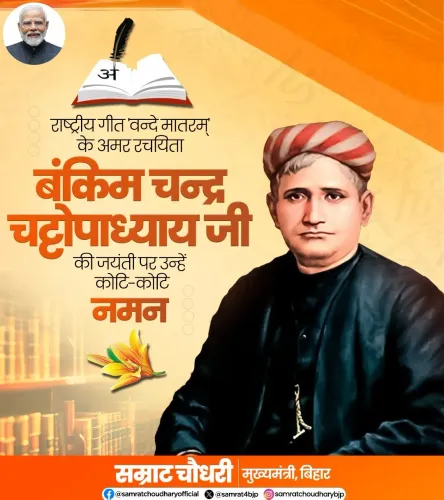
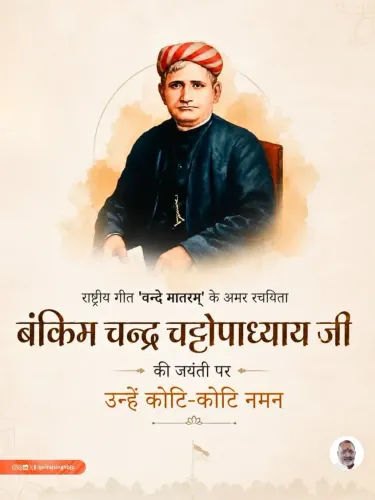
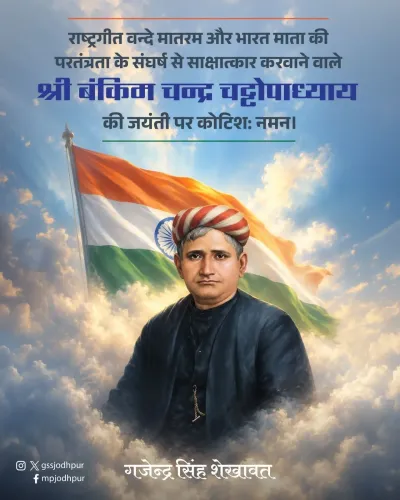
CM Rekha Gupta Honours Bankim Chandra on Vande Mataram

Synopsis
Delhi Chief Minister Rekha Gupta honoured Bankim Chandra Chattopadhyay, composer of Vande Mataram, calling the 1874 poem the soul of India and linking its legacy to PM Modi's Viksit Bharat 2047 vision.
Key Takeaways
Delhi CM Rekha Gupta posted a tribute on 7 November 2026 invoking Vande Mataram and honouring its composer.
Bankim Chandra Chattopadhyay composed the poem in 1874 ; it was later included in his 1882 novel Anandamath .
Vande Mataram was adopted as India's national song by the Constituent Assembly in 1950 .
Gupta explicitly connected the song's freedom-struggle legacy to PM Narendra Modi's Viksit Bharat @2047 development vision.
BJP leaders have consistently used independence-era cultural symbols to frame contemporary governance goals — a pattern this post continues.
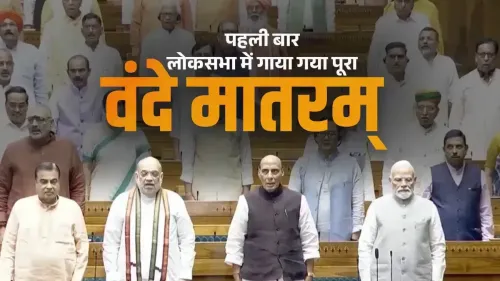
A national song that once fired the imagination of a freedom movement now echoes through the corridors of a government building — Delhi Chief Minister Rekha Gupta invoked Vande Mataram on Saturday, 7 November 2026, paying tribute to its immortal composer and tying its spirit to the ambition of a rising India.
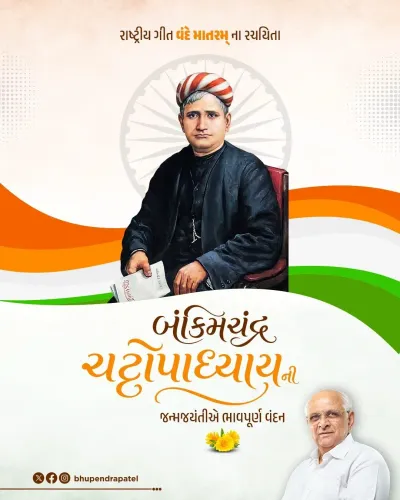
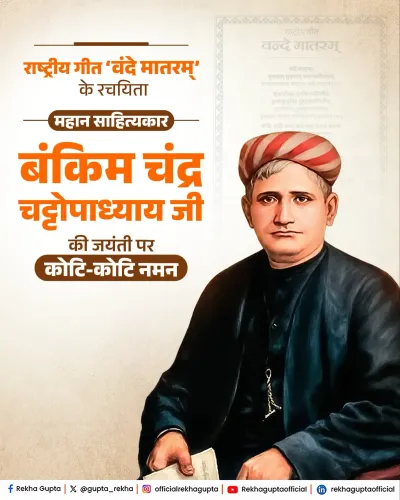
In her post, CM Gupta described the national song as 'the proclamation of India's soul, a mantra of reverence for the motherland, the energy of patriotism, and the resolve of Viksit Bharat.' She offered a deep salute — shat-shat naman — to Bankim Chandra Chattopadhyay, the towering Bengali literary figure who composed the poem that would become a rallying cry for millions.
The Man Who Gave India Its Battle Cry
Bankim Chandra Chattopadhyay first published the poem Vande Mataram in 1874, and later wove it into his landmark 1882 novel Anandamath — a story of ascetic warriors fighting for the motherland. What began as literature became legend. By the late 19th and early 20th centuries, the song had become the soundtrack of India's independence struggle, sung at protests and printed on the lips of those who faced colonial prisons.
The Constituent Assembly of India formally adopted Vande Mataram as the national song in 1950, cementing its place alongside the national anthem. Its opening stanzas — a lyrical address to the motherland as goddess and provider — remain among the most recognisable verses in the Indian literary canon.
From Freedom Struggle to Viksit Bharat
CM Gupta drew a deliberate arc: from the song's role as 'the inspiration of the freedom struggle' to its relevance today, 'under the leadership of respected Prime Minister Narendra Modi, in the building of Viksit Bharat.' The reference is to the Viksit Bharat @2047 vision — a long-term national development goal that Prime Minister Modi has articulated since 2022, targeting developed-economy status by the centenary of India's independence.
The rhetorical move is a familiar one in BJP political communication: anchoring present-day governance ambition in the cultural and nationalist symbols of the independence era. Vande Mataram serves as the bridge — its call to devotion to the motherland reframed as a call to build it. 'Vande Mataram is the voice of patriotism and resolve for every generation,' Gupta wrote.
For a song born in the pen of a 19th-century novelist, that generational reach shows no sign of fading.
Point of View
The Viksit Bharat @2047 goal — in the emotional and cultural weight of independence-era symbols. By framing Vande Mataram as the shared resolve of 'every generation,' Gupta positions the party's development narrative as a continuation of the freedom movement rather than a departure from it. The invocation of PM Modi alongside Bankim Chandra in a single breath is deliberate, casting the Viksit Bharat mission in an almost civilisational frame. How effectively this cultural-nationalist register translates into electoral or policy momentum will depend on whether voters draw the same straight line from 1874 to 2047.
NationPress
7 Nov 2026
Frequently Asked Questions
Who composed Vande Mataram?
Bankim Chandra Chattopadhyay composed Vande Mataram. He first published the poem in 1874 and later included it in his novel Anandamath in 1882 .
Is Vande Mataram India's national anthem or national song?
Vande Mataram is India's national song , not the national anthem. The Constituent Assembly adopted it in 1950 . The national anthem is Jana Gana Mana, composed by Rabindranath Tagore.
What is Viksit Bharat 2047?
Viksit Bharat @2047 is a long-term national development vision articulated by Prime Minister Narendra Modi from 2022 onward, targeting developed-economy status for India by the centenary of its independence.
Why did Delhi CM Rekha Gupta post about Vande Mataram?
Delhi CM Rekha Gupta posted a tribute honouring the legacy of Bankim Chandra Chattopadhyay and connecting the spirit of Vande Mataram to the Viksit Bharat 2047 vision on 7 November 2026 .
What is the significance of Vande Mataram in India's freedom struggle?
Vande Mataram became a rallying cry during India's independence movement, sung at protests and by those imprisoned by colonial authorities. Its imagery of the motherland as a divine protector galvanised generations of freedom fighters.