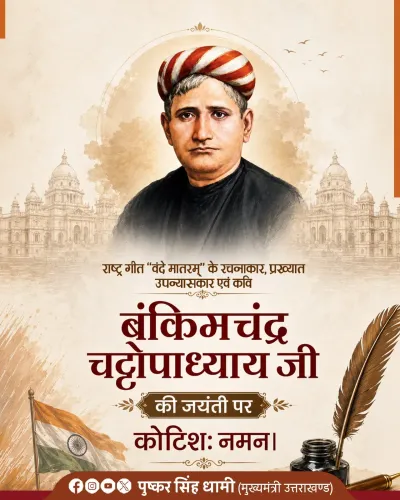
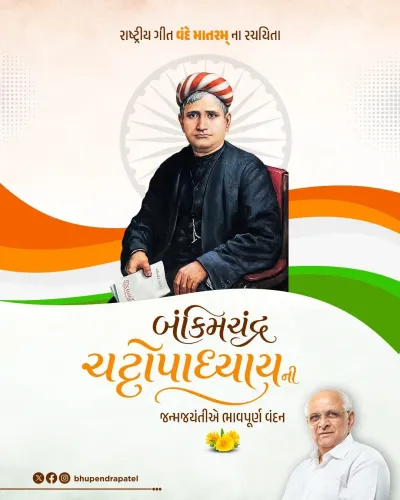
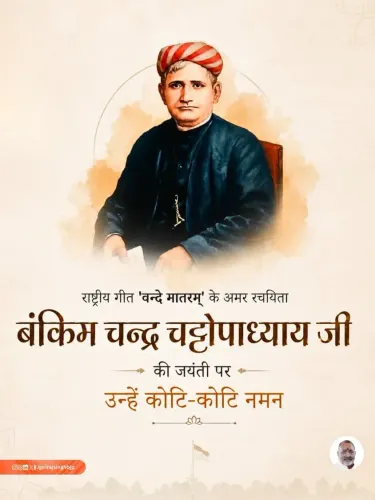
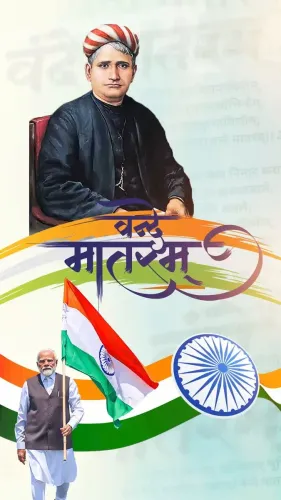
CM Rekha Gupta Pays Tribute to Bankim Chandra Chatterjee on Birth Anniversary
Synopsis
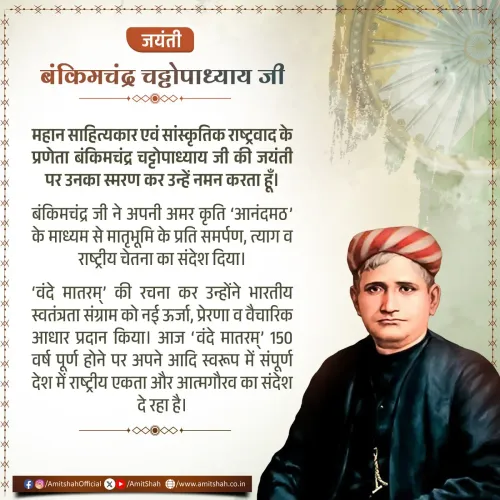
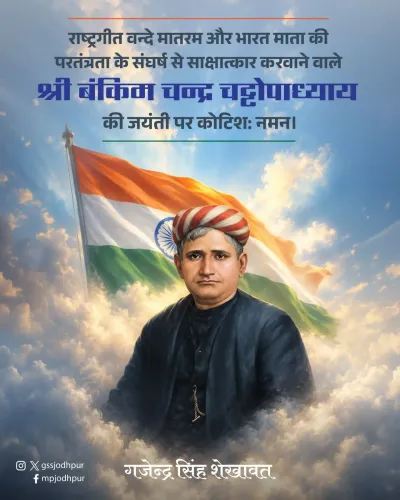
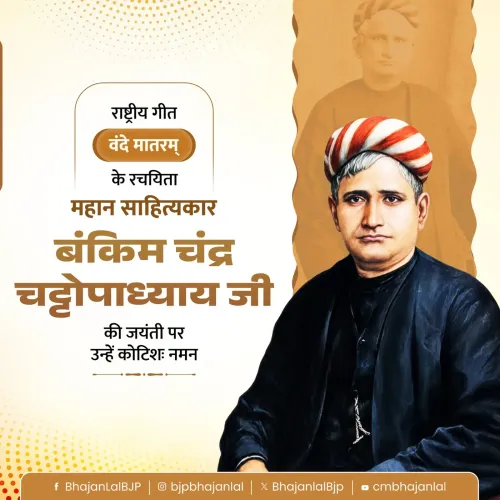
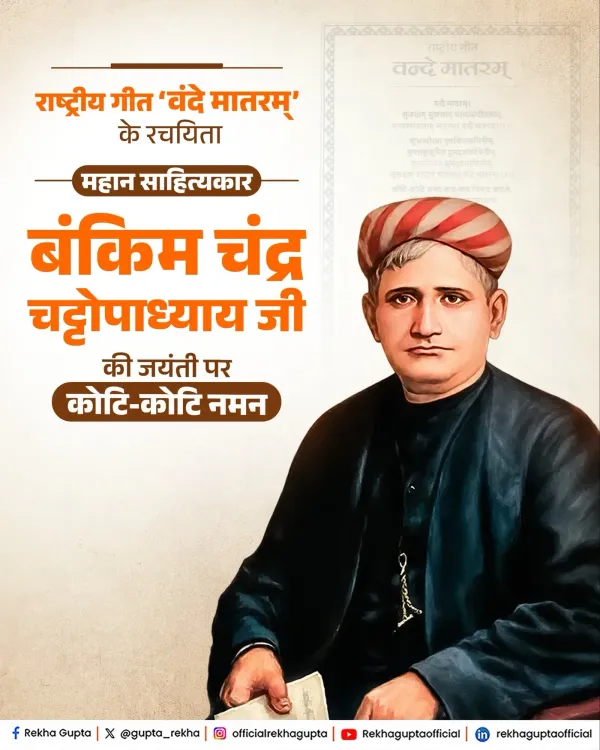
Delhi Chief Minister Rekha Gupta on 26 June 2026 paid tribute to Bankim Chandra Chatterjee, author of Anandamath and composer of Vande Mataram, calling his pen an invaluable heritage of Indian literature and his ideals a lasting guide for national service.
Key Takeaways
Delhi Chief Minister Rekha Gupta paid tribute to Bankim Chandra Chatterjee on his birth anniversary on 26 June 2026 .
Bankim Chandra Chatterjee authored the novel Anandamath (1882), which introduced the song Vande Mataram .
Vande Mataram was adopted as India's national song by the Constituent Assembly on 24 January 1950 .
CM Gupta described Vande Mataram as 'an unparalleled voice of patriotism' that awakened dedication to the motherland during the freedom struggle.
She called Chatterjee's dedication and writing 'an invaluable heritage of Indian literature' whose ideals will continue to guide national service.
The tribute follows a broader BJP pattern of marking anniversaries of 19th-century writers linked to cultural nationalism and the independence movement.
Delhi Chief Minister Rekha Gupta on Friday, 26 June 2026, paid tribute to Bankim Chandra Chatterjee, the celebrated 19th-century Bengali novelist and author of the iconic work Anandamath, on the occasion of his birth anniversary. The Chief Minister honoured his legacy through a post on X, highlighting his enduring contribution to Indian literature and the freedom struggle.
In her tribute, CM Gupta wrote: 'Bharatiya sahitya ke mahan rachnakar evam kalajayi kriti Anandamath ke lekhak Bankim Chandra Chatterjee ji ki jayanti par unhe vinamra shraddhanjali' — offering 'humble tribute on the birth anniversary of the great creator of Indian literature and author of the timeless work Anandamath.' She underscored that his immortal composition Vande Mataram resonated as 'an unparalleled voice of patriotism in the hearts of every person during the freedom struggle' and awakened in citizens a spirit of dedication to the motherland.
Context
Bankim Chandra Chatterjee (1838–1894) was one of the foremost literary figures of 19th-century Bengal. His novel Anandamath (1882) introduced the song Vande Mataram, which became a powerful rallying cry for Indian nationalists during the independence movement against British colonial rule. The song personifies India as a mother goddess and draws on deep cultural and spiritual imagery that galvanised generations of freedom fighters.
CM Gupta's post described his 'unwavering dedication and vigorous pen' as 'an invaluable heritage of Indian literature,' adding that 'his thoughts and ideals will always guide us on the path of national service and nation-building.'
Policy Backdrop
Vande Mataram was formally adopted as India's national song by the Constituent Assembly on 24 January 1950, placing it alongside the national anthem as a symbol of the republic. It continues to be performed at state functions and official ceremonies across the country. The song's constitutional recognition reflects the lasting imprint of Chatterjee's literary and nationalist vision on modern India.
BJP leaders have consistently marked the birth anniversaries of 19th-century writers linked to the freedom struggle, weaving themes of cultural nationalism and patriotism into public discourse. Such commemorations position historical literary works like Anandamath within a broader narrative of national unity and devotion to the motherland — a pattern evident across party leadership at the national and state levels.
Stakeholders and Impact
The tribute resonates with India's literary community, scholars of Bengali literature, and citizens who regard Vande Mataram as a cornerstone of the nation's cultural identity. For Delhi's diverse population, which includes a significant Bengali-speaking community, acknowledgements of Chatterjee's legacy carry both cultural and civic weight.
Commemorations of this nature also reinforce the state government's engagement with India's pre-independence cultural heritage, signalling to constituents that the administration values the intellectual and artistic roots of the freedom movement.
What's Next
Political observers will watch for similar tributes as other pre-independence literary anniversaries approach in the coming months. Any parliamentary references to Vande Mataram or legislative discussions around the national song's status in upcoming sessions may draw renewed attention to Chatterjee's foundational role in shaping India's national identity.
As India continues to commemorate the figures who shaped its independence movement, Bankim Chandra Chatterjee's legacy — enshrined in a song that predates the republic itself — remains a living thread in the country's cultural and political fabric.
Point of View
The tribute links state leadership to a lineage of patriotic fervour that resonates deeply with the party's core voter base. The framing of Chatterjee's ideals as a guide for 'nation-building' signals that these commemorations serve not merely as historical acknowledgements but as active political messaging. As India approaches significant national milestones, such tributes are likely to intensify in frequency and visibility.
NationPress
24 Sept 2026
Frequently Asked Questions
Who was Bankim Chandra Chatterjee?
Bankim Chandra Chatterjee (1838–1894) was a celebrated 19th-century Bengali novelist and poet, best known for writing the novel Anandamath and composing Vande Mataram, which became a rallying anthem during India's independence movement.
What is Vande Mataram and why is it significant?
Vande Mataram is a patriotic song composed by Bankim Chandra Chatterjee, first published in his 1882 novel Anandamath. It was adopted as India's national song by the Constituent Assembly on 24 January 1950 and is performed at official state functions across the country.
Why did Delhi CM Rekha Gupta pay tribute to Bankim Chandra Chatterjee?
CM Rekha Gupta paid tribute on the occasion of Bankim Chandra Chatterjee's birth anniversary on 26 June 2026, honouring his contribution to Indian literature and his role in inspiring patriotism through Vande Mataram during the freedom struggle.
What is the novel Anandamath about?
Anandamath, published in 1882 by Bankim Chandra Chatterjee, is a Bengali novel set against the backdrop of the Sannyasi Rebellion in 18th-century Bengal. It introduced the song Vande Mataram and became a seminal text in India's nationalist literary tradition.
How do BJP leaders typically commemorate freedom-era literary figures?
BJP leaders routinely mark the birth anniversaries of 19th-century writers associated with the freedom struggle, using such occasions to reinforce themes of cultural nationalism, patriotism, and devotion to the motherland in public discourse.