CM Bhajan Lal Pays Tribute to Bankim Chandra on Birth Anniversary
Synopsis
Rajasthan Chief Minister Bhajan Lal Sharma on 26 June 2026 paid tribute to Bankim Chandra Chattopadhyay, composer of India's national song Vande Mataram, on his birth anniversary, calling his patriotic works an enduring inspiration for national service.
Key Takeaways
Rajasthan CM Bhajan Lal Sharma posted a tribute to Bankim Chandra Chattopadhyay on his birth anniversary on 26 June 2026 .
Bankim Chandra Chattopadhyay composed Vande Mataram in 1876 , which was later adopted as India's national song on 24 January 1950 .
Sharma described Chattopadhyay's works as immortal and said they would inspire 'national service and dedication to the motherland for ages to come.' The tribute is consistent with a broader BJP pattern of formally commemorating 19th-century nationalist literary figures.
The Rajasthan government has previously encouraged Vande Mataram recitation in schools through education department directives.
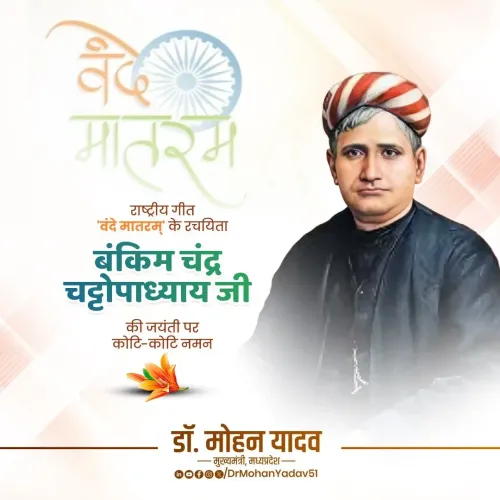
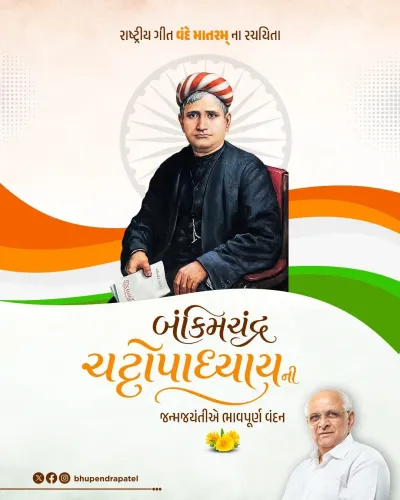
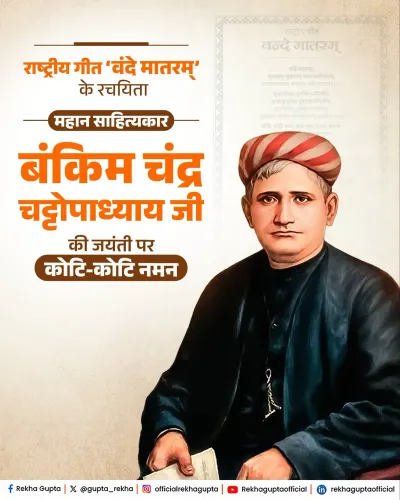
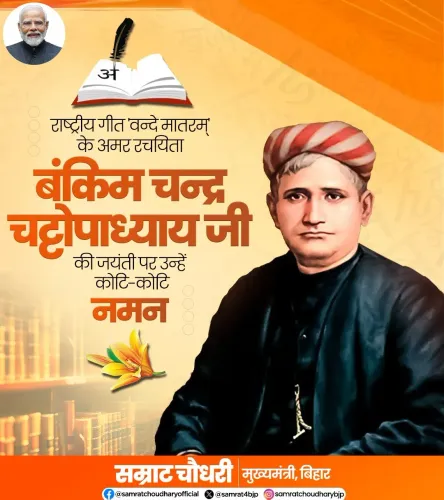
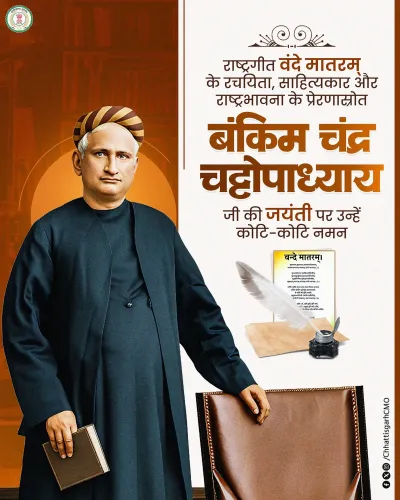
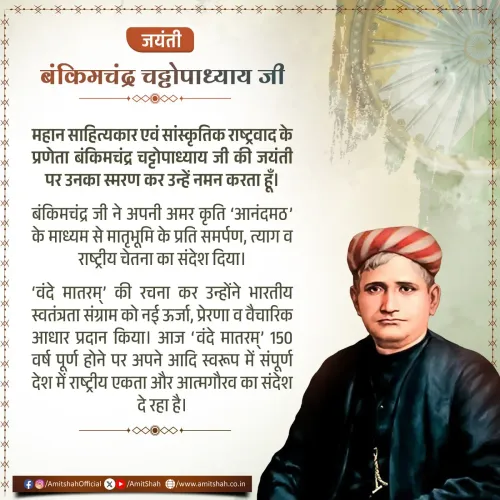
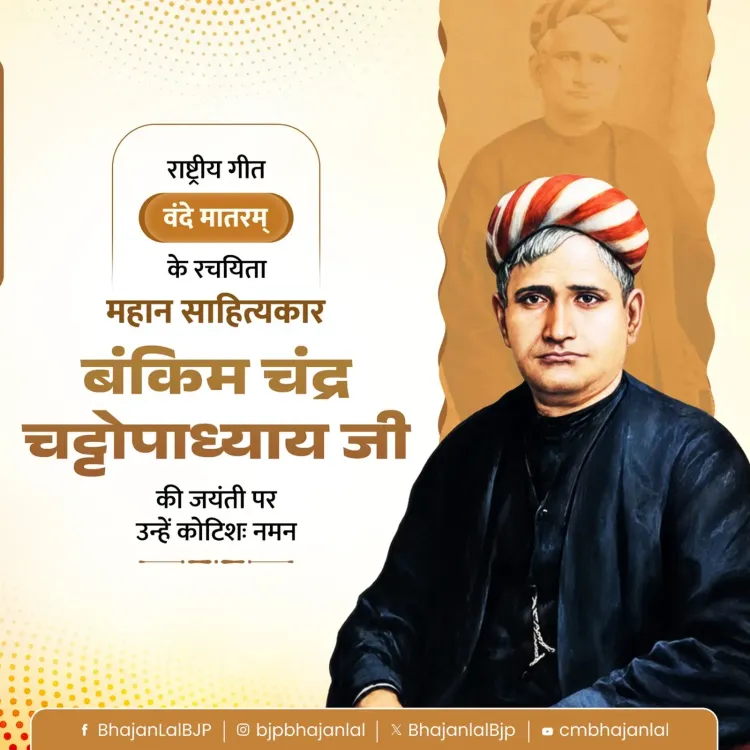
Rajasthan Chief Minister Bhajan Lal Sharma on Friday, 26 June 2026, paid homage to Bankim Chandra Chattopadhyay, the 19th-century Bengali litterateur and composer of India's national song Vande Mataram, on the occasion of the author's birth anniversary. Sharma, posting on X in Hindi, offered 'kotisha naman' — salutations in crores — to the iconic writer and invoked his enduring legacy of patriotic thought.
In his post, the Chief Minister wrote: 'Rashtriya geet Vande Mataram ke rachayita, mahan sahityakar Bankim Chandra Chattopadhyay ji ki jayanti par unhe kotisha naman!' — translated as: 'Heartfelt salutations in crores to the great literary figure Bankim Chandra Chattopadhyay, composer of the national song Vande Mataram, on his birth anniversary!' Sharma added that Chattopadhyay's immortal works and thoughts steeped in patriotism 'will continue to inspire the countrymen towards national service and dedication to the motherland for ages to come.'
Context
Bankim Chandra Chattopadhyay (1838–1894) was a pioneering Bengali novelist and poet whose poem Vande Mataram was composed in 1876 and later featured in his celebrated novel Anandamath. The song became a rallying cry during India's independence movement and was adopted by the Constituent Assembly on 24 January 1950 as India's national song, accorded equal honour alongside Jana Gana Mana. Chattopadhyay is widely regarded as one of the foundational figures of modern Indian literature and nationalist thought.
Policy Backdrop
BJP-led state governments, including Rajasthan under Chief Minister Sharma, have made it a consistent practice to formally mark the birth anniversaries of 19th-century writers and poets associated with India's cultural and nationalist heritage. These commemorations are part of a broader emphasis on pre-independence cultural symbols and icons that the party frames as foundational to the nation's identity. The Rajasthan government has, in the past, issued directives through its education department encouraging the recitation of Vande Mataram in schools, reinforcing the song's place in civic life.
Stakeholders and Impact
The tribute is directed at a wide audience — citizens, students, and cultural organisations — for whom Bankim Chandra Chattopadhyay's legacy carries deep resonance. For students in particular, such official commemorations often coincide with school-level events and essay competitions centred on nationalist literature. The post also signals the Rajasthan government's continued alignment with the BJP's broader cultural calendar, which regularly elevates figures associated with India's literary and freedom-movement heritage.
What's Next
Observers will watch for any follow-up circulars from the Rajasthan state education department around this date, particularly those mandating or encouraging Vande Mataram recitation in schools as part of anniversary observances. Larger cultural events or state-sponsored programmes honouring Chattopadhyay's legacy on his birth anniversary could also be announced in the coming days. The commemoration is consistent with an annual pattern and is likely to recur as part of the state government's official cultural calendar.
Point of View
And official commemorations serve to reinforce that framing. By invoking Chattopadhyay's 'patriotism-soaked thoughts' and the call to 'national service,' Sharma's post echoes a vocabulary that connects literary heritage to contemporary governance messaging. The consistency of such tributes across BJP-ruled states suggests a coordinated cultural calendar rather than spontaneous homage. For Rajasthan, these commemorations also feed into education policy, where the recitation of Vande Mataram in schools has been an area of active state interest.
NationPress
24 Sept 2026
Frequently Asked Questions
Who was Bankim Chandra Chattopadhyay?
Bankim Chandra Chattopadhyay (1838–1894) was a pioneering Bengali novelist and poet best known for composing Vande Mataram in 1876, which became India's national song. His novel Anandamath, in which the song featured, is considered a landmark of Indian nationalist literature.
When was Vande Mataram adopted as India's national song?
Vande Mataram was adopted as India's national song by the Constituent Assembly on 24 January 1950, accorded equal honour alongside Jana Gana Mana as the national anthem.
Why did Bhajan Lal Sharma post a tribute to Bankim Chandra Chattopadhyay?
Rajasthan Chief Minister Bhajan Lal Sharma posted the tribute on 26 June 2026 to mark the birth anniversary of Bankim Chandra Chattopadhyay, honouring him as the composer of Vande Mataram and a towering figure in Indian literary and nationalist history.
What is the significance of Vande Mataram in India?
Vande Mataram, meaning 'I bow to thee, Mother,' served as a powerful rallying song during India's independence movement. It holds the status of national song and is accorded the same respect as the national anthem Jana Gana Mana.
Does the Rajasthan government promote Vande Mataram in schools?
The Rajasthan government has previously issued directives encouraging the recitation of Vande Mataram in schools as part of civic and cultural education, a practice aligned with the BJP's broader emphasis on nationalist heritage.