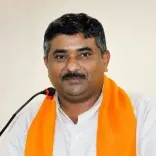
Nadda pays tribute to Bankim Chandra on birth anniversary

Synopsis
Union Health Minister J. P. Nadda marked the birth anniversary of Bankim Chandra Chattopadhyay on 26 June 2026, honouring the composer of 'Vande Mataram' as an enduring source of patriotic inspiration and national consciousness for crores of Indians.
Key Takeaways
Nadda , Union Health Minister and BJP national president, paid tribute to Bankim Chandra Chattopadhyay on his birth anniversary on 26 June 2026 .
Bankim Chandra (1838–1894) composed Vande Mataram , first published in his novel Anandamath in 1882 .
Vande Mataram was first sung publicly at the Indian National Congress session in 1896 and became a rallying anthem of the independence movement.
The Constituent Assembly adopted Vande Mataram as India's national song on 24 January 1950 .
Nadda credited Bankim Chandra's writings with awakening dedication, courage, and sacrifice for the motherland in crores of Indians.
The tribute reflects a broader political practice of honouring nationalist literary figures to emphasise pre-independence cultural heritage.
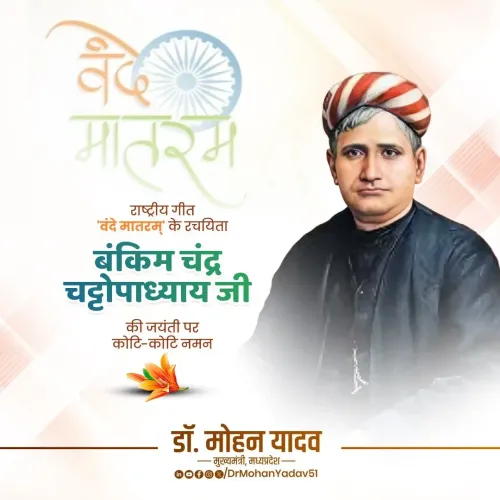
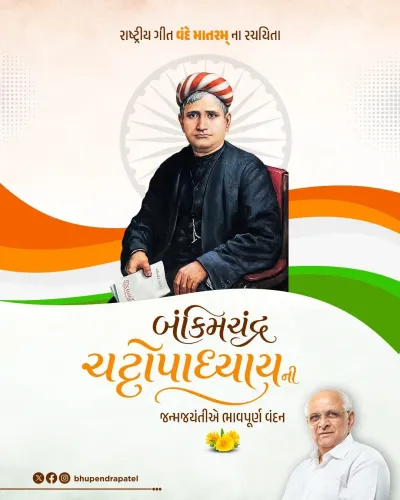
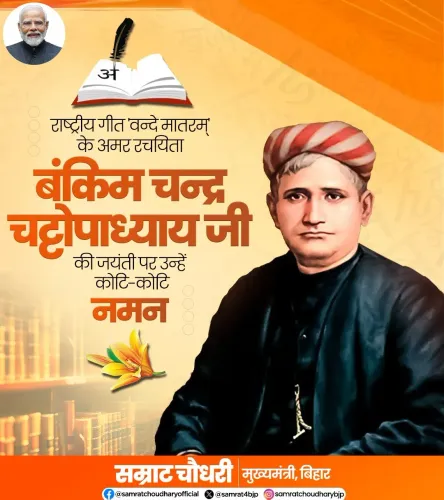
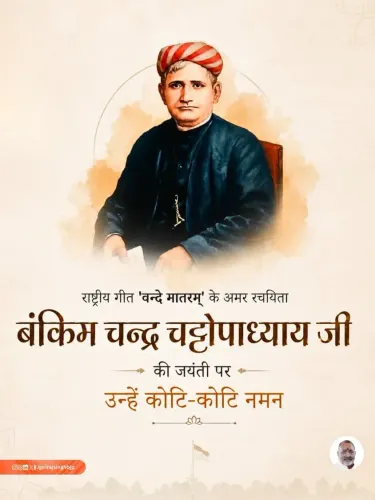
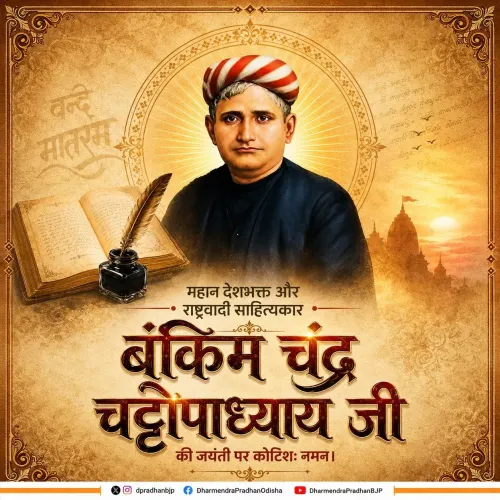
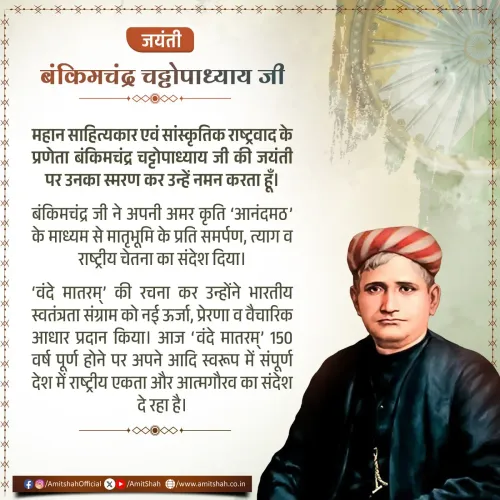
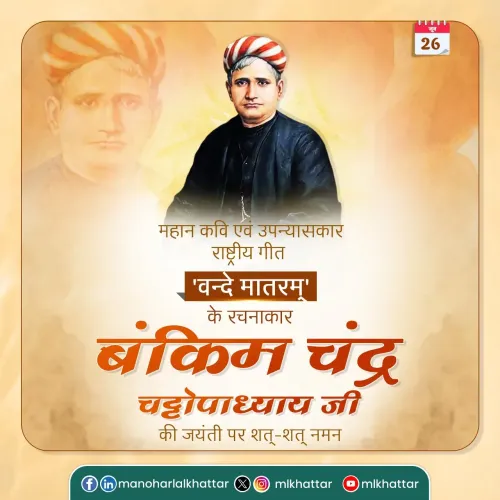
Union Health Minister J. P. Nadda on Friday, 26 June 2026, paid tribute to Bankim Chandra Chattopadhyay, the composer of India's national song Vande Mataram, on the occasion of the literary icon's birth anniversary, saluting his enduring contribution to the nation's cultural and patriotic consciousness.
In a post on X, Nadda wrote: 'Rashtriya geet Vande Mataram ke rachayita, mahan sahityakar evam rashtrachetna ke prakhar preranasrot Bankim Chandra Chattopadhyay ji ki jayanti par unhe kotishaha naman karta hoon.' (On the birth anniversary of Bankim Chandra Chattopadhyay — the composer of the national song 'Vande Mataram', a great literary figure and a blazing source of national consciousness — I bow to him a crore times.)
Context
Nadda described how Bankim Chandra's writings carried the spirit of patriotism to every citizen, and how the immortal national song 'Vande Mataram' became the soul of the Indian freedom struggle. He noted that the song awakened in crores of Indians a sense of dedication, courage, and sacrifice towards the motherland.
The minister added that Bankim Chandra's priceless literature remains an unbroken source of love for the country and national consciousness even today, and that his inspiring life and writings will continue to guide the nation on the path of service.
Policy Backdrop
Bankim Chandra Chattopadhyay (1838–1894) was a pioneering Bengali novelist and essayist. He first published Vande Mataram within his landmark novel Anandamath in 1882, giving the independence movement one of its most powerful anthems of resistance against British rule.
The song gained national prominence when it was sung at the Indian National Congress session in 1896. Decades later, on 24 January 1950, the Constituent Assembly formally adopted Vande Mataram as India's national song, cementing its constitutional status alongside the national anthem.
Stakeholders and Impact
Tribute messages on the birth anniversaries of nationalist literary figures have become a consistent feature of Indian political discourse across party lines. For the BJP, honouring pre-independence cultural icons such as Bankim Chandra aligns with a broader emphasis on indigenous heritage and the freedom struggle's literary roots.
Cultural organisations, educational institutions, and citizens across West Bengal and the rest of India observe Bankim Chandra's birth anniversary with readings, seminars, and recitations of Vande Mataram. His works remain part of school and university syllabi, keeping his legacy active across generations.
What's Next
Similar official tributes from leaders across the political spectrum are expected through the anniversary period. Bankim Chandra's legacy is also likely to feature in parliamentary discussions on cultural education policy and in government-backed literary events celebrating the freedom struggle's pre-independence heritage.
As India continues to draw on the symbols and figures of its independence movement in public life, Bankim Chandra's Vande Mataram remains a touchstone — one whose resonance, as Nadda's tribute underlines, shows no sign of diminishing.
Point of View
Historically, some political sensitivity — the message reinforces the party's positioning as a custodian of India's nationalist cultural heritage. The tribute also reflects a broader trend in Indian politics where the freedom struggle's literary and cultural dimensions are increasingly elevated alongside its political narrative. For Nadda, who holds both a senior cabinet portfolio and the party's top organisational post, such statements serve a dual function: affirming ideological continuity and maintaining visibility on days of national cultural significance.
NationPress
24 Sept 2026
Frequently Asked Questions
Who was Bankim Chandra Chattopadhyay?
Bankim Chandra Chattopadhyay (1838–1894) was a pioneering Bengali novelist and essayist, best known as the composer of Vande Mataram , which he first published in his 1882 novel Anandamath . He is regarded as one of the founders of modern Bengali literature and a major inspiration for India's independence movement.
What is 'Vande Mataram' and why is it significant?
Vande Mataram is India's national song, adopted by the Constituent Assembly on 24 January 1950. Originally composed by Bankim Chandra Chattopadhyay, it became the anthem of the Indian independence movement and continues to be a powerful symbol of patriotism and national identity.
Why did J. P. Nadda post a tribute to Bankim Chandra Chattopadhyay?
J. P. Nadda, Union Health Minister and BJP national president, posted the tribute on 26 June 2026 to mark Bankim Chandra Chattopadhyay's birth anniversary, honouring his literary legacy and his role in inspiring the freedom struggle through Vande Mataram .
When was 'Vande Mataram' first sung publicly?
Vande Mataram was first sung publicly at the Indian National Congress session in 1896, more than a decade after Bankim Chandra Chattopadhyay published it in Anandamath in 1882. It subsequently became one of the most powerful anthems of resistance against British rule.
What is J. P. Nadda's current role in the Indian government?
J. P. Nadda serves as Union Minister of Health and Family Welfare and Minister of Chemicals and Fertilizers in the Indian government. He is also the national president of the Bharatiya Janata Party (BJP).