PM Modi pays tribute to Bankim Chandra on Jayanti, marks 150 years of Vande Mataram

Synopsis
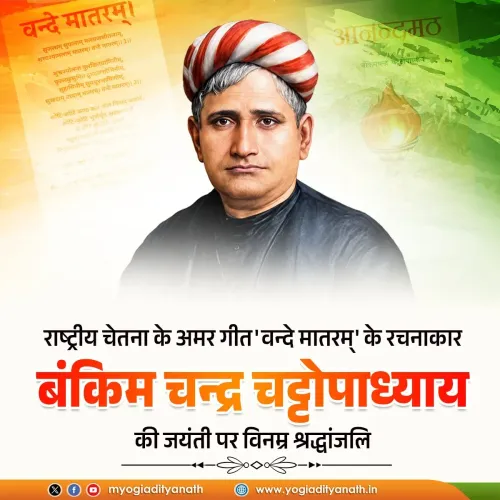
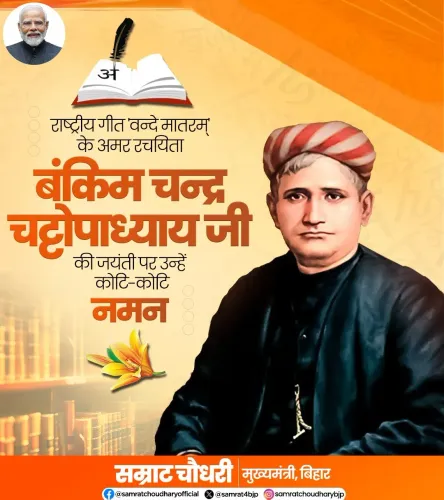
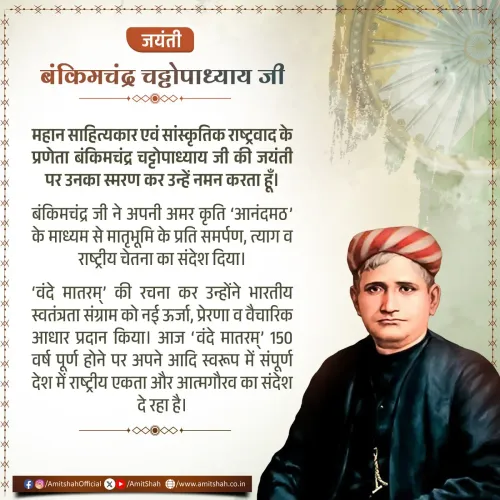
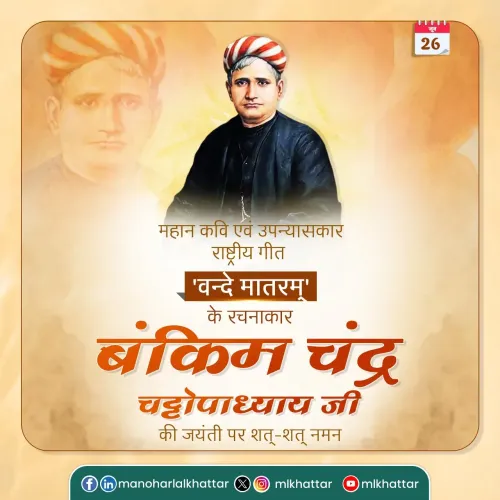
Prime Minister Narendra Modi paid tribute to Bankim Chandra Chattopadhyay on his Jayanti on 26 June 2026, honouring the 19th-century Bengali literary icon and marking the 150th anniversary of Vande Mataram, which Chattopadhyay composed and which became India's national song.
Key Takeaways
Prime Minister Narendra Modi paid tribute to Bankim Chandra Chattopadhyay on his Jayanti on 26 June 2026 .
Modi described Chattopadhyay as a 'towering literary luminary' whose writings awakened patriotism across generations of Indians.
The Prime Minister highlighted that India is marking the 150th anniversary of Vande Mataram , composed by Chattopadhyay.
Vande Mataram was first published in Chattopadhyay's novel Anandamath in 1882 and declared India's national song by the Constituent Assembly in 1950 .
The tribute is part of a broader pattern of official commemorations linking 19th-century literary nationalism to contemporary nation-building narratives.
Prime Minister Narendra Modi on Friday, 26 June 2026 paid tribute to Bankim Chandra Chattopadhyay on the literary icon's Jayanti, calling him a 'towering literary luminary' whose writings 'awakened a spirit of patriotism and cultural pride among generations of Indians.' The Prime Minister also highlighted that the nation is currently marking the 150th anniversary of Vande Mataram, the national song Chattopadhyay gifted to the freedom movement.
Context
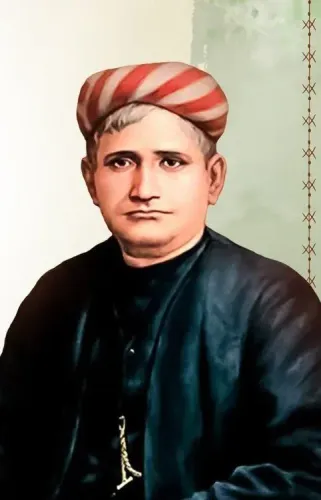
Bankim Chandra Chattopadhyay was a 19th-century Bengali novelist and poet widely regarded as one of the architects of modern Indian literary nationalism. His most enduring contribution, Vande Mataram — meaning 'I bow to thee, Mother' — was first published as part of his novel Anandamath in 1882. The song went on to become a rallying cry during India's independence movement and was subsequently declared the national song by the Constituent Assembly of India in 1950.
Modi's post noted that Chattopadhyay's 'rich literary work continues to illuminate minds and strengthen our collective resolve towards nation-building,' framing the commemoration within an active, ongoing national project rather than a purely historical tribute.
Policy Backdrop
The tribute forms part of a recurring pattern of official commemorations of 19th-century literary and cultural figures credited with shaping modern Indian nationalism. Successive governments have periodically highlighted such icons to draw a line of continuity between the independence era and contemporary nation-building priorities.
The specific mention of the 150th anniversary of Vande Mataram signals a broader commemorative moment. Emphases on national symbols such as Vande Mataram have historically aligned with wider government efforts to promote these symbols across public and educational spheres, though the precise calendar of official events tied to this anniversary has not been confirmed.
Stakeholders and Impact
The tribute is directed at India's broader literary community, educators, and the general public — particularly those engaged with the cultural and historical legacy of the Bengal Renaissance, the intellectual movement of which Chattopadhyay was a central figure. His works are part of school and university curricula across India, giving the commemoration resonance well beyond literary circles.
For Bengali communities in particular, Chattopadhyay holds a place of exceptional reverence. A Prime Ministerial tribute on his Jayanti carries symbolic weight in affirming the centrality of regional literary traditions to the national imagination. The 150th anniversary framing also invites renewed public engagement with the text and history of Vande Mataram itself.
What's Next
Government-organised cultural programmes and state-level events tied to the 150th anniversary of Vande Mataram are likely in the coming period. Observers will watch for any related curriculum updates, parliamentary references to national symbols, or coordinated commemorations involving cultural ministries and educational institutions.
The anniversary could also prompt renewed public and academic discussion on the historical journey of Vande Mataram — from a passage in a 19th-century Bengali novel to a constitutionally recognised national song — and its place in contemporary civic life.
Point of View
The Prime Minister elevates a literary commemoration into a broader civic moment, reinforcing the national song's symbolic centrality. This approach reflects a wider pattern across successive governments of deploying cultural icons to build narrative continuity between the freedom struggle and present-day governance priorities. The framing also signals likely follow-through in the form of state-level events and educational initiatives tied to the Vande Mataram anniversary.
NationPress
24 Sept 2026
Frequently Asked Questions
Who was Bankim Chandra Chattopadhyay?
Bankim Chandra Chattopadhyay was a 19th-century Bengali novelist and poet best known for composing Vande Mataram, which became India's national song. He is regarded as a foundational figure of modern Indian literary nationalism and the Bengal Renaissance.
What is the 150th anniversary of Vande Mataram?
Vande Mataram was first published by Bankim Chandra Chattopadhyay as part of his novel Anandamath in 1882, making 2026 the approximate year of its 150th anniversary. The song was later declared India's national song by the Constituent Assembly in 1950.
Why did PM Modi pay tribute to Bankim Chandra Chattopadhyay?
Prime Minister Narendra Modi paid tribute to Bankim Chandra Chattopadhyay on his Jayanti — his birth anniversary — on 26 June 2026, recognising the literary icon's contribution to Indian patriotism and highlighting the 150th anniversary of Vande Mataram.
What is Vande Mataram and why is it significant?
Vande Mataram is India's national song, composed by Bankim Chandra Chattopadhyay and first published in 1882. It became a powerful rallying anthem during the independence movement and was constitutionally recognised as the national song in 1950.
What events are expected around the 150th anniversary of Vande Mataram?
Government-organised cultural programmes and state-level commemorative events are expected in connection with the 150th anniversary of Vande Mataram, though the precise schedule of official events has not been confirmed publicly.