CM Yogi Pays Tribute to Bankim Chandra on Birth Anniversary
Synopsis
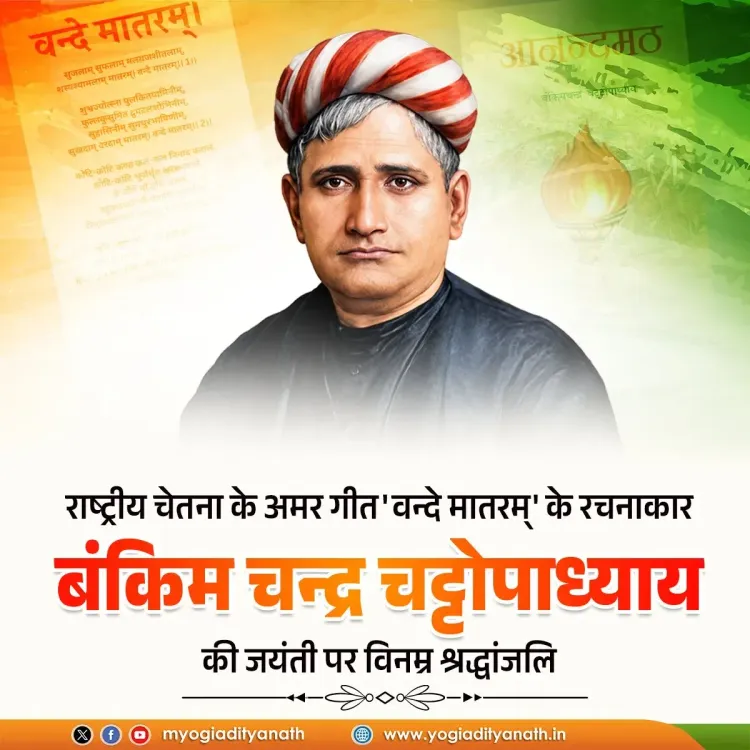
Uttar Pradesh Chief Minister Yogi Adityanath marked the birth anniversary of Bankim Chandra Chattopadhyay on 27 June 2026, honouring the author of Vande Mataram and calling his works immortal pillars of India's freedom struggle.
Key Takeaways
Yogi Adityanath posted a tribute to Bankim Chandra Chattopadhyay on his birth anniversary on 27 June 2026 .
Chattopadhyay ( 1838–1894 ) authored the novel Anandamath ( 1882 ), which introduced Vande Mataram .
Vande Mataram was adopted as India's national song by the Constituent Assembly on 24 January 1950 .
The CM described Chattopadhyay's works as having given 'new energy to the freedom struggle' and declared them 'immortal.' The tribute reflects a consistent BJP pattern of publicly honouring nationalist literary figures linked to the independence era.
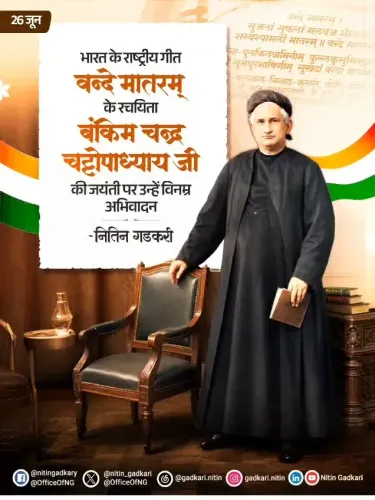
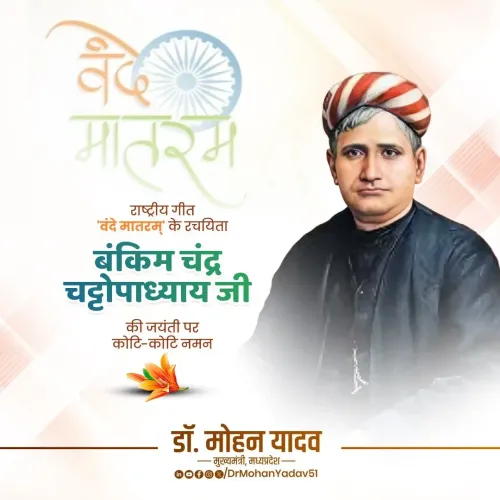
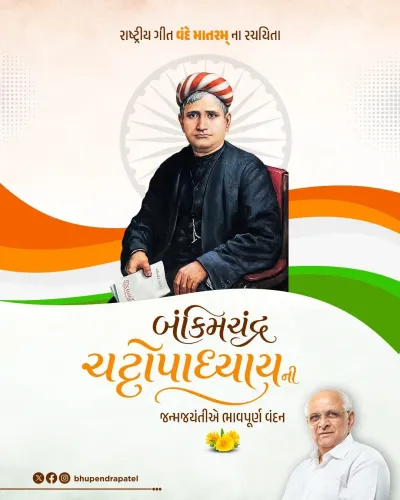
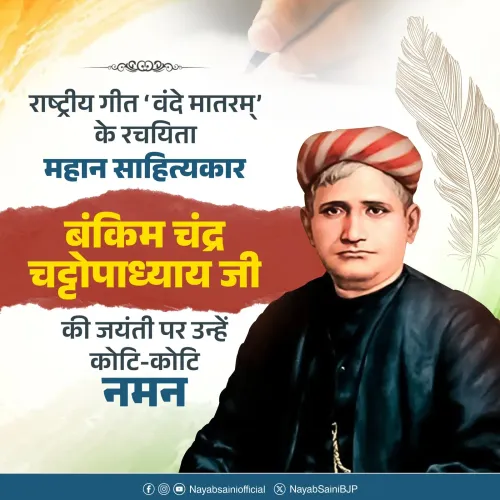
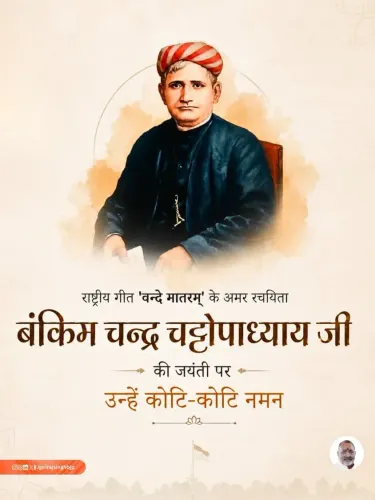
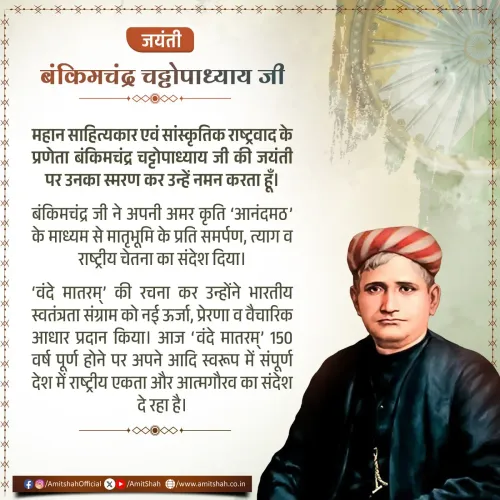
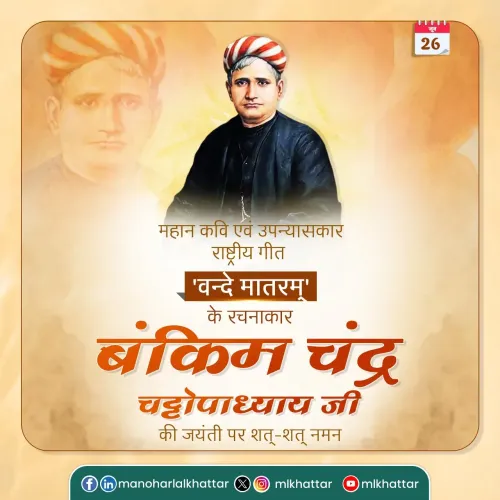
Uttar Pradesh Chief Minister Yogi Adityanath on Saturday, 27 June 2026, paid tribute to Bankim Chandra Chattopadhyay, the author of India's national song Vande Mataram, on the occasion of the Bengali literary giant's birth anniversary.
In his post, the Chief Minister offered 'humble homage' (vinamra shraddhanjali) to Chattopadhyay, describing his works as having 'infused pride and patriotism, giving new energy to the freedom struggle' — and declared that his creations 'shall remain immortal forever.'
Context
Bankim Chandra Chattopadhyay (1838–1894) was a pioneering Bengali novelist and poet whose 1882 novel Anandamath introduced the song Vande Mataram to the world. The hymn, composed in the 1870s, became a rallying cry during the Swadeshi movement and remained a defining symbol of the Indian independence struggle against British rule.
The Constituent Assembly of India formally adopted Vande Mataram as India's national song on 24 January 1950, cementing Chattopadhyay's place in the nation's constitutional and cultural identity.
Policy Backdrop
Indian political leaders across parties regularly mark the birth and death anniversaries of 19th-century writers and reformers associated with the independence era. BJP leaders in particular have consistently highlighted symbols such as Vande Mataram to underscore themes of cultural self-assertion and nationalist literary heritage.
For Yogi Adityanath, who heads both the Uttar Pradesh government and the Gorakhnath Math, such commemorations align with a broader public messaging that links governance with civilisational and cultural pride.
Stakeholders and Impact
Tributes of this nature resonate most directly with school students, educators, and citizens for whom Vande Mataram remains a living part of civic life — sung at school assemblies, state functions, and national events. Chattopadhyay's literary legacy also holds deep significance for Bengali cultural identity and for Indians who trace the intellectual roots of the freedom movement to 19th-century Bengal.
Statements by senior political figures on such occasions serve to reinforce the official narrative around nationalist literature, keeping figures like Chattopadhyay visible in public discourse beyond academic circles.
What's Next
With Independence Day approaching in August, official references to Vande Mataram and its author are likely to intensify, with commemorative events at schools and government institutions across the country. Yogi Adityanath's tribute sets an early tone for that seasonal cycle of patriotic remembrance, reinforcing the BJP's sustained emphasis on nationalist cultural symbols in public life.
Point of View
The Chief Minister reinforces a cultural vocabulary that the BJP has long used to connect governance with civilisational identity. The timing — weeks before Independence Day — positions the tribute within a broader seasonal effort to anchor public discourse in nationalist literary heritage. It also signals the party's continued effort to claim ownership of pan-Indian symbols that transcend regional and linguistic boundaries.
NationPress
25 Sept 2026
Frequently Asked Questions
Who was Bankim Chandra Chattopadhyay?
Bankim Chandra Chattopadhyay (1838–1894) was a Bengali novelist and poet best known for writing Vande Mataram, which he introduced in his 1882 novel Anandamath. The song later became India's national song.
What is Vande Mataram and why is it significant?
Vande Mataram is a patriotic hymn composed by Bankim Chandra Chattopadhyay in the 1870s. It became a rallying symbol during the Swadeshi movement and was adopted as India's national song by the Constituent Assembly on 24 January 1950.
Why did CM Yogi Adityanath post about Bankim Chandra Chattopadhyay?
Yogi Adityanath posted a tribute on the occasion of Bankim Chandra Chattopadhyay's birth anniversary on 27 June 2026, honouring him as the creator of Vande Mataram and a key inspiration for the Indian freedom struggle.
When was Vande Mataram adopted as India's national song?
Vande Mataram was officially adopted as India's national song by the Constituent Assembly on 24 January 1950, the day before India became a republic.
What is Anandamath and its connection to Vande Mataram?
Anandamath is an 1882 Bengali novel by Bankim Chandra Chattopadhyay set against the backdrop of a fictional uprising. It contains the song Vande Mataram, which went on to become one of the most celebrated patriotic hymns in Indian history.