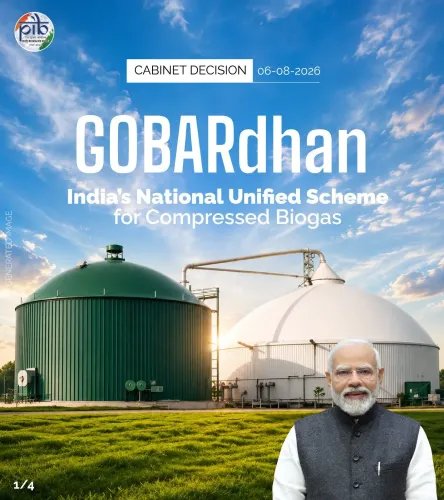
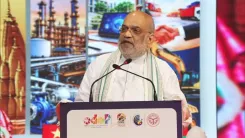
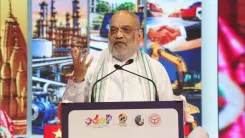
CM Himanta Shares IBA Claim: GOBARdhan Could Cut Gas Imports by $5 Billion
Synopsis
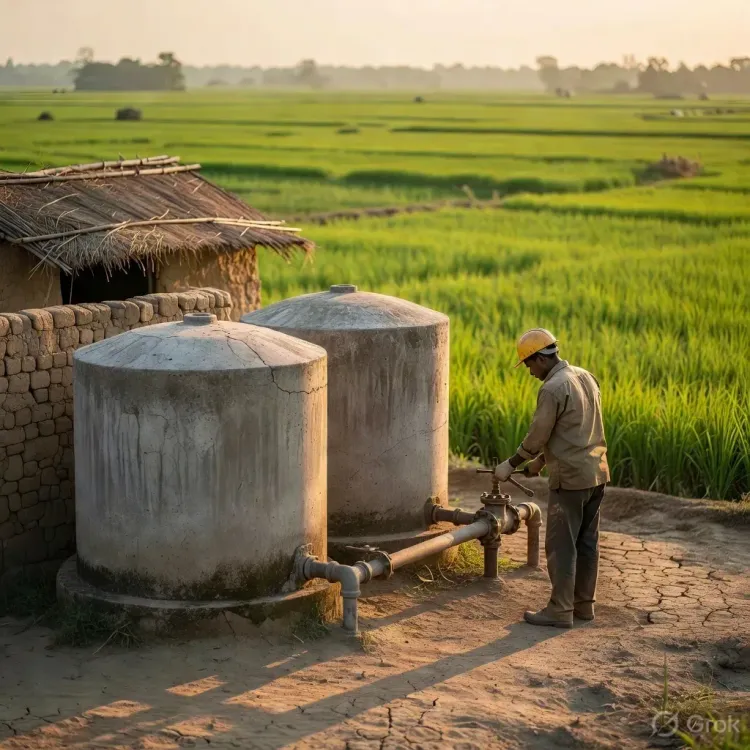
Assam Chief Minister Himanta Biswa Sarma amplified an Indian Biogas Association claim on August 11, 2026, asserting that the GOBARdhan scheme — which converts cattle dung and organic waste into compressed biogas — could cut India's natural gas import bill by $5 billion, spotlighting the scheme's energy-security potential.
Key Takeaways
Assam CM Himanta Biswa Sarma shared an Indian Biogas Association (IBA) assessment on August 11, 2026 via the NaMo App.
The IBA claims the GOBARdhan scheme could reduce India's gas imports by $5 billion annually.
GOBARdhan was launched in April 2018 under the Swachh Bharat Mission to convert cattle dung and organic waste into Compressed Biogas (CBG) and bio-fertiliser.
The scheme operates alongside the SATAT initiative , which targets a national network of CBG production plants linked to fuel retail.
Multiple states have announced CBG plant targets as part of broader energy-security and waste-to-wealth strategies.
The $5 billion projection is the IBA's claim; actual savings depend on the pace of CBG plant commissioning across India.
A scheme built on cattle dung could save India $5 billion in annual gas imports — that is the striking claim now circulating from the Indian Biogas Association (IBA), amplified on Tuesday, August 11, 2026 by Assam Chief Minister Himanta Biswa Sarma, who shared the assessment via the NaMo App on X.
What the GOBARdhan scheme actually does
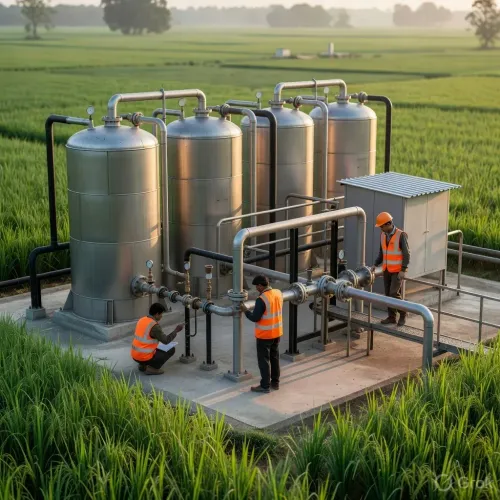
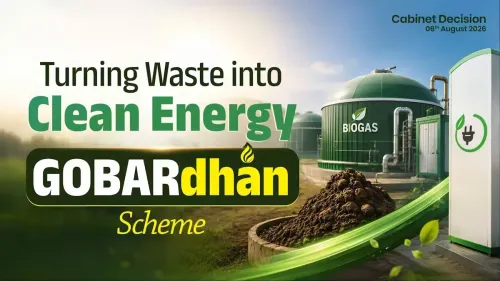
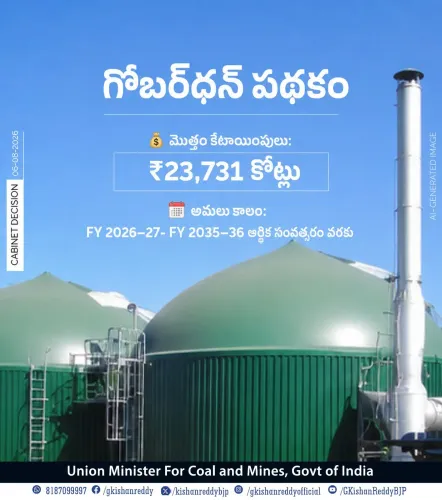
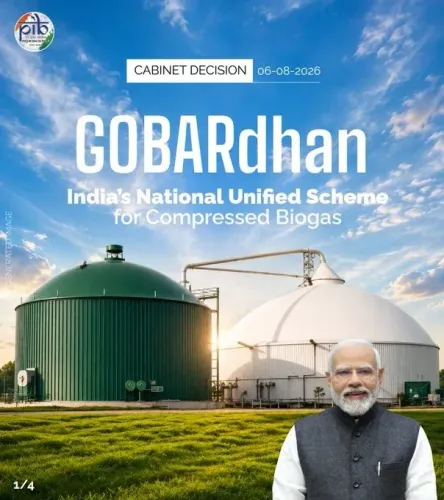
Launched in April 2018 under the Swachh Bharat Mission, the GOBARdhan (Galvanising Organic Bio-Agro Resources Dhan) scheme was designed to turn cattle dung and organic agricultural waste into two marketable outputs: Compressed Biogas (CBG) and bio-fertiliser. Multiple central ministries — including Petroleum and Natural Gas — oversee its implementation, making it one of the few schemes that simultaneously touches energy security, rural livelihoods, and waste management.
The IBA, the industry body representing biogas producers and technology providers, has argued that scaling the scheme aggressively could displace a significant volume of imported natural gas. The $5 billion import-reduction figure is the association's projection — and it is a number big enough to command serious policy attention.
Where GOBARdhan fits inside India's broader energy pivot
India's push into CBG did not begin with GOBARdhan alone. The Sustainable Alternative Towards Affordable Transportation (SATAT) initiative runs parallel, targeting a network of CBG plants linked to fuel-retail outlets. Together, SATAT and GOBARdhan form the backbone of a 'waste-to-wealth' energy strategy that multiple state governments have adopted, committing to plant-commissioning targets of their own.
The logic is straightforward: India is a large net importer of natural gas, exposed to global price swings that ripple through fertiliser costs, power tariffs, and household cooking-fuel prices. Every cubic metre of domestically produced biogas is one less cubic metre that needs to be purchased on international spot markets. At scale, the arithmetic — as the IBA frames it — adds up to billions of dollars in foreign-exchange savings.
Why a BJP chief minister is amplifying this now
CM Sarma, who also serves as convenor of the North-East Democratic Alliance (NEDA), has consistently used his social-media presence to spotlight central government schemes with economic implications for the region. The North-East, rich in agricultural biomass, stands to benefit directly from a scaled-up biogas ecosystem — both as a source of feedstock and as a market for decentralised clean energy.
Sharing an economic assessment that frames a government scheme in dollar-denominated import-savings terms is also a pointed political choice: it shifts the conversation from subsidy and expenditure to return on investment.
The real test will come when SATAT-linked plant commissioning data and the next energy ministry review reveal whether on-ground CBG output is actually tracking toward the scale the IBA's projections assume. If it is, the $5 billion headline stops being a claim and starts being a roadmap.
Point of View
Giving it fresh urgency ahead of potential policy reviews. For the North-East specifically, where agricultural biomass is abundant and energy access remains uneven, a scaled CBG ecosystem could serve both economic and strategic goals. The gap between the IBA's projection and verified on-ground output, however, is where the real policy accountability lies.
NationPress
25 Sept 2026
Frequently Asked Questions
What is the GOBARdhan scheme?
GOBARdhan (Galvanising Organic Bio-Agro Resources Dhan) is a central government scheme launched in April 2018 under the Swachh Bharat Mission. It converts cattle dung and organic agricultural waste into Compressed Biogas (CBG) and bio-fertiliser, implemented by multiple ministries including Petroleum and Natural Gas.
How much could GOBARdhan reduce India's gas imports?
The Indian Biogas Association (IBA) has claimed the GOBARdhan scheme could reduce India's natural gas imports by $5 billion. This is the IBA's projection and has not been independently verified by government data.
What is the SATAT initiative and how does it relate to GOBARdhan?
SATAT (Sustainable Alternative Towards Affordable Transportation) is a parallel government initiative that targets a national network of CBG plants connected to fuel-retail outlets. Together with GOBARdhan, it forms the core of India's waste-to-wealth energy strategy aimed at reducing dependence on imported natural gas.
Why did Assam CM Himanta Biswa Sarma share this?
CM Sarma regularly uses social media to highlight central government schemes with economic relevance to the North-East. The region's rich agricultural biomass makes it a natural beneficiary of a scaled biogas ecosystem, and amplifying the IBA's dollar-denominated savings figure frames the scheme as an investment rather than an expenditure.
What should we watch next on India's biogas policy?
Key indicators include the pace of SATAT-linked CBG plant commissioning across states and any revision to national biogas production targets in upcoming energy ministry reviews, which will reveal whether on-ground output is tracking toward the IBA's projected scale.