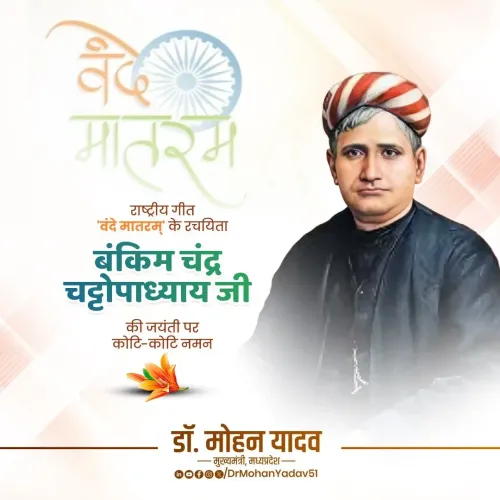
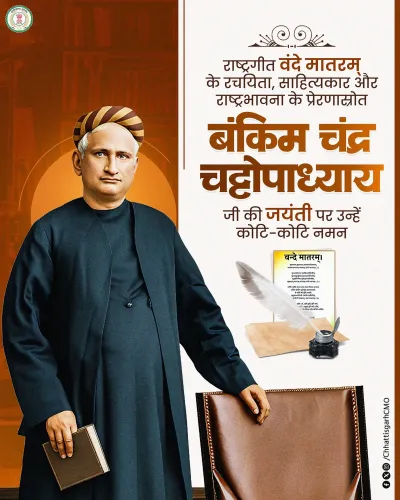
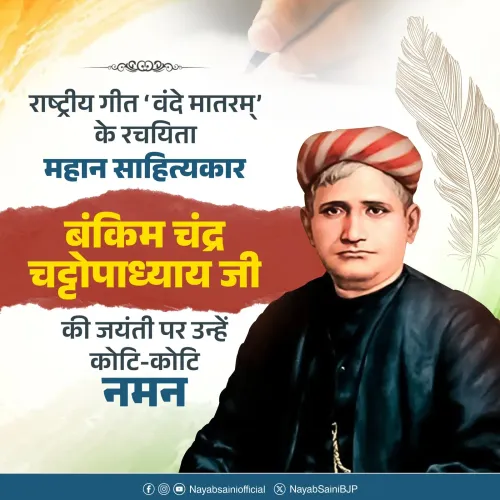
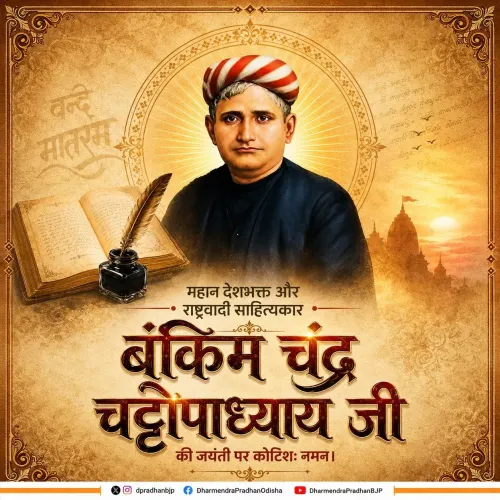
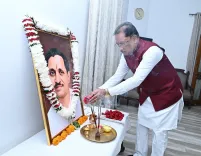
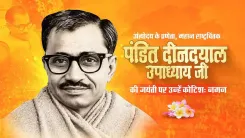
PM Modi pays tribute to Bankim Chandra Chattopadhyay on birth anniversary
Synopsis
On the 150th anniversary of Vande Mataram, Prime Minister Modi and Home Minister Shah paid tribute to Bankim Chandra Chattopadhyay — the civil servant-turned-novelist whose hymn outlasted empires. The timing is deliberate: in an era of heightened cultural nationalism, invoking Chattopadhyay is as much a political statement as a literary one.
Key Takeaways
PM Narendra Modi and Home Minister Amit Shah paid tribute to Bankim Chandra Chattopadhyay on his birth anniversary, 26 June .
Both leaders highlighted the 150th anniversary of Vande Mataram , composed by Chattopadhyay in his novel 'Anandamath' .
Chattopadhyay was born on 26 or 27 June 1838 near Naihati, Bengal , and served as a Deputy Magistrate in the Indian Civil Service from 1858 to 1891 .
His first major Bengali novel, 'Durgeshnandini' , is credited with establishing the Bengali novel as a literary form.
He passed away on 8 April 1894 in Calcutta , leaving behind a body of work that shaped modern Indian fiction and nationalist thought.
Prime Minister Narendra Modi on Friday, 26 June paid homage to Bankim Chandra Chattopadhyay — novelist, poet, essayist, and journalist — on his birth anniversary, calling the 19th-century literary giant a figure who 'awakened a spirit of patriotism and cultural pride among generations of Indians.' The tribute coincides with the 150th anniversary of Vande Mataram, the hymn Chattopadhyay composed and which became one of the most enduring rallying cries of India's freedom movement.
What Modi and Shah Said
Taking to social media platform X, Prime Minister Modi wrote: 'Tributes to the great Bankim Chandra Chattopadhyay on his Jayanti. A towering literary luminary, his writings awakened a spirit of patriotism and cultural pride among generations of Indians. His rich literary work continues to illuminate minds and strengthen our collective resolve towards nation-building.'
Modi also noted the significance of the timing: 'This is a time when we are marking the 150th anniversary of Vande Mataram. Through Vande Mataram, he gifted the freedom movement and our nation one of its most enduring inspirations.'
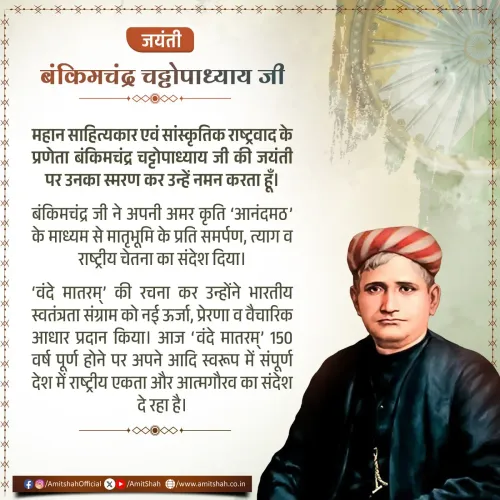
Union Home Minister Amit Shah also offered homage, stating: 'Through his immortal work 'Anandamath', he conveyed the message of dedication to the motherland, sacrifice, and national consciousness. With the composition of 'Vande Mataram', he gave the Indian freedom struggle new strength, inspiration, and an ideological foundation. Today, on the occasion of the 150th anniversary of 'Vande Mataram', its original form continues to carry the message of national unity and collective pride across the country.'
Who Was Bankim Chandra Chattopadhyay
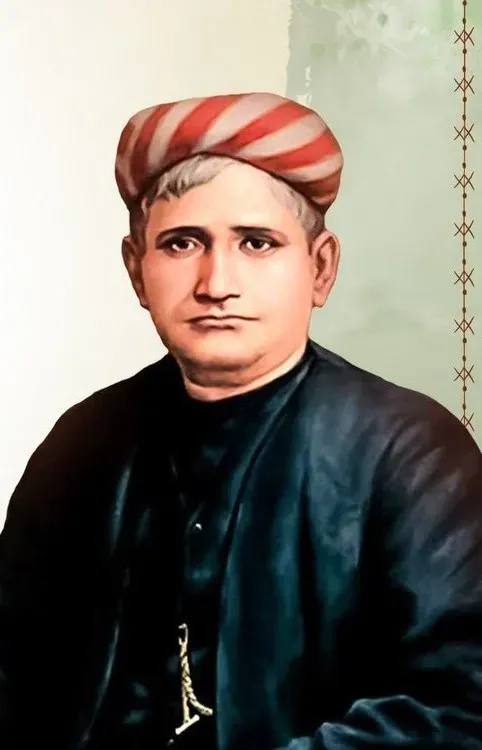
Bankim Chandra Chattopadhyay — also widely known as Chatterjee — was born on 26 or 27 June 1838 near Naihati in Bengal, into an orthodox Brahmin family. He was educated at Hooghly College, Presidency College in Calcutta, and the University of Calcutta, where he was among the institution's earliest graduates. From 1858 until his retirement in 1891, he served as a Deputy Magistrate in the Indian Civil Service. He passed away on 8 April 1894 in Calcutta.
Literary Legacy and Contributions
Chattopadhyay's early writings appeared in Sambad Prabhakar, and in 1858 he published a poetry collection titled 'Lalita O Manas'. He initially wrote in English — his novel 'Rajmohan's Wife' was serialised in the Indian Field in 1864 — before pivoting decisively to Bengali. His first major Bengali novel, 'Durgeshnandini', is credited with laying the foundation for the Bengali novel as a literary form. He followed it with 'Kapalkundala' in 1866 and 'Mrinalini' in 1869, the latter depicting themes from the period of early Muslim invasions in Bengal.
Scholars note that while his plots occasionally relied on coincidence or supernatural elements — partly a consequence of serial publication constraints — his influence on nationalist sentiment was profound. His portrayal of heroic figures stirred cultural pride well beyond Bengal's borders.
Vande Mataram and the Freedom Movement
Chattopadhyay's most lasting contribution to India's political consciousness is Vande Mataram, drawn from his novel 'Anandamath'. The hymn became a defining slogan of the independence struggle and was later adopted as India's national song. This year marks its 150th anniversary, lending additional resonance to the tributes offered by senior government leaders. Notably, both Modi and Shah chose to anchor their remembrances in the Vande Mataram milestone — a framing that underscores the hymn's continued symbolic weight in contemporary political discourse.
As India marks a century and a half of Vande Mataram, Chattopadhyay's dual identity — civil servant by day, revolutionary literary voice by night — remains a reminder that cultural nationalism in India has deep, complex roots that predate the formal independence movement by decades.
Point of View
Which tend to flatten him into a symbol of cultural nationalism. Mainstream coverage misses that Vande Mataram's journey from novel chapter to national song was contested and nonlinear — and that its invocation today carries very different freight than it did in 1875.
NationPress
25 Sept 2026
Frequently Asked Questions
Why is Bankim Chandra Chattopadhyay remembered on 26 June?
26 June is observed as the birth anniversary of Bankim Chandra Chattopadhyay, who was born on 26 or 27 June 1838 near Naihati in Bengal. He is celebrated as one of the most influential figures in Bengali literature and Indian cultural nationalism.
What is the significance of Vande Mataram's 150th anniversary?
Vande Mataram, composed by Bankim Chandra Chattopadhyay and drawn from his novel 'Anandamath', marks its 150th anniversary in 2025. The hymn became a defining slogan of India's freedom movement and is now the country's national song, making the milestone significant for both literary and national history.
What were Bankim Chandra Chattopadhyay's major literary works?
His major works include 'Durgeshnandini' — his first significant Bengali novel — 'Kapalkundala' (1866), 'Mrinalini' (1869), and 'Anandamath', which contains Vande Mataram. He also wrote 'Rajmohan's Wife' in English, serialised in 1864.
What role did Bankim Chandra Chattopadhyay play in India's freedom movement?
Chattopadhyay's composition of Vande Mataram gave the Indian independence movement one of its most powerful ideological and emotional rallying cries. According to Home Minister Amit Shah, the hymn provided 'new strength, inspiration, and an ideological foundation' to the freedom struggle.
Who was Bankim Chandra Chattopadhyay in terms of his career and education?
Chattopadhyay was educated at Hooghly College, Presidency College in Calcutta, and the University of Calcutta, where he was among the earliest graduates. He served as a Deputy Magistrate in the Indian Civil Service from 1858 until his retirement in 1891, passing away on 8 April 1894 in Calcutta.