Pakistan army sells stability to Washington, depth to Beijing: Analysis
Synopsis
A Parrhesia News analysis by Francesca Marino lays bare Pakistan's civil-military compact: prime ministers are tolerated for absorbing blame, not exercising power. Imran Khan's imprisonment, the analysis argues, is not just punitive — it is a signal sent simultaneously to domestic challengers and foreign patrons that Rawalpindi, not Islamabad, holds the real veto.
Key Takeaways
Imran Khan has been imprisoned since August 2023 ; his family and lawyers describe conditions as solitary confinement, with court-ordered access reportedly denied.
Italian journalist Francesca Marino , writing in Parrhesia News , argues Khan's detention serves both domestic control and international signalling functions.
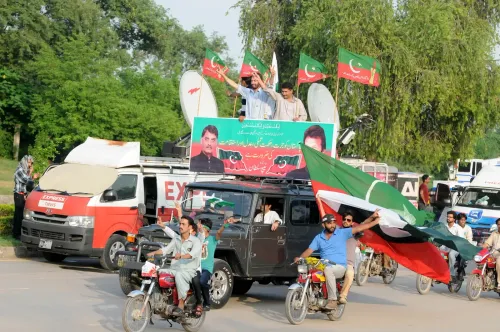
PTI -backed candidates outperformed rivals in the 2024 Pakistani elections despite repression, arrests, and loss of electoral symbol.
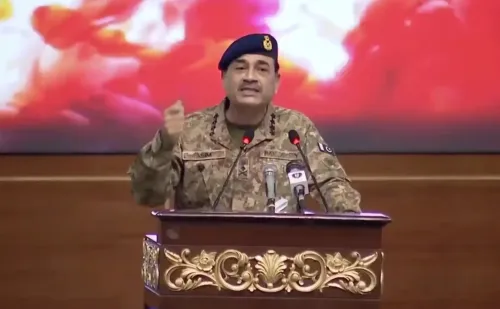
Army Chief Asim Munir was elevated to Field Marshal after the elections — characterised in the analysis as the constitutionalisation of military rule.
The analysis contends Pakistan's army sells stability to Washington , strategic depth to Beijing , and counterterrorism utility to Europe as part of a geopolitical rent-seeking model.
Khan's ouster came via a no-confidence vote in 2022 ; PTI has termed all subsequent convictions politically motivated.
A detailed analysis published in Parrhesia News argues that Pakistan's military establishment operates a sophisticated geopolitical rent-seeking model — selling stability narratives to Washington, strategic depth to Beijing, Islamic military utility to Riyadh, and counterterrorism optics to Europe — while maintaining domestic control through the continued imprisonment of former Prime Minister Imran Khan.
The Logic Behind Khan's Imprisonment
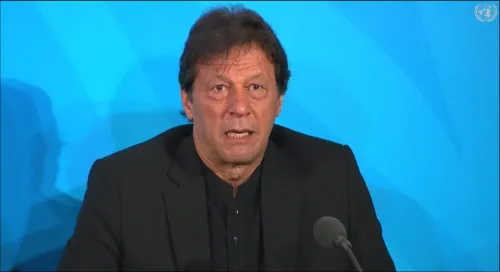
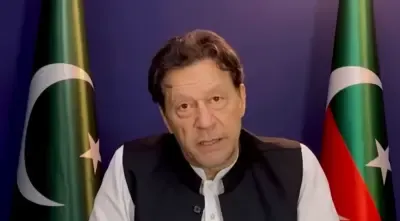
Italian journalist Francesca Marino, writing in Parrhesia News, argues that Khan's incarceration since August 2023 serves a dual function. Domestically, it has, according to her analysis, 'decapitated the only political force capable of mobilising millions against Rawalpindi.' Internationally, it reportedly reassured Pakistan's strategic patrons that institutional control had been restored.
Khan's family, party, and lawyers have described his detention conditions as solitary confinement, with access to relatives, legal counsel, and medical care reportedly restricted, interrupted, or denied despite court orders. His party, Pakistan Tehreek-e-Insaf (PTI), has consistently termed the convictions against him politically motivated.
'His isolation is not only punitive. It is pedagogical. It teaches Pakistan what happens when popularity challenges the barracks. It teaches judges how far their orders matter. It teaches parties how quickly an election symbol, a candidate list, a mandate and a leader can be dismantled. It teaches foreign capitals that the army remains in control,' Marino wrote.
How the Civil-Military Arrangement Works
Marino's analysis contends that in Pakistan, the civilian government performs sovereignty while the army exercises it — a distinction the international community has, according to her, chosen to tolerate. Khan's original rise to power was itself facilitated by the same establishment he later clashed with. The arrangement broke down, the analysis argues, when Khan became 'too popular, too erratic, too convinced of his mandate, and too dangerous for a system where Prime Ministers are chosen for absorbing responsibility instead of governance.'
With Khan behind bars, the report notes, the military was able to engage directly with Washington, Riyadh, Beijing, and Gulf capitals without what Marino describes as 'the inconvenience of an elected civilian leader imagining he had a veto.'
The 2024 Elections and Constitutionalised Military Rule
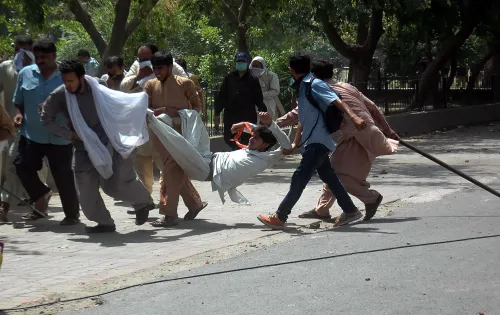
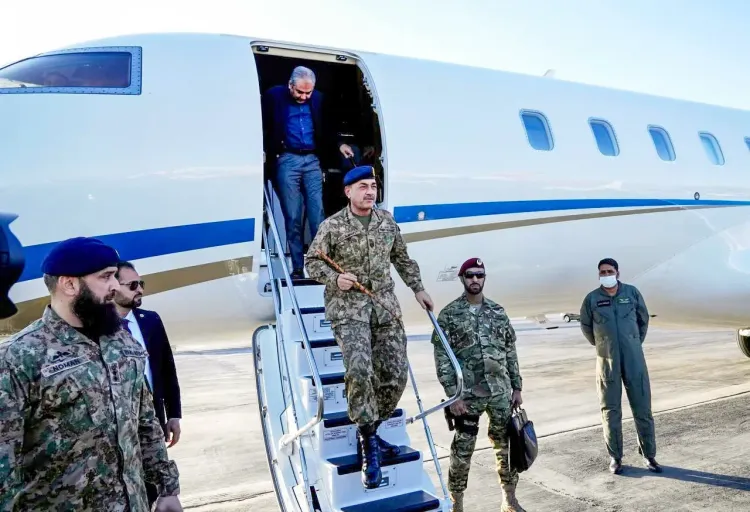
The 2024 Pakistani general elections sharpened the legitimacy crisis, according to the analysis. PTI-backed candidates reportedly outperformed rivals despite facing repression, mass arrests, and the stripping of the party's electoral symbol. In the aftermath, Army Chief Asim Munir was elevated to the rank of Field Marshal — a move the report characterises as the constitutionalisation of military rule.
Marino argues that Khan's release would do more than free a former prime minister. 'It would reopen the whole chain of events: the cypher, the vote of no confidence, the military's role, Washington's pressure, the election manipulation, the judiciary's collapse, the transformation of Munir from army chief into constitutional sovereign. Khan is no longer only a politician. He has become evidence,' she wrote.
Pakistan's Geopolitical Bargain
The analysis frames Pakistan's internal repression as inseparable from its external transactions. 'The army sells stability to Washington, strategic depth to Beijing, Islamic military usefulness to Riyadh, counterterrorism theatre to Europe, and nuclear responsibility to everyone frightened enough to pay attention,' Marino wrote.
This geopolitical bargain, she argues, rests on a set of implicit rules: that Pakistan may hold elections as long as the 'wrong winner does not win,' invoke sovereignty as long as it belongs to Rawalpindi, and imprison its most popular politician while insisting the rule of law is intact. Khan has remained in custody since August 2023, following his ouster from office in 2022 via a no-confidence vote, and has since faced multiple legal cases.
Whether international pressure — particularly from Washington — will shift the calculus around Khan's detention remains an open question as Pakistan navigates a fragile economic recovery and continued dependence on external financial support.
Point of View
Beijing, and Riyadh each benefit from the arrangement and have limited incentive to disrupt it. Khan's imprisonment is therefore less a Pakistani anomaly and more the system functioning as designed — with foreign indulgence baked in. The real accountability gap is not in Rawalpindi but in the capitals that fund, arm, and validate it.
NationPress
25 Sept 2026
Frequently Asked Questions
Why is Imran Khan still in prison?
Imran Khan has been imprisoned since August 2023 following convictions that his party, PTI, has termed politically motivated. According to the Parrhesia News analysis, his continued detention serves to neutralise the only political force capable of mass mobilisation against Pakistan's military establishment, while also signalling to foreign partners that institutional control has been restored.
What is Pakistan's army's geopolitical rent-seeking model?
The analysis by Francesca Marino argues that Pakistan's army sustains itself by selling different strategic commodities to different powers: stability narratives to Washington, strategic depth to Beijing, Islamic military utility to Riyadh, and counterterrorism credentials to Europe. This external revenue model, she contends, is what civilian governments are not permitted to interfere with.
What happened in Pakistan's 2024 general elections?
PTI-backed candidates outperformed rivals in the February 2024 elections despite facing mass arrests, the removal of their electoral symbol, and widespread repression. Following the elections, Army Chief Asim Munir was elevated to Field Marshal — a move the Parrhesia News analysis describes as the formal constitutionalisation of military authority.
Who is Francesca Marino and what is Parrhesia News?
Francesca Marino is an Italian journalist who has written extensively on South Asian politics. Parrhesia News is the publication in which her analysis of Pakistan's civil-military compact and Imran Khan's imprisonment appeared. The analysis draws on reported conditions of Khan's detention and the broader pattern of Pakistan's strategic relationships.
What would Imran Khan's release mean for Pakistan?
According to Marino's analysis, Khan's release would do far more than free a former prime minister — it would reopen scrutiny of the no-confidence vote, alleged election manipulation, the role of the judiciary, and the military's transformation under Asim Munir. The analysis argues Khan has effectively 'become evidence' in a chain of events the establishment has strong incentives to keep buried.