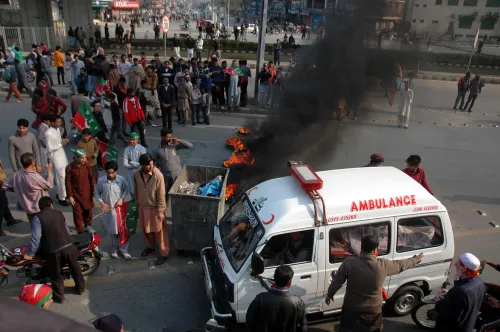
PTI's September 27 protest to expose Pakistan's civilian-military fault lines
Synopsis
PTI's September 27 protest is more than a demand for Imran Khan's release — it is an involuntary mirror held up to Pakistan's unresolved crisis of authority. With Asim Munir now both Field Marshal and Chief of Defence Forces, and Khan's sisters detained ahead of the march, the structural fault line between elected civilian power and military establishment has rarely looked more exposed.
Key Takeaways
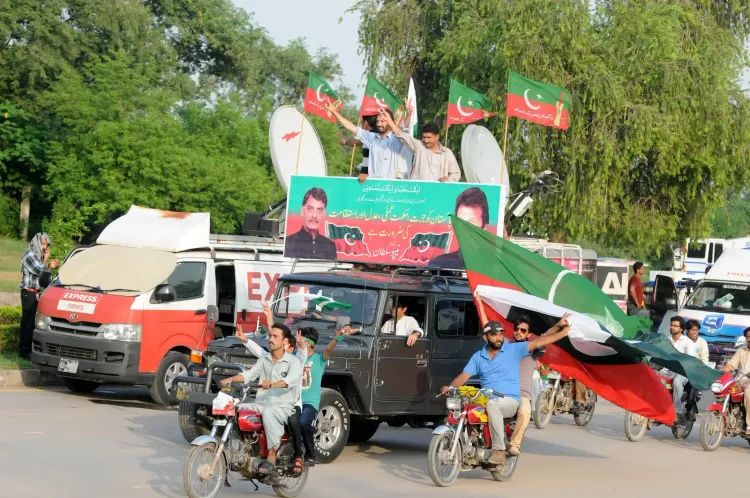
PTI has planned a nationwide protest and long march on 27 September 2026 to demand the release of imprisoned founder Imran Khan and restore constitutional order.
Analysts argue the crisis reflects a 50-year-old unresolved question in Pakistan: whether legitimacy rests with elected institutions or the military establishment.
Imran Khan 's sisters — Uzma Khan , Noreen Niazi , and Aleema Khan — have been detained for 30 days each under the Punjab Maintenance of Public Order Ordinance, 1960 .
Army chief General Asim Munir was promoted to Field Marshal in May 2025 and also assumed the new role of Chief of Defence Forces under the 27th Constitutional Amendment in November 2025 .
PTI leaders described Imran Khan as a 'symbol of national unity' and alleged that Pakistan's constitutional institutions and electoral process have been systematically weakened.
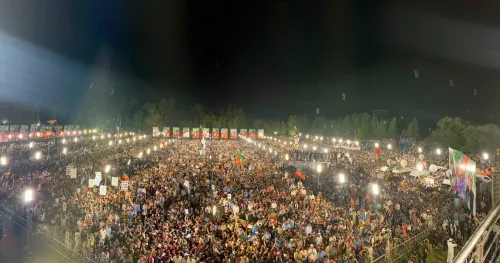
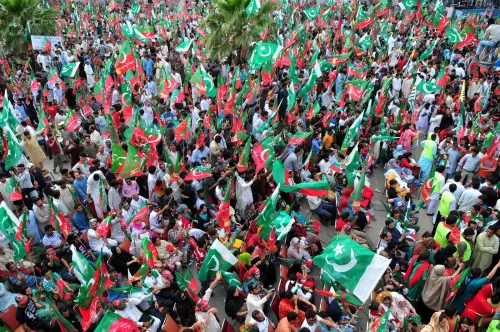
Pakistan Tehreek-e-Insaf (PTI)'s planned nationwide protest on 27 September 2026 is set to once again lay bare one of the Pakistani state's most enduring structural failures — its inability to establish a political order in which civilian authorities govern without decisive military intervention or the constant shadow of the establishment, according to a detailed analysis published by Pressenza International Press Agency.
The Core Contradiction PTI Is Walking Into
Nearly 50 years after the 1977 military coup, Pakistan has still not resolved the foundational question of sovereign authority: whether legitimacy flows from electoral institutions or from a military establishment that has long operated well beyond its constitutionally defined defence role. Social policy specialist Chrysoula Asteriadou, writing for Pressenza, argued that the PTI protest — organised to demand the release of imprisoned party founder Imran Khan and to defend constitutional order — crystallises this unresolved tension rather than transcends it.
Imran Khan's own political trajectory, critics note, contains some of the very contradictions he now publicly opposes. After becoming Pakistan's Prime Minister in 2018, Khan faced persistent allegations from analysts and political opponents that his electoral rise was facilitated by the military establishment — a claim he and PTI have consistently rejected. His government also drew criticism over reported pressure on journalists, the use of cybercrime legislation against dissenting voices, and alleged intimidation of critical media.
A Symptom, Not Simply a Cause
Asteriadou's analysis cautions against reducing Pakistan's current crisis to a binary of democratic politician versus authoritarian general. 'None of this justifies any violation of Khan's rights, nor does it make questions surrounding the legality and conditions of his prolonged imprisonment irrelevant. It does mean, however, that Pakistan's present crisis cannot be reduced to a confrontation between a democratic politician and an authoritarian general. The Khan case is better understood as a symptom of a political system in which the relationship between elected authority and the military establishment has remained chronically unstable,' the report stated.
The analysis underscores that the fallout between Khan and the military leadership does not erase the political history of his rise — it instead illustrates Pakistan's broader pattern, in which civilian and military elites coexist when their interests align, and clash when the balance of power shifts.
Asim Munir and the Military's Deepening Institutional Grip
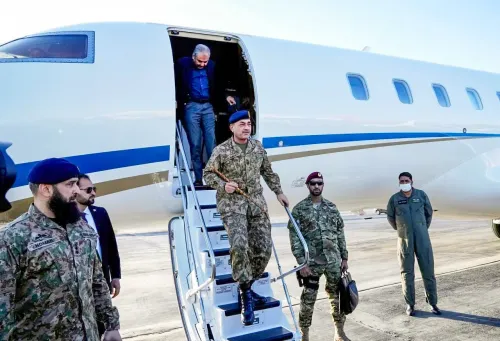
The structural problem has sharpened under Pakistan's current army chief, General Asim Munir. In May 2025, the Pakistani government promoted Munir to the rank of Field Marshal, making him only the second officer in the country's history to hold that position after Ayub Khan. In November 2025, through the 27th Constitutional Amendment, Pakistan restructured its military command and created the new position of Chief of Defence Forces, a role assumed by Munir alongside his existing position as army chief — further consolidating institutional authority.
Imran Khan's Sisters Detained Ahead of Protest
In the days leading up to the 27 September demonstration, authorities moved to curtail PTI-linked activity. Imran Khan's sisters — Uzma Khan, Noreen Niazi, and Aleema Khan — were detained following orders from the Lahore Deputy Commissioner. The DC office ordered the detention of Uzma Khan and Noreen Niazi for 30 days under the Punjab Maintenance of Public Order Ordinance, 1960, citing grounds of being 'prejudicial to the public safety and maintenance of public order.' Aleema Khan was similarly detained for 30 days under comparable orders, according to Pakistan-based daily Dawn.
What PTI Says It Is Fighting For
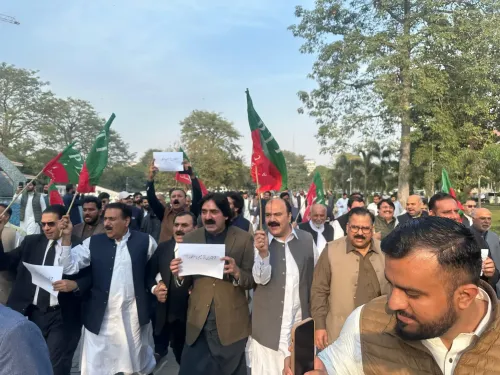
At a press conference on 13 September, PTI leaders including Haris Touro, Shahid Anwar, Riazur Rehman, Insaf Lawyers Forum president advocate Sajjad Ahmed, and Bakhtshad Khan framed the protest as far broader than a single leader's release. They stated that the march on 27 September is aimed at restoring democracy, ensuring the supremacy of the constitution, and upholding the rule of law. They described Imran Khan as 'a symbol of national unity' and claimed that constitutional and legal institutions have been weakened and the electoral process undermined.
PTI leaders also alleged that members of the ruling elite had privately acknowledged that the existing system had failed, and that Pakistan faced severe political and economic challenges. Whether the 27 September protest produces any tangible shift in that order — or is absorbed, as previous ones have been, into the ongoing civilian-military impasse — remains to be seen.
Point of View
And the detention of Imran Khan's sisters ahead of it, follows a playbook Pakistan's establishment has used repeatedly — and the pattern matters more than the event itself. The deeper irony is that Khan's movement is now championing the very constitutional norms his own government was accused of eroding. The 27th Constitutional Amendment, which gave Asim Munir simultaneous command as Field Marshal and Chief of Defence Forces, represents the most significant formal consolidation of military authority in decades — yet it has attracted far less international attention than the protests outside. Until Pakistan's political class can break the cycle of seeking military patronage on the way up and then demanding constitutional protection on the way down, each round of this conflict will look like the last.
NationPress
21 Sept 2026
Frequently Asked Questions
What is the PTI protest on September 27 about?
The PTI protest on 27 September 2026 is a nationwide march organised to demand the release of imprisoned party founder Imran Khan, restore democratic norms, and assert the supremacy of the constitution and rule of law in Pakistan. PTI leaders announced it on 13 September, framing it as a response to what they described as a severe political and economic crisis.
Why have Imran Khan's sisters been detained?
Uzma Khan, Noreen Niazi, and Aleema Khan — Imran Khan's sisters — were detained for 30 days each under the Punjab Maintenance of Public Order Ordinance, 1960, on orders from the Lahore Deputy Commissioner. Authorities cited grounds of being 'prejudicial to the public safety and maintenance of public order,' with the detentions occurring in the days leading up to the PTI protest.
What structural weakness does the PTI protest expose in Pakistan?
According to analysts, the protest highlights Pakistan's chronic inability to establish a political system in which civilian authority operates without decisive military intervention. Nearly 50 years after the 1977 coup, the country has not resolved who ultimately holds sovereign power — elected institutions or the military establishment.
Who is Asim Munir and why is he significant to this crisis?
Asim Munir is Pakistan's army chief who, in May 2025, was promoted to the rank of Field Marshal — only the second officer in Pakistan's history to hold that rank after Ayub Khan. In November 2025, a 27th Constitutional Amendment created the position of Chief of Defence Forces, also assumed by Munir, further consolidating military institutional authority.
Does Imran Khan's own history complicate PTI's democratic credentials?
Analysts and political opponents have long argued that Khan's rise to the prime ministership in 2018 was facilitated by support from the military establishment — a claim PTI rejects. His government also faced criticism over reported pressure on media organisations and the use of cybercrime laws against critics. Researchers describe his current case as a symptom of a political system chronically unable to separate civilian governance from military influence, rather than a straightforward story of democratic persecution.