Kishan Reddy at Mining Ministers Meet: Minerals Now a Security Issue
Synopsis
Union Minister G. Kishan Reddy addressed the 4th Conference of Mining Ministers in Benaulim, Goa, announcing India's coal output has crossed 1 billion tonnes, minerals production value has quadrupled to ₹1.89 lakh crore, and urging states to treat mining reforms as a National Mission for strategic self-reliance.
Key Takeaways
India's domestic coal production has crossed the 1 billion tonnes milestone for the first time.
The production value of major minerals reached ₹1.89 lakh crore in 2025–26 , more than four times the FY 2014–15 level.
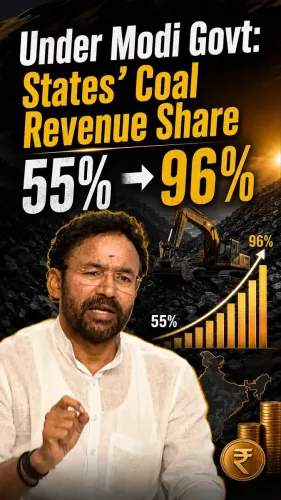
States' revenue from non-coal mining rose from around ₹13,000 crore to nearly ₹70,000 crore .
Over ₹1.36 lakh crore has been collected under the District Mineral Foundation for mining-affected communities.
States account for over 90 percent of mining revenue , making their role central to reform delivery.
Reddy urged states to expedite mine operationalisation, launch new block auctions, expand private exploration, and ensure scientific mine closure.
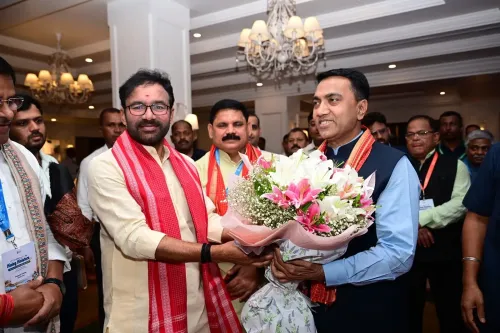
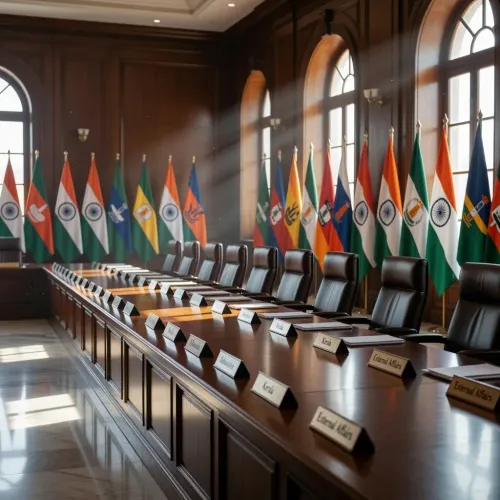
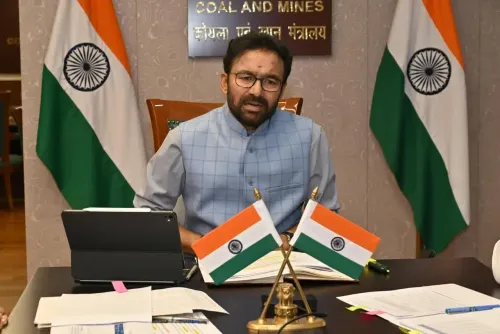
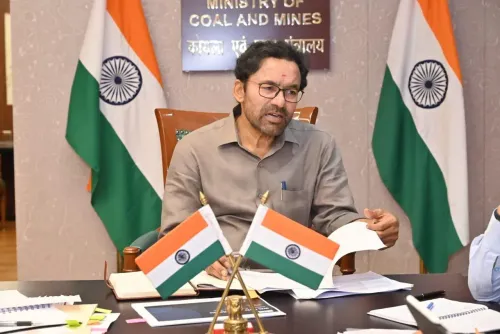
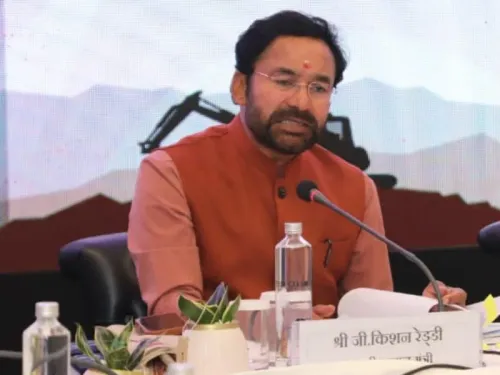
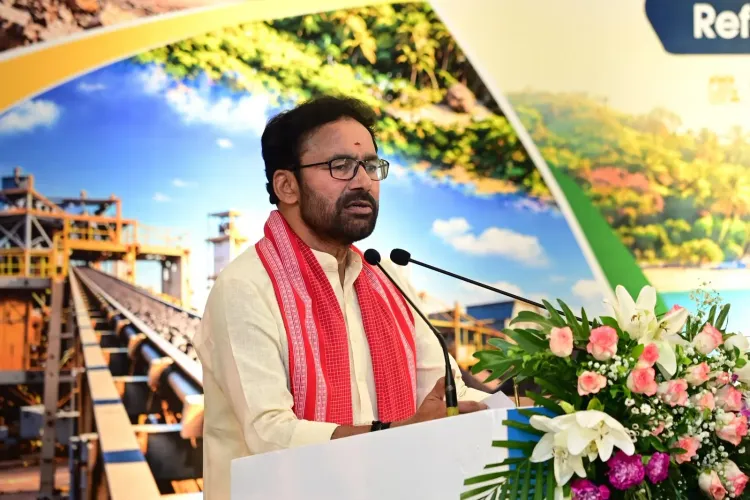
Minerals are no longer just commodities — they are a matter of national survival. That was the blunt message Union Coal and Mines Minister G. Kishan Reddy delivered on Thursday, November 5, 2026, as he addressed the 4th Conference of Mining Ministers on Reforms in the Mines and Coal Sector at Benaulim, Goa, laying out a sweeping case for why India must treat its mineral wealth as the backbone of economic and strategic security.
A billion tonnes of coal — and a quadrupled minerals economy
The minister opened with a headline that would have seemed ambitious just a decade ago: India's domestic coal production has crossed the historic 1 billion tonnes mark. The numbers behind that milestone are even more striking. The production value of major minerals reached ₹1.89 lakh crore in 2025–26 — more than four times the level recorded in FY 2014–15. States' revenue from non-coal mining has surged from around ₹13,000 crore to nearly ₹70,000 crore over the same period.
Perhaps the most socially significant figure: over ₹1.36 lakh crore collected under the District Mineral Foundation (DMF), the statutory fund created to channel mining royalties into development and welfare for communities living closest to extraction zones. That sum represents a structural shift — mineral wealth no longer flows past the people sitting on top of it.
From extraction to strategic doctrine: the Aatmanirbharta pivot
Reddy's core argument was explicitly doctrinal. He reiterated that Prime Minister Narendra Modi's vision of Aatmanirbharta (self-reliance) has become 'more important than ever', and pushed hard for translating that vision into action — accelerating reforms, reducing import dependence, and building a globally competitive mining sector. The framing is deliberate: critical minerals are now a geopolitical asset, and India's ability to process and produce them domestically is an index of strategic autonomy.
The Aatmanirbhar Bharat Abhiyan, launched in 2020, laid the ideological groundwork. The Mines and Minerals (Development and Regulation) Amendment Act of 2021 followed with structural teeth — enabling private exploration agencies and faster block auctions. This conference is the latest staging post in that reform arc.
States hold 90% of the revenue — and the responsibility
With state governments accounting for over 90 percent of mining revenue, Reddy's message to assembled state ministers was direct: expedite the operationalisation of auctioned mines, accelerate auctions of new mineral blocks, expand exploration through Notified Private Exploration Agencies, and ensure scientific mine closure and rehabilitation. No vague encouragement — a specific to-do list.
The conference brought together a cross-section of federal India. Goa Chief Minister Pramod Sawant hosted; Union Minister of State for Coal and Mines Satish Chandra Dubey was present alongside ministers from Assam (Jayanta Malla Baruah), Bihar (Dr. Pramod Kumar), Gujarat (Arjun Modhwadia), Mizoram (Pu F. Rodingliana), Punjab (Barinder Kumar Goyal) and Sikkim (Pintso Namgyal Lepcha), plus representatives from the Meghalaya and Chhattisgarh Mineral Development Corporations.
Cooperative Federalism as the delivery mechanism
Reddy closed with a call that framed intergovernmental coordination as the only path to execution: treat mining reforms as a National Mission, with time-bound outcomes and institutional coordination between Centre and states. The phrase he reached for — 'Cooperative Federalism' — has been a Modi-era watchword, but on minerals it carries concrete weight. No Centre-driven auction calendar succeeds if state machinery stalls the actual operationalisation.
The watch-item now is whether state governments move on the minister's specific asks in the months ahead — particularly on new block auctions and private exploration mandates. India's mineral ambitions are well articulated. The gap between articulation and excavation is where the next chapter will be written.
Point of View
Reddy is signalling that the Centre views import dependence on minerals as a vulnerability on par with energy dependence. The emphasis on Cooperative Federalism as the delivery mechanism is also telling: the Centre can architect reforms and set auction calendars, but execution lives with state governments, whose 90-percent share of mining revenue gives them enormous leverage — and accountability. The real test of the conference's ambitions will come in state-level auction timelines and the pace at which auctioned-but-idle mines are brought into production.
NationPress
5 Nov 2026
Frequently Asked Questions
What is the 4th Conference of Mining Ministers about?
It is a national conference convened by the Union Ministry of Coal and Mines to review reforms in the mines and coal sector, bringing together state mining ministers and senior officials to align on targets for auctions, exploration, and production.
Has India really produced 1 billion tonnes of coal?
Union Minister G. Kishan Reddy stated at the Benaulim conference that India's domestic coal production has crossed the historic 1 billion tonnes mark, a figure the Centre has been targeting since the production augmentation push launched in 2020–21.
What is the District Mineral Foundation and how much has it collected?
The District Mineral Foundation (DMF) is a statutory fund into which a portion of mining royalties is deposited to finance development and welfare for communities in mining-affected districts. Reddy stated over ₹1.36 lakh crore has been collected under it.
What is a Notified Private Exploration Agency in India's mining sector?
Notified Private Exploration Agencies are private entities authorised under India's amended mining law to conduct mineral exploration on behalf of the government, expanding the exploration pipeline beyond public-sector capacity.
Why did Kishan Reddy say minerals are a matter of strategic security?
Reddy argued that critical minerals underpin defence, clean energy, and advanced manufacturing supply chains; dependence on imports for these materials creates strategic vulnerabilities, making domestic production and processing a national security imperative.