Kishan Reddy to Address Mining Ministers' Conference in Goa
Synopsis
Union Coal and Mines Minister G. Kishan Reddy will address the 4th Conference of Mining Ministers in Benaulim, Goa on 5–6 November 2026, bringing state ministers together for deliberations on mining governance reforms, sector modernisation, and production targets.
Key Takeaways
Union Coal and Mines Minister G.
Kishan Reddy will address the 4th Conference of Mining Ministers at Benaulim, Goa on 5–6 November 2026 .
The conference is a joint platform of the Ministry of Coal and the Ministry of Mines , bringing state governments into direct dialogue with the Centre.
Key agenda items include key reforms, stronger governance, and building a future-ready coal and mining sector.
India's commercial coal mining was opened to private players under the Mineral Laws (Amendment) Ordinance, 2020 .
The Mines and Minerals (Development and Regulation) Amendment Act, 2021 further streamlined mine auctions and production frameworks.
Observers will watch for joint resolutions or follow-up policy directives on mine auctions, exploration, and production targets.
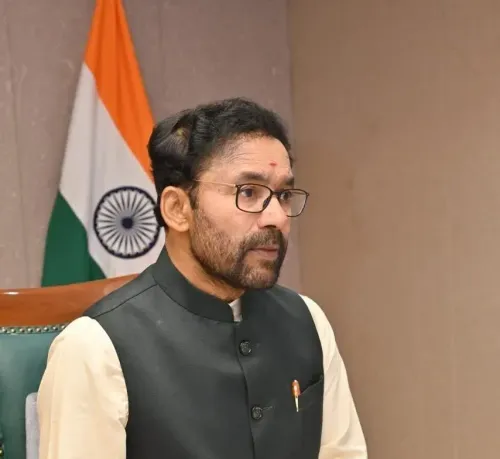
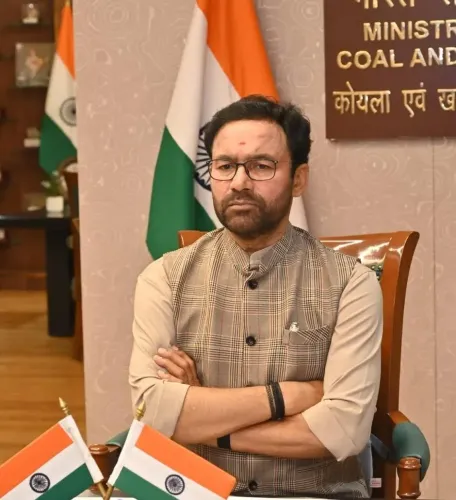
When India's mining future gets debated, the room that matters is the one where the Centre and the states sit across the same table — and Union Coal and Mines Minister G. Kishan Reddy is set to convene exactly that gathering at Benaulim, Goa on 5–6 November 2026, as the host of the 4th Conference of Mining Ministers.
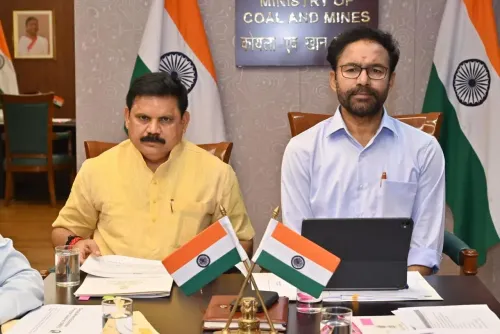
Reddy posted his anticipation on X, writing: 'Looking forward to addressing the 4th Conference of Mining Ministers in Benaulim, Goa, bringing States together for constructive deliberations on key reforms, stronger governance, and a future-ready mining and coal sector.' The two-day gathering will draw state mining ministers and officials under the joint aegis of the Ministry of Coal and the Ministry of Mines.
Why Benaulim, and why now
India's mineral sector has been in accelerated reform mode since the landmark Mineral Laws (Amendment) Ordinance of 2020 cracked open commercial coal mining to private players — a structural shift designed to curb the country's stubborn import bill. That was followed by the Mines and Minerals (Development and Regulation) Amendment Act, 2021, which streamlined mine auctions and pushed mineral production higher up the national agenda.
Successive conferences of mining ministers have served as the principal coordination mechanism between New Delhi's policy ambitions and state-level ground realities — because mineral leases, exploration rights, and enforcement ultimately run through state governments. What gets agreed in a conference hall in Goa tends to shape what gets implemented in mining belts from Jharkhand to Rajasthan.
The reform agenda on the table
Reddy's framing — 'stronger governance' and a 'future-ready' sector — signals that the deliberations will likely centre on tightening regulatory efficiency, accelerating pending mine auctions, and aligning state production targets with national output goals. Reducing India's dependence on imported coking coal and critical minerals has been a consistent pressure point, one that the Centre has repeatedly asked states to address through faster clearances and exploration push.
Industry and state governments alike will be watching for any joint resolutions or follow-up directives that emerge after the two-day session — the kind of political signal that moves project timelines in a sector where delay is measured in billions of rupees.
India's mineral wealth is vast; whether the governance architecture can keep pace with its ambition is the question Benaulim will spend two days trying to answer.
Point of View
State-level execution. Reddy's emphasis on 'governance' alongside reform signals an acknowledgment that the bottleneck in India's mineral sector now lies less in legislation and more in administrative follow-through at the state level. With critical minerals and energy transition minerals climbing the geopolitical agenda, the pressure on this conference to produce actionable outcomes — not just communiqués — has never been higher. The choice of Goa as a neutral, non-mining-state venue also subtly signals an intent to keep deliberations collaborative rather than adversarial.
NationPress
4 Nov 2026
Frequently Asked Questions
What is the 4th Conference of Mining Ministers India 2026?
It is a two-day national conference held on 5–6 November 2026 at Benaulim, Goa , convened by the Union Ministries of Coal and Mines to bring state mining ministers together for deliberations on sector reforms, governance, and production goals.
Who is G. Kishan Reddy?
G. Kishan Reddy is India's Union Minister of Coal and Mines, and also serves as the BJP's Telangana state president. He will address the conference as the host minister.
What reforms will be discussed at the Mining Ministers' Conference in Goa?
The conference is expected to cover stronger regulatory governance, acceleration of mine auctions, alignment of state production targets with national goals, and implementation of reforms introduced since the 2020 Mineral Laws (Amendment) Ordinance .
Why do India's mining reforms require state-level coordination?
In India, mineral leases, exploration rights, and enforcement mechanisms are administered at the state level, so national policy goals can only be realised through active coordination between the Centre and individual state governments.
What was the Mines and Minerals Amendment Act 2021?
The Mines and Minerals (Development and Regulation) Amendment Act, 2021 was a central legislation that expedited mine auctions, expanded the categories of minerals under auction, and aimed to boost domestic mineral production and reduce import dependence.