Sea Vigil 2026: NCC cadets, Bharat Scouts briefed at INS Netaji Subhas, Kolkata
Synopsis
India's fifth edition of Exercise Sea Vigil is set for 18–19 November 2026, covering 11,098 km of coastline and 2.4 million sq km of EEZ. A fresh sensitisation drive at INS Netaji Subhas in Kolkata signals the Navy's intent to embed civilian youth — NCC cadets, Scouts, fishermen — directly into the coastal security apparatus, building on 2024's live simulations at the Victoria Memorial and Garden Reach Shipbuilders.
Key Takeaways
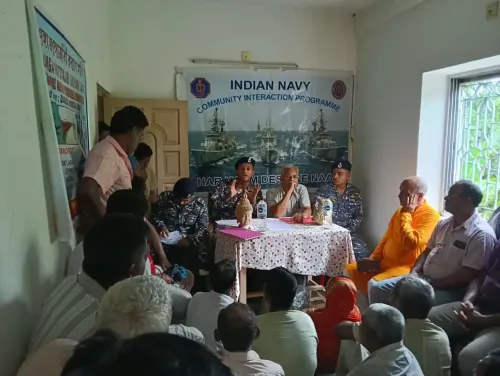
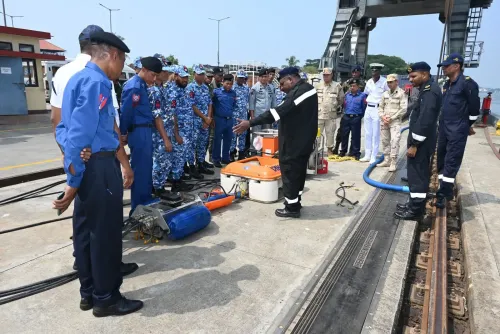
NOIC West Bengal held a sensitisation and familiarisation visit for NCC cadets and Bharat Scouts at INS Netaji Subhas, Kolkata on 4 November 2026 .
Exercise Sea Vigil 2026 is scheduled for 18–19 November 2026 — the fifth edition of the biennial drill.
The exercise spans India's entire 11,098 km coastline and 2.4 million sq km EEZ, involving six central ministries and 21 agencies .
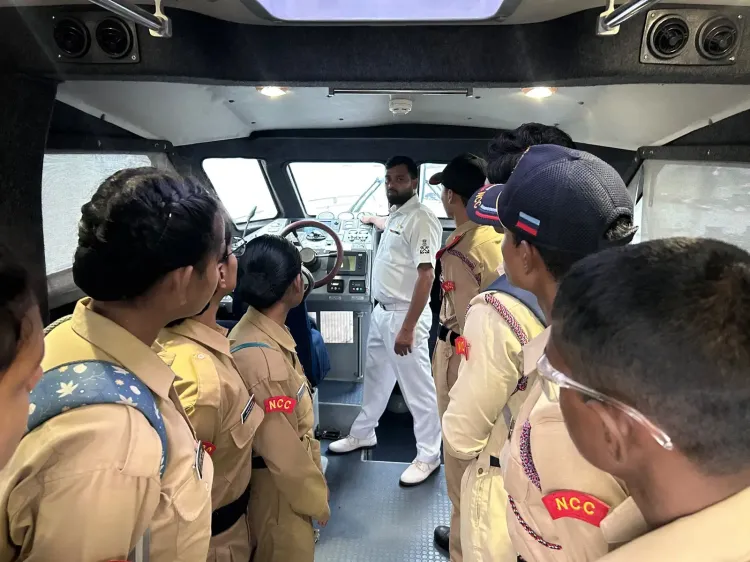
Cadets received hands-on exposure to Fast Interceptor Crafts (FICs) and small arms used in maritime defence.
The Sundarbans region gives West Bengal outsized importance in coastal security planning.
The Indian Navy has led maritime security coordination since the 26/11 Mumbai attacks , with Sea Vigil serving as the primary inter-agency validation drill.
As part of the upcoming biennial coastal defence exercise Sea Vigil 2026, the Naval Officer-in-Charge (NOIC), West Bengal, organised a sensitisation campaign and familiarisation visit for NCC cadets and Bharat Scouts at INS Netaji Subhas in Kolkata on Wednesday, 4 November 2026. The initiative underscores the Indian Navy's deliberate push to anchor youth engagement as a key result area of this year's exercise.
What the Cadets Saw and Learned
During the visit, participants were briefed on the core functions of the Indian Navy, the Examination Services, and the War Watching Organisation (WWO). The session went beyond classroom instruction — cadets were given operational exposure to Fast Interceptor Crafts (FICs) deployed for riverine patrolling across West Bengal waterways. They also received on-site handling familiarisation with small arms used in maritime defence, giving them a tangible sense of frontline coastal security operations.
Exercise Sea Vigil 2026: Scope and Scale
The high-intensity national exercise is scheduled for 18–19 November 2026 and will be the fifth edition of the drill, following its last run in November 2024. The exercise spans the entire 11,098 km coastline of India and covers the country's Exclusive Economic Zone (EEZ) of 2.4 million square kilometres. The 2024 edition involved six central ministries, 21 central and state agencies, and drew participation from both the Indian Army and the Indian Air Force — both are expected to participate again this year.
The drill is structured around Red and Blue teams: Red teams simulate attackers, while other agencies defend vital assets including ports, oil rigs, vulnerable areas and points, and cable landing stations. During the 2024 edition, simulated scenarios included dud Improvised Explosive Devices (IEDs) planted within the Victoria Memorial campus in Kolkata, 'armed' infiltrators entering a port facility, and a waterborne 'strike' attempted against defence shipbuilder Garden Reach Shipbuilders and Engineers Ltd.
Why West Bengal Matters to Maritime Security
West Bengal holds particular strategic significance for security planners, owing to the vast expanse of the Sundarbans — the world's largest mangrove forest and delta — which poses formidable monitoring challenges. The region's dense and difficult terrain makes it a priority zone for coastal surveillance exercises. The involvement of NCC cadets, NSS volunteers, Bharat Scouts and Guides, and local fishing communities along the coastline is designed to build a grassroots culture of maritime vigilance that complements formal security deployments.
Post-26/11 Mandate and Coordination Goals
The Indian Navy has been designated the lead agency for maritime security in the aftermath of the 26/11 Mumbai attacks. Exercise Sea Vigil is central to fulfilling that mandate — validating Standard Operating Procedures (SOPs), testing intelligence-sharing mechanisms, and stress-testing inter-agency coordination across central and state security architectures. Notably, it is designed to be as close to real-world conditions as operationally possible, with live-scenario simulations at critical infrastructure sites.
What Comes Next
With the main exercise now less than a fortnight away, sensitisation events such as Wednesday's visit at INS Netaji Subhas are expected to continue across coastal states. The focus will remain on integrating non-military stakeholders into the security framework, ensuring that India's expansive maritime frontier is watched not just by armed forces, but by an informed and alert civilian network.
Point of View
Scouts, fishermen — reflects a hard lesson from 26/11: India's coastline is too vast for the Navy alone to watch. Yet the more revealing test will come on 18–19 November, when simulated IEDs, waterborne strikes, and infiltration drills expose exactly where inter-agency coordination still frays. The Sundarbans dimension adds a layer mainstream coverage consistently underweights: a 10,000 sq km mangrove labyrinth that formal surveillance grids cannot fully penetrate, making community vigilance not a soft-power add-on but a genuine operational necessity. Whether five editions of Sea Vigil have hardened those community networks is the question the exercise must answer.
NationPress
5 Nov 2026
Frequently Asked Questions
What is Exercise Sea Vigil 2026?
Exercise Sea Vigil 2026 is India's fifth biennial national-level coastal defence exercise, scheduled for 18–19 November 2026. It covers the entire 11,098 km Indian coastline and the 2.4 million sq km Exclusive Economic Zone, involving the Navy, Army, Air Force, six central ministries, and 21 central and state agencies.
What happened at INS Netaji Subhas on 4 November 2026?
The Naval Officer-in-Charge, West Bengal, conducted a sensitisation campaign and familiarisation visit for NCC cadets and Bharat Scouts at INS Netaji Subhas in Kolkata. Cadets were briefed on Navy roles and the War Watching Organisation, and given hands-on exposure to Fast Interceptor Crafts and small arms.
When and where will Sea Vigil 2026 take place?
Sea Vigil 2026 will be held on 18–19 November 2026 across India's entire coastline. It is a nationwide exercise with no single location — it spans all coastal states and union territories.
Why is West Bengal significant for Sea Vigil?
West Bengal is of heightened strategic importance because of the Sundarbans, the world's largest mangrove forest and delta, which is extremely difficult for security forces to monitor. Its complex terrain makes it a priority surveillance and security zone in the coastal defence framework.
How does Sea Vigil involve civilians and youth organisations?
Beyond military forces, Sea Vigil actively engages NCC cadets, NSS volunteers, Bharat Scouts and Guides, and local fishing communities to build grassroots coastal awareness. Youth engagement is listed as a key result area of Sea Vigil 2026, with sensitisation visits like the one at INS Netaji Subhas forming part of that outreach.