INS Netaji Subhas kicks off Ex Sea Vigil 2026 prep with Kultali outreach
Synopsis
India's largest coastal security exercise is gearing up for its fifth edition — and this time the Indian Navy is starting outreach two weeks early. With fishermen in the Sundarbans enrolled as 'Eyes and Ears of the Nation' and Red Team attackers targeting landmarks like the Victoria Memorial and GRSE, Exercise Sea Vigil 2026 is a live stress-test of every link in India's post-26/11 maritime security chain.
Key Takeaways
INS Netaji Subhas officials visited Kultali, South 24-Parganas on 29 October 2026 to begin community sensitisation for Exercise Sea Vigil 2026 .
The exercise is scheduled for 18–19 November 2026 — the fifth edition of the biennial drill.
It will span India's entire 11,098 km coastline and the 2.4 million sq km EEZ .
The 2024 edition involved six central ministries and 21 agencies ; the Army and Air Force are again expected to participate.
Red Team–Blue Team scenarios in 2024 included simulated IED plants at the Victoria Memorial and a waterborne strike on GRSE .
West Bengal's Sundarbans region is flagged as a priority zone given its challenging terrain for security monitoring.
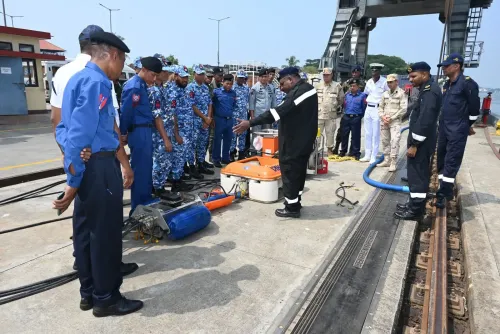
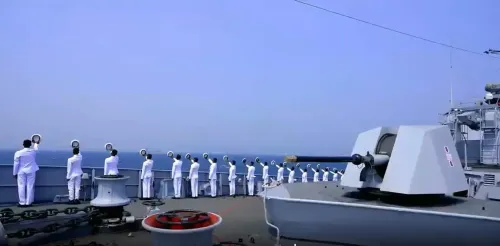
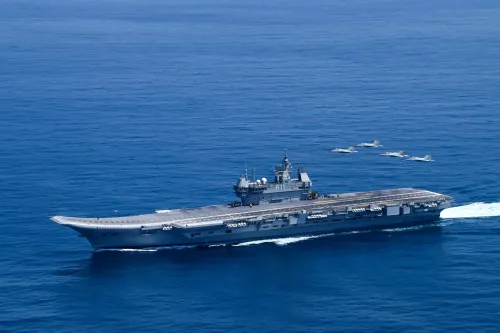
INS Netaji Subhas, the Indian Navy's eastern command installation in Kolkata, has launched preparatory activities for Exercise Sea Vigil 2026, a high-intensity, two-day coastal security drill scheduled across India's entire coastline on 18–19 November 2026. The fifth edition of the nationwide exercise is expected to involve multiple central and state agencies, and all three armed services.
Community Outreach at Kultali
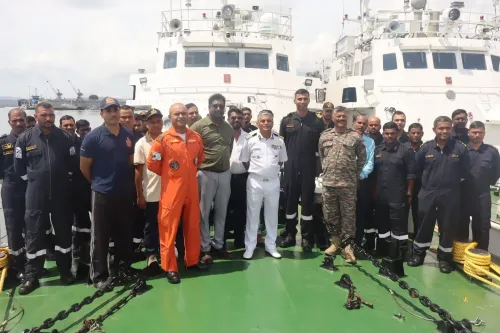
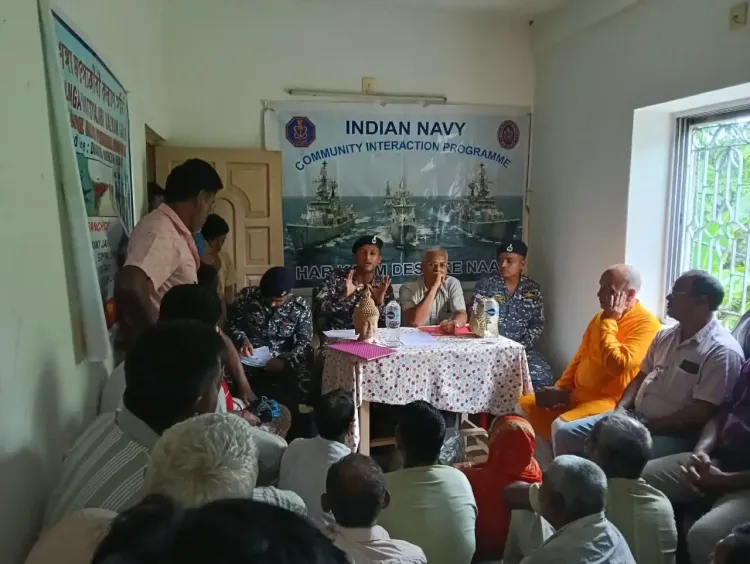
As the first step in a sensitisation drive, naval officials from INS Netaji Subhas travelled to Kultali in South 24-Parganas district, West Bengal, on Thursday, 29 October 2026. The visit was conducted in coordination with the Department of Fisheries, Government of West Bengal, and centred on engaging the large local fishing community. Officials briefed fishermen on the exercise's significance in the current geopolitical environment and on their designated role as 'Eyes and Ears of the Nation' — a community-watch framework that has been central to post-26/11 coastal security architecture.
Scale and Scope of Sea Vigil 2026
Exercise Sea Vigil spans all 11,098 km of India's coastline and extends into the country's Exclusive Economic Zone (EEZ), which covers 2.4 million square kilometres. The exercise is designed to test the preparedness of agencies responsible for safeguarding ports, oil rigs, vulnerable areas (VAs), vulnerable points (VPs), and cable landing stations. The 2024 edition involved six central ministries, 21 central and state agencies, and key maritime security stakeholders — with the Army and Air Force also participating. Both services are expected to participate again in 2026.
Red vs Blue: How the Exercise Works
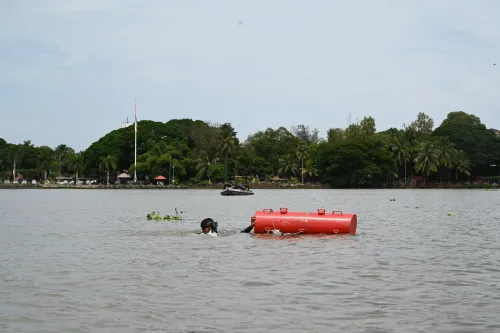
The drill adopts a Red Team–Blue Team structure: Red teams simulate adversarial attacks while Blue teams defend critical installations. During the 2024 edition, simulated threats included dud Improvised Explosive Devices (IEDs) planted within the Victoria Memorial campus in Kolkata, 'armed' infiltrators entering a port facility, and a waterborne 'strike' attempted on defence shipbuilder Garden Reach Shipbuilders and Engineers Ltd (GRSE). The scenarios are, by design, as close to real-world contingencies as possible. The exercise also validates Standard Operating Procedures (SOPs) and inter-agency coordination protocols, including intelligence sharing across maritime boundaries.
West Bengal and the Sundarbans Challenge
West Bengal holds special strategic importance in the coastal security framework, owing to the Sundarbans — the world's largest mangrove delta — whose dense and remote terrain poses significant monitoring challenges for security forces. The region's geography makes it a priority zone for the exercise. Beyond the military and paramilitary apparatus, NCC cadets, NSS volunteers, Bharat Scouts and Guides, and local fishermen are actively incorporated into the exercise to build a broad-based culture of maritime vigilance.
Indian Navy as Lead Maritime Security Agency
The Indian Navy was designated lead agency for maritime security in the wake of the 26/11 Mumbai attacks of 2008, which exposed critical gaps in India's coastal defence grid. Exercise Sea Vigil, first held in 2019, emerged directly from that accountability mandate. With this being the fifth edition, the exercise has become a biennial benchmark for testing whether lessons from previous drills have been institutionalised across agencies. All eyes will be on whether the 2026 edition raises the bar further.
Point of View
And where non-state actors have historically exploited gaps. What the drill has not yet publicly demonstrated is whether inter-agency intelligence sharing, the weakest link exposed in 2008, has been durably fixed — or merely rehearsed and filed away until the next edition.
NationPress
30 Oct 2026
Frequently Asked Questions
What is Exercise Sea Vigil 2026?
Exercise Sea Vigil 2026 is a high-intensity, two-day coastal security drill scheduled for 18–19 November 2026, covering India's entire 11,098 km coastline and 2.4 million sq km Exclusive Economic Zone. It is the fifth edition of the biennial exercise, led by the Indian Navy and involving multiple central ministries, state agencies, and all three armed services.
Why is INS Netaji Subhas visiting Kultali ahead of the exercise?
Officials from INS Netaji Subhas in Kolkata visited Kultali in South 24-Parganas on 29 October 2026 as part of a sensitisation and community interaction programme conducted with the West Bengal Department of Fisheries. The aim is to brief the local fishing community about the exercise and their role as 'Eyes and Ears of the Nation' in coastal surveillance.
How does Sea Vigil test India's coastal defences?
The exercise uses a Red Team–Blue Team format where simulated attackers test the response of agencies defending critical assets — ports, oil rigs, cable landing stations, and key landmarks. In the 2024 edition, scenarios included dud IEDs at the Victoria Memorial in Kolkata and a simulated waterborne strike on Garden Reach Shipbuilders and Engineers Ltd.
Why is West Bengal a priority zone in Sea Vigil?
West Bengal's Sundarbans — the world's largest mangrove delta — presents severe terrain challenges that make traditional surveillance difficult, making it a strategic priority for coastal security exercises. The region's vastness and remoteness are considered potential vulnerabilities in India's maritime boundary monitoring.
Why was the Indian Navy made lead agency for maritime security?
The Indian Navy was designated the lead agency for maritime security following the 26/11 Mumbai terror attacks of 2008, which exposed critical gaps in coastal defence coordination. Exercise Sea Vigil, launched in 2019, is a direct institutional response to that mandate, designed to test inter-agency preparedness and validate standard operating procedures.