Indian Navy to commission INS Dunagiri, Agray, Sanshodhak in Kolkata this week
Synopsis
For only the second time in recent years, the Indian Navy is inducting three warships in a single ceremony — a BrahMos-armed frigate, a shallow-water sub-hunter, and a seabed-mapping survey vessel, all built domestically. The Kolkata commissioning signals that India's naval production pipeline is not just growing, but accelerating.
Key Takeaways
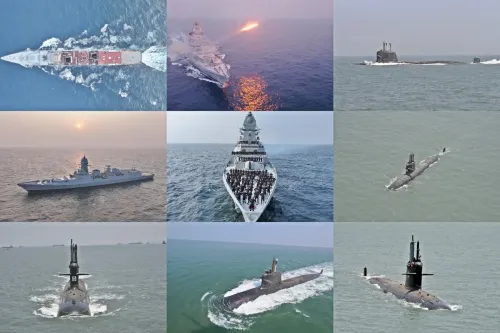
The Indian Navy will commission INS Dunagiri , INS Agray , and INS Sanshodhak together in Kolkata this week.
This is only the second triple warship commissioning in recent years; the first was in January 2024 at Mumbai .
INS Dunagiri (Project 17A frigate) was delivered in 80 months — 13 months faster than lead ship INS Nilgiri .
INS Agray is the fifth of 16 planned Arnala-class anti-submarine warfare vessels, designed for shallow coastal operations.
INS Sanshodhak completes the Sandhayak-class survey ship programme; the 110-metre vessel displaces 3,300 tonnes .
The ceremony is expected to be attended by a senior Union government dignitary, likely coinciding with PM Modi's Kolkata visit.
The Indian Navy is set to commission three warships — INS Dunagiri, INS Agray, and INS Sanshodhak — together in Kolkata later this week, in what marks a significant milestone in India's ongoing naval modernisation drive. Sources indicate the commissioning ceremony is expected to be attended by a senior Union government dignitary and is likely to coincide with Prime Minister Narendra Modi's scheduled visit to the city.
A Rare Triple Commissioning
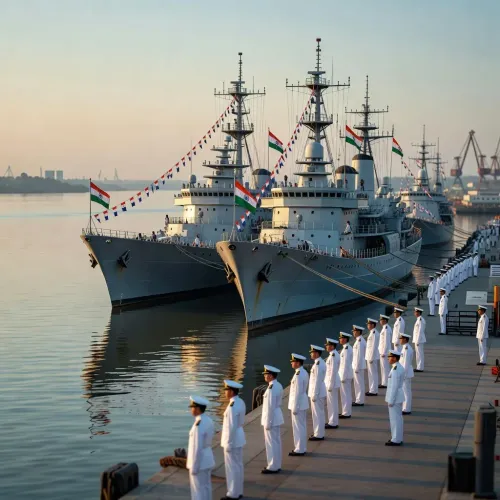
The Kolkata ceremony will be only the second instance in recent years where three frontline naval platforms have been inducted simultaneously. The previous such event occurred in January 2024, when Prime Minister Modi commissioned destroyer INS Surat, frigate INS Nilgiri, and submarine INS Vaghsheer at Mumbai's Naval Dockyard. Back-to-back triple commissionings signal an accelerating pace of domestic warship delivery — a deliberate policy push under the Atmanirbhar Bharat framework.
INS Dunagiri: Faster, Stealthier Frigate
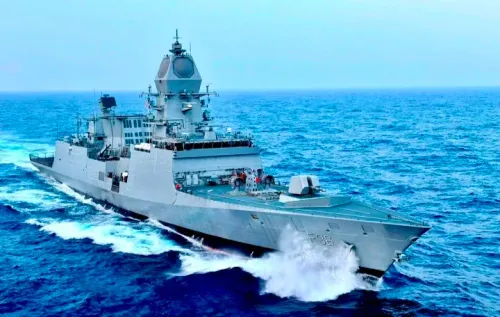
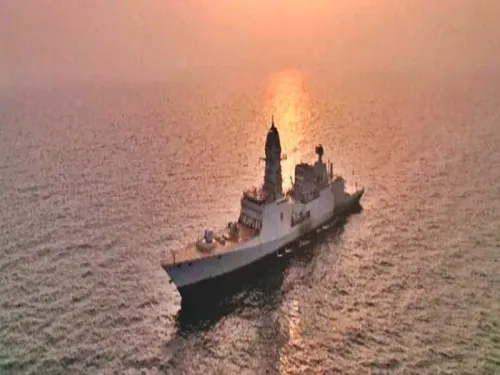
INS Dunagiri is the fifth vessel under the Project 17A frigate programme and the second of its class built at Garden Reach Shipbuilders and Engineers (GRSE) in Kolkata. The frigate carries BrahMos supersonic cruise missiles, surface-to-air missiles, and close-in weapon systems. It is powered by a Combined Diesel or Gas (CODOG) propulsion system and features an Integrated Platform Management System for enhanced operational control.
Notably, INS Dunagiri was delivered in 80 months — a full 13 months faster than the lead ship, INS Nilgiri, which took 93 months. Two more Project 17A frigates — INS Mahendragiri and INS Vindhyagiri — are yet to be commissioned, keeping the programme's pipeline active.
INS Agray: Sub-Hunting in Shallow Waters
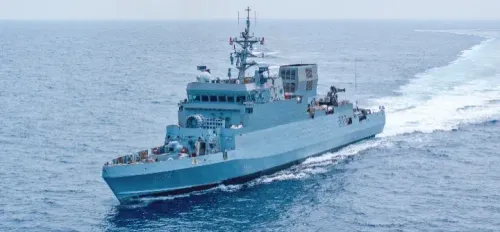
INS Agray is the fifth vessel under the 16-ship Arnala-class Anti-Submarine Warfare Shallow Water Craft (ASW-SWC) programme, approved in 2013. Designed for littoral operations, the vessel is equipped with lightweight torpedoes, indigenous anti-submarine rocket launchers, and advanced sonar systems.
The platform's specialisation in shallow coastal sub-hunting carries strategic weight, given the Pakistan Navy's continued investment in its submarine arm — including the induction of Hangor-class submarines. INS Agray directly addresses this asymmetric challenge in India's near-coastal waters.
INS Sanshodhak: Mapping the Seabed
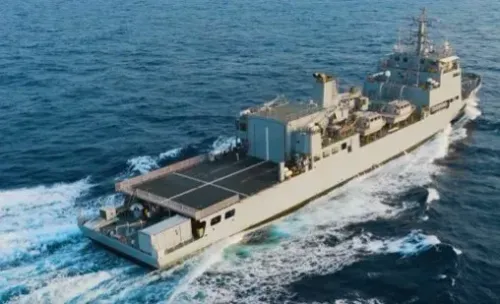
INS Sanshodhak is the fourth and final vessel of the Sandhayak-class survey ship programme. The 110-metre-long vessel displaces approximately 3,300 tonnes and is equipped with Autonomous Underwater Vehicles (AUVs), Remotely Operated Vehicles (ROVs), and advanced hydrographic survey systems for seabed mapping and navigational charting. Its induction completes the Sandhayak-class programme and bolsters the Navy's ability to maintain accurate maritime charts — critical for both wartime operations and safe navigation.
What This Means for India's Maritime Posture
Together, the three vessels expand the Indian Navy's reach across surface warfare, anti-submarine operations, and hydrographic intelligence. The commissioning also underlines GRSE's growing role as a frontline warship builder, with both INS Dunagiri and INS Agray built at its Kolkata yard. As the Indo-Pacific security environment grows more contested, India's ability to commission capable, indigenously built platforms at pace is increasingly central to its strategic calculus.
Point of View
But the harder question is whether quality assurance and crew training are keeping pace with the accelerated schedule. INS Agray's shallow-water ASW role is strategically timely given Pakistan's Hangor inductions, yet 16 vessels across a programme approved in 2013 with only five delivered by mid-2025 also points to persistent execution gaps. The Navy's modernisation story is real — but selectively told.
NationPress
17 Sept 2026
Frequently Asked Questions
Which three warships is the Indian Navy commissioning in Kolkata?
The Indian Navy is commissioning INS Dunagiri (a Project 17A frigate), INS Agray (an Arnala-class anti-submarine warfare vessel), and INS Sanshodhak (a Sandhayak-class hydrographic survey ship) together in Kolkata this week. All three are indigenously built platforms.
What is INS Dunagiri and what weapons does it carry?
INS Dunagiri is the fifth Project 17A stealth frigate and the second of its class built at Garden Reach Shipbuilders and Engineers (GRSE) in Kolkata. It is armed with BrahMos supersonic cruise missiles, surface-to-air missiles, and close-in weapon systems, and is powered by a Combined Diesel or Gas (CODOG) propulsion system.
Why is INS Agray strategically significant?
INS Agray is an anti-submarine warfare vessel designed specifically for shallow coastal waters, equipped with lightweight torpedoes, indigenous rocket launchers, and advanced sonar systems. Its induction is particularly relevant given the Pakistan Navy's growing submarine fleet, including the Hangor-class submarines.
What does INS Sanshodhak do?
INS Sanshodhak is a 110-metre hydrographic survey ship displacing about 3,300 tonnes, equipped with Autonomous Underwater Vehicles (AUVs), Remotely Operated Vehicles (ROVs), and advanced seabed-mapping systems. It is the fourth and final vessel of the Sandhayak-class programme, completing that series.
How does this commissioning compare to previous Indian Navy events?
This is only the second time in recent years that three frontline naval platforms have been commissioned simultaneously. The first such event took place in January 2024, when PM Modi inducted INS Surat, INS Nilgiri, and INS Vaghsheer at Mumbai's Naval Dockyard.