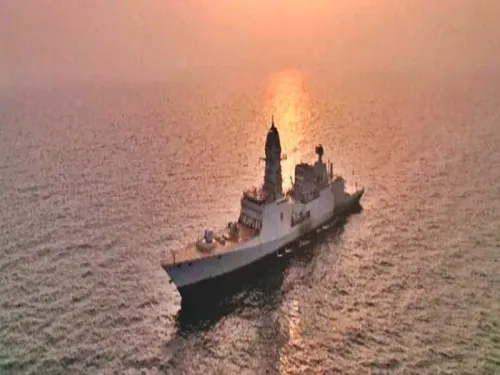
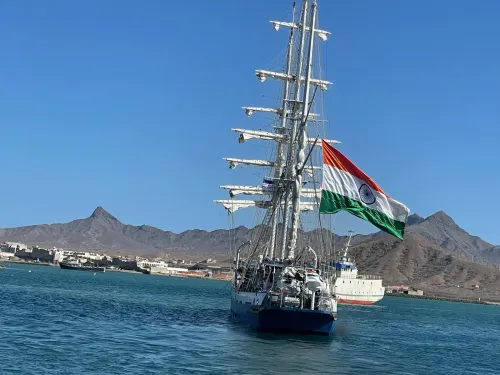
INS Agray, INS Dunagiri commissioned: 'Densely packed with weapons and sensors'
Synopsis
Three warships commissioned in a single ceremony in Kolkata — and the details are striking. INS Agray's commanding officer says the compact vessel is 'densely packed with weapons and sensors,' carrying indigenous sonar, torpedo tubes, and a decoy system. Combined with INS Dunagiri's P-17A stealth pedigree and INS Sanshodhak's survey role, this triple induction signals a measurable leap in India's indigenous naval capability.
Key Takeaways
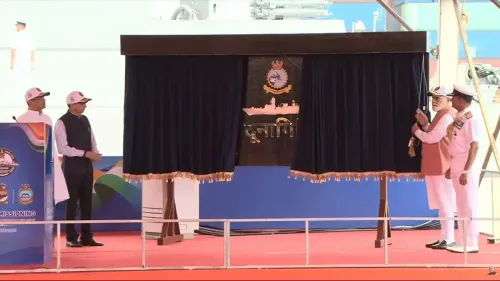
PM Narendra Modi commissioned INS Dunagiri , INS Sanshodhak , and INS Agray at Syama Prasad Mookerjee Port, Kolkata on 21 June .
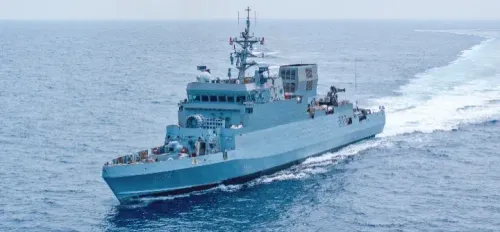
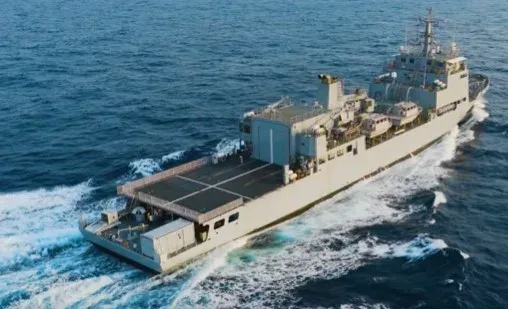
INS Agray is the fifth vessel in the Anti-Submarine Warfare Shallow Water Craft class, equipped with an indigenously developed sonar suite , torpedo tubes, rocket launchers, and a decoy system.
The ship features waterjet propulsion , making it one of the largest Indian Navy vessels fitted with this technology.
INS Dunagiri belongs to the P-17A (Giri class) stealth frigate programme; all ships in the class are named after mountains.
The triple commissioning strengthens the Navy's anti-submarine warfare , hydrographic survey , and coastal defence capabilities under the Atmanirbhar Bharat framework.
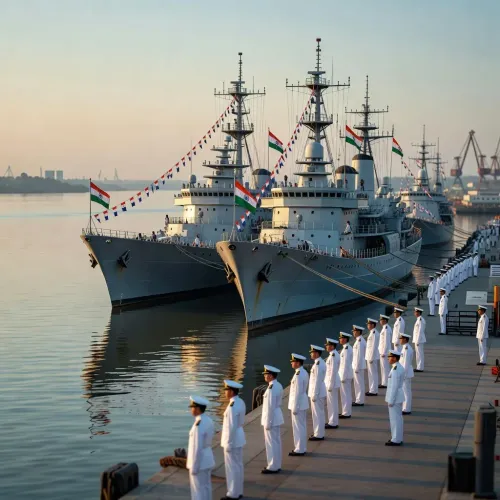
Prime Minister Narendra Modi on 21 June presided over the commissioning of three warships — INS Dunagiri, INS Sanshodhak, and INS Agray — at the Syama Prasad Mookerjee Port in Kolkata, marking a significant expansion of the Indian Navy's indigenous combat and surveillance fleet. Naval officers associated with the newly inducted vessels detailed their advanced capabilities, underscoring the strategic weight of the occasion.
INS Agray: Small Ship, Dense Firepower
Commanding Officer Commander Sunil Malpotra urged observers not to judge the anti-submarine warfare vessel by its compact profile. 'I would like to tell you not to go by the size of this ship. It may look small, but it is densely packed with weapons and sensors. It has all the capabilities required to detect and target an adversary's submarines. Not only that, if you look at the kind of asymmetric warfare taking place on the surface, this ship also possesses significant capabilities to deal with such threats,' Malpotra said.
On its anti-submarine suite, he elaborated: 'For anti-submarine warfare, the ship is equipped with an indigenously developed sonar suite, a combat management system, indigenous rocket launchers, torpedo tubes, and a decoy system that helps divert incoming torpedoes.'
Executive Officer Lt Commander Rishabh described the commissioning journey as professionally demanding. 'The journey has been very satisfying, though professionally challenging as well. It began about 8 to 9 months ago, when we started by seeing this ship as bare steel, and now here we are, the ship is almost ready,' he said. He further noted that INS Agray is the fifth vessel in the Anti-Submarine Warfare Shallow Water Craft class, with a primary mission of hunting submarines in shallow waters and the littoral domain.
Engineering Officer Lt Commander Piyush highlighted the vessel's waterjet propulsion system as a technological differentiator. 'This is better in this way because the other ships we have use propeller technology. But our ship is one of the largest in the Indian Navy that has been fitted with waterjet propulsion. In a waterjet system, it takes in water and then propels it out,' he said.
INS Dunagiri: Mythology Meets Maritime Strategy
Commanding Officer Captain Divya Alok drew attention to the cultural significance embedded in the vessel's name. 'This ship is linked to our mythology in its own way. All the ships of the Giri class, that is, the P-17 Alpha class ships, have been named after mountains. Therefore, it is connected to our mythological heritage,' she said. INS Dunagiri belongs to the P-17A stealth frigate programme, a flagship initiative in India's indigenous warship construction drive.
Strategic Significance of the Triple Commissioning
The simultaneous induction of three vessels — spanning anti-submarine warfare, hydrographic survey, and surface combat roles — is being viewed as a concentrated boost to the Indian Navy's operational readiness across multiple mission profiles. Notably, the emphasis on indigenously developed sonar suites, combat management systems, and propulsion technology reflects the growing depth of India's domestic defence manufacturing ecosystem under the Atmanirbhar Bharat framework.
This comes amid heightened maritime activity in the Indian Ocean Region, where India has been expanding its naval footprint in response to evolving regional security dynamics. The commissioning of INS Sanshodhak, a hydrographic survey vessel, also strengthens the Navy's ability to map and monitor underwater terrain — a capability with both civilian and strategic applications.
What Comes Next
The three vessels are expected to be deployed across their respective operational domains in the months ahead, with INS Agray likely assigned to littoral and shallow-water patrol duties. Defence analysts will watch whether the indigenous systems aboard these ships — particularly the sonar suite and combat management platform — perform to specification under operational conditions, a key test for India's self-reliance in naval technology.
Point of View
However, comes at sea: whether these indigenous systems hold up under operational stress will determine whether this commissioning is a genuine capability leap or a well-staged headline.
NationPress
19 Sept 2026
Frequently Asked Questions
What ships were commissioned by PM Modi in Kolkata on 21 June?
Prime Minister Narendra Modi commissioned three vessels — INS Dunagiri, INS Sanshodhak, and INS Agray — at the Syama Prasad Mookerjee Port in Kolkata on 21 June. The ships span anti-submarine warfare, hydrographic survey, and surface combat roles.
What are the key capabilities of INS Agray?
INS Agray is an Anti-Submarine Warfare Shallow Water Craft designed to hunt submarines in shallow and littoral waters. It carries an indigenously developed sonar suite, a combat management system, rocket launchers, torpedo tubes, a decoy system, and features waterjet propulsion.
What class does INS Dunagiri belong to, and what is its significance?
INS Dunagiri belongs to the P-17A, or Giri class, of stealth frigates, with all ships in the class named after mountains. Commanding Officer Captain Divya Alok noted the vessel's connection to India's mythological heritage through this naming tradition.
What makes INS Agray's propulsion system distinctive?
INS Agray uses a waterjet propulsion system rather than conventional propeller technology, making it one of the largest Indian Navy vessels equipped with this system. In a waterjet setup, water is drawn in and expelled to generate thrust.
How does this commissioning reflect India's Atmanirbhar Bharat goals?
The three vessels feature several indigenously developed systems, including INS Agray's sonar suite and combat management platform. Their induction is seen as evidence of India's deepening domestic defence manufacturing capability, moving beyond hull construction into advanced onboard electronics and weapons systems.