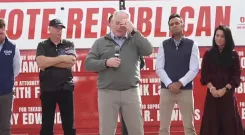
Trump Rallies Iowa and Kansas Ahead of 2026 Midterms
Synopsis
US President Donald Trump is travelling to Iowa and Kansas on November 1 to campaign for Republican Senate and governor candidates ahead of what he calls the most important midterm election in US history, with polls opening Tuesday, November 3.
Key Takeaways
President Trump announced campaign stops in Iowa and Kansas on November 1, 2026 , the day before the midterm vote.
In Iowa, Trump is backing Ashley Hinson for Senate and Zach Lahn for Governor.
In Kansas, he is supporting Roger Marshall for Senate and Ty Masterson for Governor.
Trump described Tuesday, November 3 as 'the Most Important Midterm Election in the History of the U.S.A.' Kansas is designated Trump's final campaign stop, emphasising last-minute base mobilisation over swing-state outreach.
The results will shape Republican control of the US Senate and House and Trump's legislative leverage for the rest of his second term.
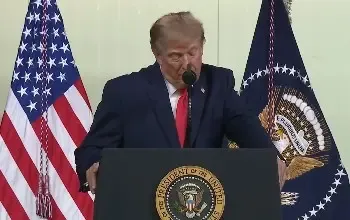
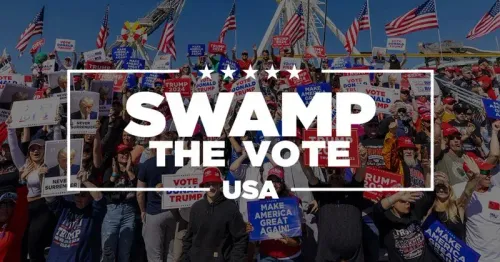
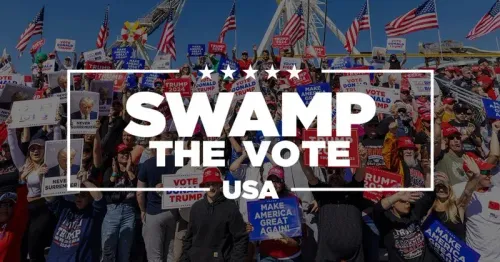
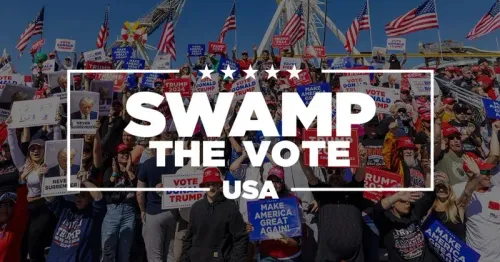
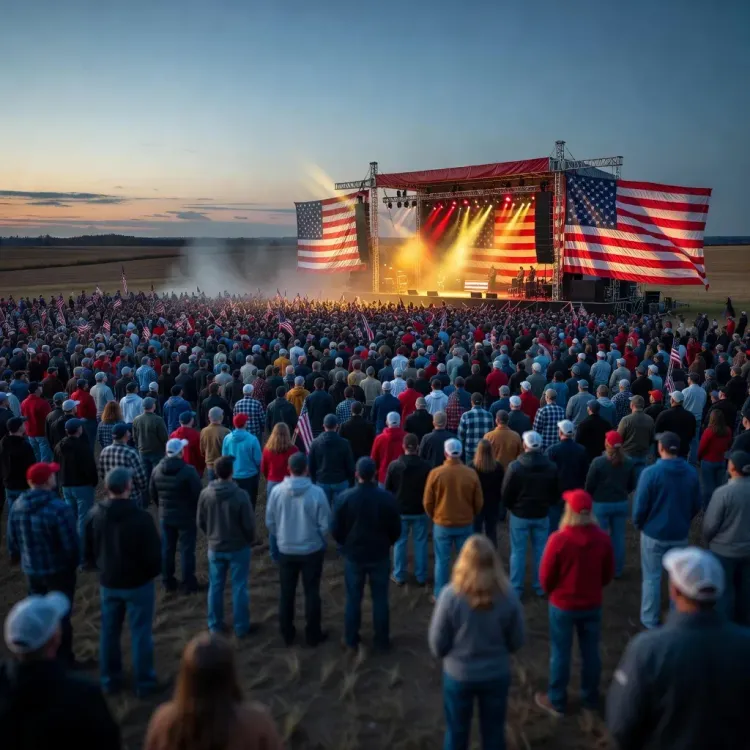
With the 2026 US midterm elections just days away, US President Donald Trump announced he is hitting the campaign trail on Sunday, November 1, 2026, making back-to-back stops in Iowa and Kansas — two heartland states where he is throwing his full weight behind a slate of Republican candidates he calls 'truly incredible.' The rallies mark what Trump himself is framing as the most consequential midterm in American history.
Iowa and Kansas: The Races Trump Is Betting On
In Iowa, Trump is campaigning for Ashley Hinson for US Senate and Zach Lahn for Governor. In Kansas, he is backing Roger Marshall for Senate and Ty Masterson for Governor — alongside what he described as 'fabulous Warrior Republicans running for Congress, and other vital positions.' The Kansas Senate seat is especially notable: Roger Marshall, a Republican first elected to the Senate in 2020, is seeking to hold his seat in a state that has trended reliably red but still demands turnout mobilisation to deliver comfortable margins.
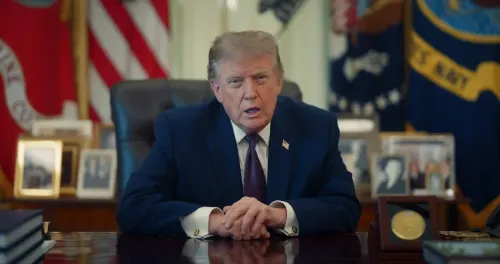
Trump posted on X: 'Tuesday will be the Most Important Midterm Election in the History of the U.S.A.' The framing is deliberate — midterm cycles typically see the president's party lose seats in Congress, and Trump's presence in these states signals the Republican strategy of using his direct voter appeal to counter that historical pattern.
Trump's Midterm Playbook: A Pattern Stretching Back to 2018
This is not new territory for Trump. In 2018 and again in 2022, he conducted blitz campaign swings in battleground and heartland states, prioritising personal endorsements for Senate and governor candidates aligned with his agenda. The strategy delivered mixed results in 2018 but proved more effective in 2022 in Senate contests where he threw his full weight early. The 2026 version of that playbook is leaning even harder on turnout mechanics — note that Trump specifically urges 'our Great Patriots' to 'get out and vote,' a turnout-over-persuasion pitch aimed squarely at the Republican base.
The choice of Iowa and Kansas as final-day stops — not swing states like Pennsylvania or Michigan — suggests the Republican ground game is prioritising base consolidation and safe-margin amplification over flipping purple territory on the eve of the vote.
Why These Stops Matter for Congressional Control
Control of the US Senate and House of Representatives hangs on dozens of individual race outcomes across the country. Senate contests in Iowa and Kansas, combined with competitive House races in both states, could contribute meaningfully to the Republican tally. A strong showing would hand Trump legislative leverage heading into the remainder of his second term; a disappointing night would complicate his domestic policy agenda. The results from Tuesday's vote will be watched closely as the first major electoral verdict on Trump's second-term presidency.
Kansas is Trump's declared 'last stop' — a signal of where he believes the most urgent energy is needed. Whether that energy translates into votes will become clear within hours of polls closing on Tuesday, November 3, 2026.
Point of View
Making mobilisation the decisive variable. Should Republicans post strong margins in both states, Trump will claim personal credit and use the mandate to assert dominance over the party's direction heading into the second half of his term. A weak showing, by contrast, would renew questions about whether his endorsement remains the electoral asset it was in the primary cycle.
NationPress
2 Nov 2026
Frequently Asked Questions
Where is Trump campaigning before the 2026 midterm elections?
Trump announced campaign rallies in Iowa and Kansas on November 1, 2026 — the day before midterm election day — making Kansas his final stop.
Who is Trump endorsing in Iowa for the 2026 midterms?
Trump is endorsing Ashley Hinson for US Senate and Zach Lahn for Governor in Iowa ahead of the November 3 midterm elections.
Who is Roger Marshall and what race is he in?
Roger Marshall is a Republican US Senator from Kansas, first elected in 2020, who is seeking re-election in the 2026 midterms with Trump's backing.
When are the 2026 US midterm elections?
The 2026 US midterm elections are scheduled for Tuesday, November 3, 2026.
Why are the 2026 US midterm elections considered important?
Control of both the US Senate and House of Representatives is at stake, which will determine Trump's ability to advance his legislative agenda during the remainder of his second term.