India-US Navy EOD Exercise 2026 concludes at Kochi after 5-day drill
Synopsis
The eighth India-US Navy EOD Exercise wrapped up at Kochi on 14 August 2026 — and it signals more than routine training. Weeks after India took command of anti-submarine warfare at RIMPAC for the first time ever, this five-day drill on IED threats, mine neutralisation, and unmanned underwater systems marks India's steady shift from naval participant to operational leader in Indo-Pacific security.
Key Takeaways
The 8th edition of the India-US Navy EOD Exercise 2026 concluded at Southern Naval Command, Kochi on 14 August 2026 .
Training covered IED threats , mine neutralisation , render-safe procedures, and unmanned underwater systems .
Cross-training included advanced diving disciplines: wreck location, salvage, and slithering operations.
Last month, the Indian Navy served as Deputy Commander Task Force for Theatre-level Anti-Submarine Warfare at RIMPAC 2026 — a first for India.
RIMPAC 2026 , its 30th edition, was held in Hawaii from 1 July to 31 July 2026 .
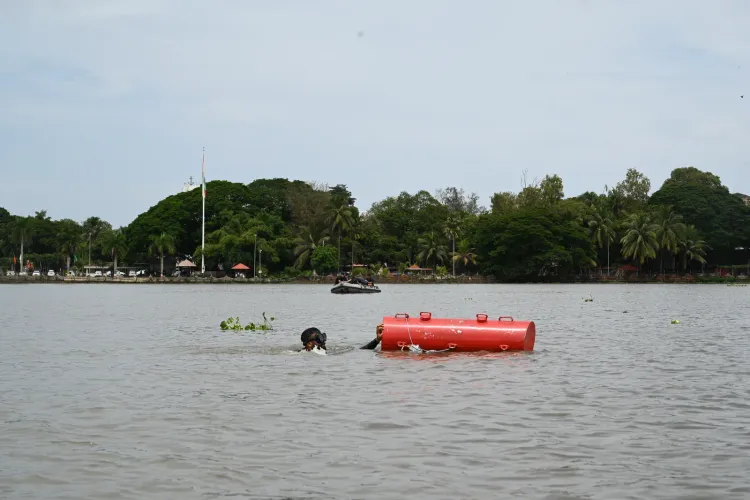
The Indian Navy and the United States Navy wrapped up the eighth edition of the bilateral Explosive Ordnance Disposal (EOD) Exercise 2026 at the Southern Naval Command, Kochi, on 14 August 2026, following five days of intensive joint training. The Ministry of Defence confirmed the successful conclusion on Monday, describing it as a significant step in deepening operational synergy between the two navies in specialised maritime operations.
What the Exercise Covered
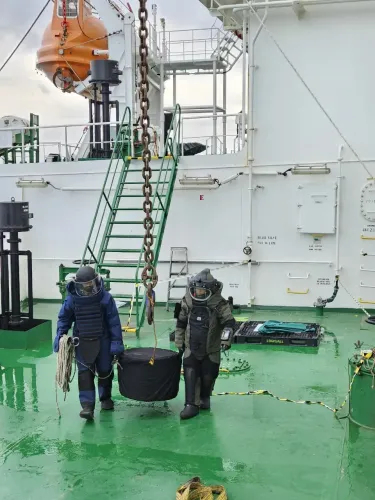
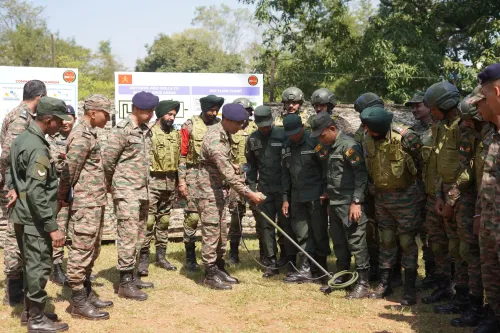
The joint drill served as a structured platform for knowledge-sharing across critical EOD domains. Subject Matter Expert Exchanges (SMEEs) addressed real-time threats from Improvised Explosive Devices (IEDs), render-safe procedures, mine neutralisation, and the deployment of unmanned underwater systems.
The cross-training phase extended to advanced diving disciplines, encompassing wreck location and salvage, specialist equipment handling, and slithering operations — a breadth of coverage that reflects the growing complexity of underwater threat environments.
Key Outcomes and Interoperability Gains
'The joint training exercise enhanced the professional competence and skill-sets of the diving teams while fostering greater mutual understanding and interoperability,' the Ministry of Defence stated. Officials noted that the exercise reinforced both navies' commitment to cooperation in specialised maritime security operations.
This edition marked the eighth consecutive iteration of the IN-USN EOD series, underscoring the sustained and deepening character of Indo-US naval engagement rather than a one-off bilateral event.
Broader Context: India's Rising Maritime Role
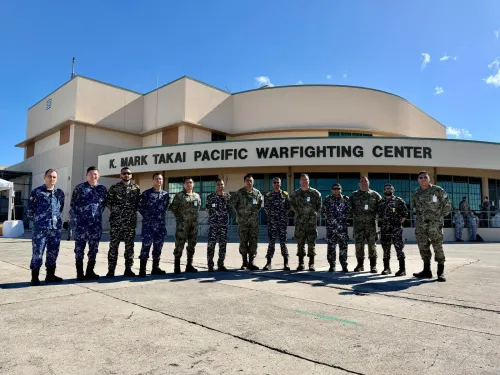
The EOD exercise conclusion comes weeks after the Indian Navy achieved a landmark at the Rim of the Pacific (RIMPAC) 2026 exercise held in Hawaii from 1 July to 31 July 2026. For the first time, the Indian Navy assumed the role of Deputy Commander Task Force for Theatre-level Anti-Submarine Warfare during the 30th edition of RIMPAC — one of the world's largest multinational maritime exercises.
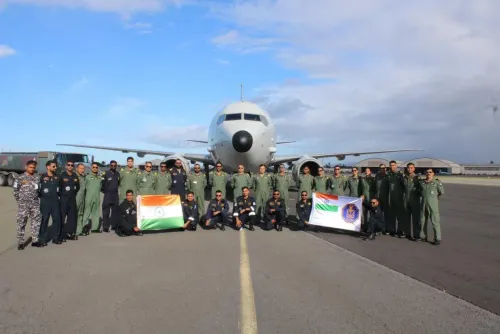
The Indian Navy's P-8I Long Range Maritime Reconnaissance (LRMR) aircraft and participating personnel were actively engaged in mission planning, operational briefings, and professional exchanges with partner navies during the sea phase. According to the Indian Navy, the deployment reaffirmed its commitment to a 'free, open, inclusive and rules-based Indo-Pacific.'
Strategic Significance
Taken together, the EOD exercise at Kochi and the RIMPAC role reflect a deliberate Indian strategy of building interoperability across the full spectrum of maritime operations — from subsurface threat neutralisation to large-scale anti-submarine warfare command. This comes amid growing emphasis on Indo-Pacific security architecture, with India deepening naval partnerships not just with the US but across a network of like-minded navies. The trajectory suggests India is transitioning from a participant in multilateral exercises to a leadership node within them.
Point of View
Now in its eighth year, is no longer a novelty — it is institutional. What deserves attention is the cumulative arc: India is simultaneously deepening bilateral underwater-threat training with the US and, for the first time, commanding a task force at RIMPAC. That combination points to a navy being deliberately positioned for leadership roles in Indo-Pacific security architecture, not merely participation. The question is whether India's defence procurement and force-projection capacity is scaling at the same pace as its diplomatic and operational ambitions — because command credibility ultimately rests on hardware and tonnage, not just exercises.
NationPress
1 Oct 2026
Frequently Asked Questions
What is the India-US Navy EOD Exercise 2026?
It is the eighth edition of a bilateral Explosive Ordnance Disposal exercise between the Indian Navy and the United States Navy, held at the Southern Naval Command in Kochi. The five-day drill covered IED threats, mine neutralisation, render-safe procedures, and the use of unmanned underwater systems.
Where and when did the EOD Exercise 2026 conclude?
The exercise concluded at the Southern Naval Command, Kochi, on 14 August 2026, after five days of joint training and professional exchanges between Indian and US Navy teams.
What is the significance of India's role at RIMPAC 2026?
For the first time, the Indian Navy served as Deputy Commander Task Force for Theatre-level Anti-Submarine Warfare at RIMPAC 2026, held in Hawaii from 1 July to 31 July. This marked a shift from India being a participant to holding a command role in one of the world's largest multinational maritime exercises.
What disciplines were covered in the cross-training phase of the EOD exercise?
The cross-training phase included advanced diving disciplines such as wreck location and salvage, employment of specialist equipment, and slithering operations, alongside Subject Matter Expert Exchanges on IEDs and unmanned underwater systems.
How does this exercise fit into broader India-US defence ties?
The EOD exercise is part of a sustained pattern of India-US naval cooperation that now spans bilateral drills, multilateral exercises like RIMPAC, and increasing command responsibilities for the Indian Navy. It reflects both nations' shared interest in a rules-based Indo-Pacific maritime order.