Indian Navy takes Deputy Commander role at RIMPAC 2026 ASW exercise
Synopsis
For the first time ever, the Indian Navy is holding the Deputy Commander Task Force role for Theatre-level Anti-Submarine Warfare at RIMPAC 2026 — the world's largest multinational maritime exercise. With its P-8I aircraft operating from Hawaii alongside 30 nations and 30,000 personnel, this is India's most significant command-level integration into a global naval exercise to date.
Key Takeaways
The Indian Navy has assumed the Deputy Commander Task Force role for Theatre-level Anti-Submarine Warfare at RIMPAC 2026 — a first in India's participation history.
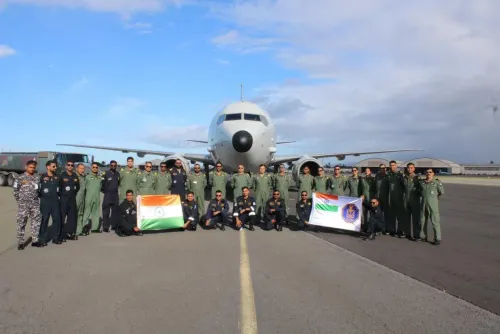
India's P-8I LRMR aircraft and naval personnel are actively engaged in mission planning and operations from Hawaii .
RIMPAC 2026 — its 30th edition — runs from 1 July to 31 July 2026 , involving 30 nations , 30,000 personnel , and over 206 aircraft .
The deployment reaffirms India's commitment to a free, open, rules-based Indo-Pacific and enhanced interoperability with partner navies.
Vice Admiral Jeff Jablon commands the Combined Task Forces for RIMPAC 2026.
The Indian Navy has assumed the role of Deputy Commander Task Force for Theatre-level Anti-Submarine Warfare (ASW) at the Rim of the Pacific (RIMPAC) 2026 exercise — marking the first time India has held this command position at the world's largest multinational maritime exercise. The sea phase of the exercise is under way in and around the Hawaiian Islands through 31 July 2026.
India's Historic Command Role
This is the first occasion the Indian Navy has been entrusted with the Deputy Commander Task Force role for Theatre-level ASW at RIMPAC, a significant step up in India's operational standing among partner navies. The Indian Navy's spokesperson confirmed the development in a post on X, noting that the deployment reflects India's deepening integration into multilateral maritime security frameworks.
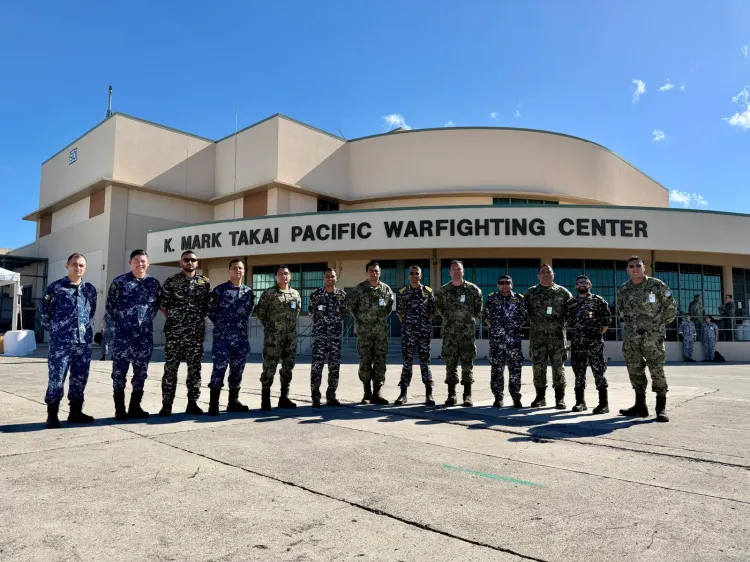
India's P-8I Long Range Maritime Reconnaissance (LRMR) aircraft and a contingent of naval personnel arrived in Hawaii earlier this month and have since been engaged in mission planning, technical preparations, operational briefings, and professional exchanges with partner navies.
Scale of RIMPAC 2026
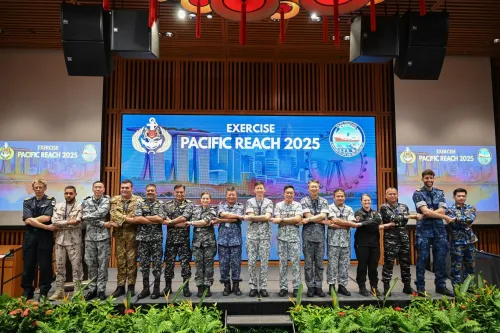
The 30th edition of RIMPAC, running from 1 July to 31 July 2026, brings together 30 nations, more than 30 surface ships, 5 submarines, 15 national land forces, over 206 aircraft, and approximately 30,000 personnel. The exercise is designed to build interoperability, sharpen warfighting readiness, and reinforce cooperative sea-lane security across the Indo-Pacific region.
Vice Admiral Jeff Jablon, RIMPAC 2026 Commander, Combined Task Forces (CCTF), said: 'The Rim of the Pacific exercise continues to be the world's premier multinational maritime training event, bringing together allies and partners committed to strengthening security and stability across the region. By training together in complex, realistic scenarios, participating nations improve readiness, sharpen warfighting skills, and strengthen the interoperability required to operate effectively alongside one another whenever and wherever needed.'
Strategic Significance for India
According to the Indian Navy, the deployment reaffirms its commitment to a free, open, inclusive, and rules-based Indo-Pacific while enhancing interoperability, maritime domain awareness, and operational cooperation with partner navies. The P-8I — India's premier maritime patrol aircraft — is central to the ASW mission, capable of detecting and tracking submarines across vast ocean expanses.
This comes amid growing emphasis on multilateral naval cooperation in the Indo-Pacific, where sea-lane security has become an increasingly contested strategic priority. India's elevation to a command role at RIMPAC signals a broader recognition of its naval capabilities and its expanding role in regional security architecture.
What Comes Next
The exercise continues through the end of July, with participating nations conducting complex, realistic combat scenarios. India's performance in the ASW command role will be closely watched as a measure of its operational integration with partner navies — and as a signal of the trajectory of its Indo-Pacific partnerships.
Point of View
Not just diplomatic inclusion. This comes as India walks a careful line between its traditional strategic autonomy and its deepening Quad-aligned posture in the Indo-Pacific. The question worth asking is whether this command integration will translate into sustained interoperability protocols or remain a high-profile exercise moment. Past RIMPAC participations have built goodwill; this edition, for the first time, builds command experience — and that difference matters.
NationPress
8 Oct 2026
Frequently Asked Questions
What is India's role at RIMPAC 2026?
The Indian Navy is serving as Deputy Commander Task Force for Theatre-level Anti-Submarine Warfare at RIMPAC 2026 — the first time India has held this command position at the exercise. India's P-8I maritime patrol aircraft and a naval contingent are participating from Hawaii.
What is RIMPAC and why does it matter?
RIMPAC, or Rim of the Pacific, is the world's largest multinational maritime exercise, held biennially around the Hawaiian Islands. The 2026 edition, its 30th, runs from 1 July to 31 July and involves 30 nations, over 30 surface ships, 5 submarines, and approximately 30,000 personnel.
Why is India's ASW command role significant?
Anti-Submarine Warfare is one of the most technically demanding domains in naval operations. India holding a command role in Theatre-level ASW signals that partner navies recognise its operational capabilities and trust it with a leadership function in a complex, multilateral setting — a step beyond mere participation.
What assets has India deployed to RIMPAC 2026?
India has deployed its P-8I Long Range Maritime Reconnaissance aircraft along with a contingent of naval personnel. The assets arrived in Hawaii earlier in July and have been engaged in mission planning, technical preparations, and operational briefings with partner navies.
How does RIMPAC 2026 relate to India's Indo-Pacific strategy?
According to the Indian Navy, the RIMPAC 2026 deployment reaffirms its commitment to a free, open, inclusive, and rules-based Indo-Pacific. It is part of India's broader effort to enhance interoperability and maritime domain awareness with partner navies in a region of growing strategic importance.