India and US Team Up with Indo-Pacific Allies for Comprehensive Anti-Submarine Warfare Drill in Guam
Synopsis
The recent 20-day antisubmarine warfare exercise in Guam saw the US and India collaborate with Japan, Australia, and New Zealand, enhancing regional naval capabilities. This exercise underscores significant defense cooperation among Indo-Pacific nations.
Key Takeaways
Collaboration: The exercise enhanced military cooperation among five nations.
Interoperability: Focus on improving coordinated antisubmarine warfare operations.
Realistic Training: Participants engaged in live exercises and tracking drills.
Regional Stability: Drills like Sea Dragon emphasize the importance of alliances in maintaining peace.
Strengthened Defense Ties: Reflects deepening defense cooperation, particularly with India's involvement.
Washington, April 4 (NationPress) The United States and India have engaged in a collaborative 20-day antisubmarine warfare exercise alongside Japan, Australia, and New Zealand in Guam, enhancing cooperation among partners in the Indo-Pacific region, as reported by officials.
The Sea Dragon 2026 exercise wrapped up at Andersen Air Force Base on March 28, following a rigorous training schedule aimed at identifying and countering undersea threats within a complex operational landscape, according to a media statement.
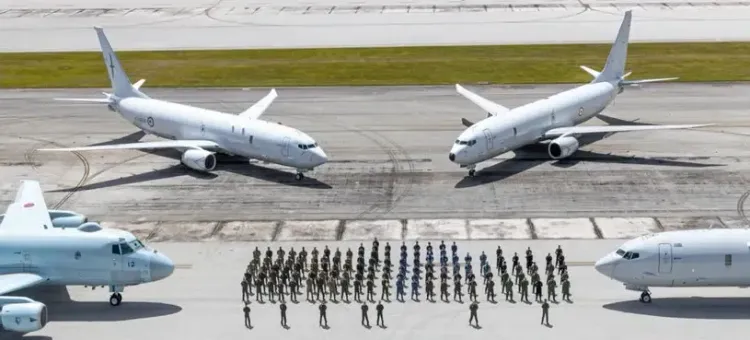
Under the auspices of Commander, Task Force 72, the drill showcased US Navy P-8A Poseidon aircraft in conjunction with planes from the Indian Navy, Japan Maritime Self-Defense Force, Royal Australian Air Force, and the Royal New Zealand Air Force.
Officials highlighted that these exercises were crafted to bolster interoperability and enhance shared maritime awareness among the five nations involved. The training built on previous exercises to improve coordinated antisubmarine warfare capabilities in a dynamic and contested setting.
“What we do in Sea Dragon not only develops our skills but also forges teams across nations. The shared experiences empower us to operate together more effectively,” remarked Navy Lt. Paolo Aguilar, from Patrol and Reconnaissance Squadron 4.
The training included systematic tracking drills utilizing a mobile antisubmarine warfare target known as the MK-30. Additionally, participants conducted a live antisubmarine warfare operation where crews searched for an active Navy submarine in the vicinity.
This year's operations took place near Saipan, the capital of the Northern Mariana Islands, where forces deployed recoverable exercise torpedoes, showcasing an expansion of operational capabilities among the participating nations.
The exercise maintained a competitive aspect, with each nation’s performance evaluated and scored in realistic scenarios. Japan’s Patrol and Reconnaissance Squadron 3 secured the Dragon Belt award, previously held by the Royal Australian Air Force last year.
Exercises such as Sea Dragon underscore the strength of US partnerships and alliances, officials stated, emphasizing the critical role these drills play in sustaining regional stability.
“They illustrate that together we are stronger, more capable, and prepared to deter any aggressor in the Indo-Pacific,” noted Navy Lt. Caitlin Tucker, a pilot with Patrol and Reconnaissance Squadron 45.
Since its inception in 2019, Sea Dragon has become a vital platform for enhancing collaboration among maritime forces in the Indo-Pacific. India’s participation alongside US allies signifies a deepening of defense cooperation within the region.
In recent years, India has broadened its involvement in multilateral naval exercises as part of a comprehensive strategy to fortify maritime security partnerships and protect vital sea routes. The Indo-Pacific remains pivotal to global trade and strategic rivalry, with a growing emphasis on undersea capabilities and surveillance.
Point of View
The collaboration between the US, India, and other Indo-Pacific allies in the recent antisubmarine warfare exercise reflects a strategic alignment aimed at enhancing maritime security. This exercise not only strengthens defense ties but also contributes to the stability of the Indo-Pacific region, which is crucial for global trade and security.
NationPress
24 Sept 2026
Frequently Asked Questions
What was the purpose of the Sea Dragon 2026 exercise?
The purpose of the Sea Dragon 2026 exercise was to enhance interoperability and strengthen shared maritime domain awareness among the participating nations through coordinated antisubmarine warfare operations.
Which countries participated in the exercise?
The exercise involved the United States, India, Japan, Australia, and New Zealand.
Where did the Sea Dragon 2026 exercise take place?
The Sea Dragon 2026 exercise took place at Andersen Air Force Base in Guam.
What type of aircraft were used during the exercise?
The exercise featured US Navy P-8A Poseidon aircraft along with aircraft from the Indian Navy, Japan Maritime Self-Defense Force, Royal Australian Air Force, and Royal New Zealand Air Force.
Why is the Indo-Pacific region significant?
The Indo-Pacific region is significant due to its central role in global trade flows and strategic competition, with increasing focus on undersea capabilities and surveillance.