Rajnath Singh: India a Trusted Net Security Provider in Indo-Pacific
Synopsis
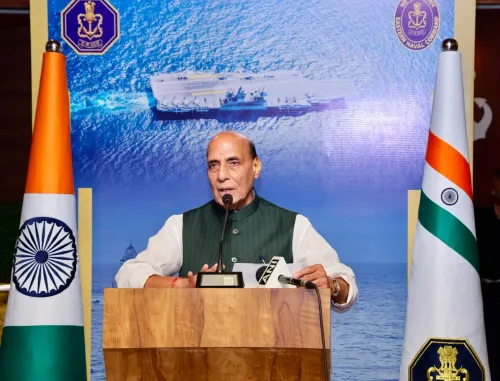
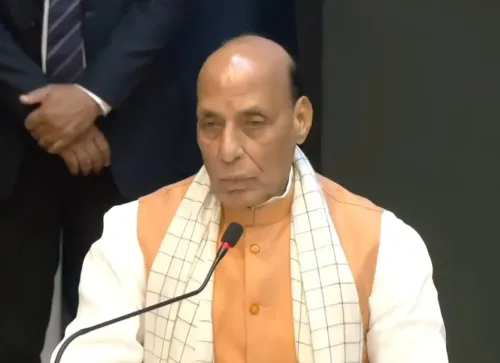
Union Defence Minister Rajnath Singh declared India a 'Trusted Net Security Provider,' reaffirming the Indian Navy's decades-long role in protecting global trade routes, freedom of navigation, and stability across the Indo-Pacific under International Maritime Law.
Key Takeaways
Union Defence Minister Rajnath Singh posted on October 29, 2026 reaffirming India's maritime security role.
India describes itself as a Trusted Net Security Provider for the Indo-Pacific, protecting critical Sea Lines of Communication.
The statement aligns with the SAGAR doctrine articulated by PM Modi in 2015 — Security And Growth for All in the Region.
India explicitly backs Freedom of Navigation and adherence to International Maritime Law (UNCLOS) .
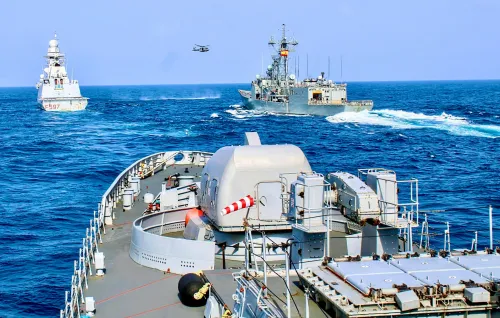
The Indian Navy has sustained anti-piracy patrols, humanitarian missions, and trade-route protection across the Indian Ocean Region for decades.
The Indo-Pacific framing links India's naval posture to multilateral forums including QUAD maritime security dialogues.
Decades of naval deployment have earned India a seat at the table as guarantor of the world's most critical sea lanes — and on Thursday, October 29, 2026, Union Defence Minister Rajnath Singh put that role on record in a direct statement on X, reaffirming India's commitment to a free and stable Indo-Pacific.
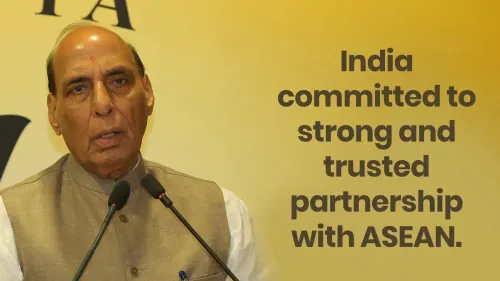
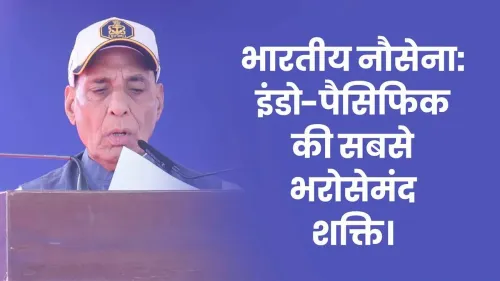
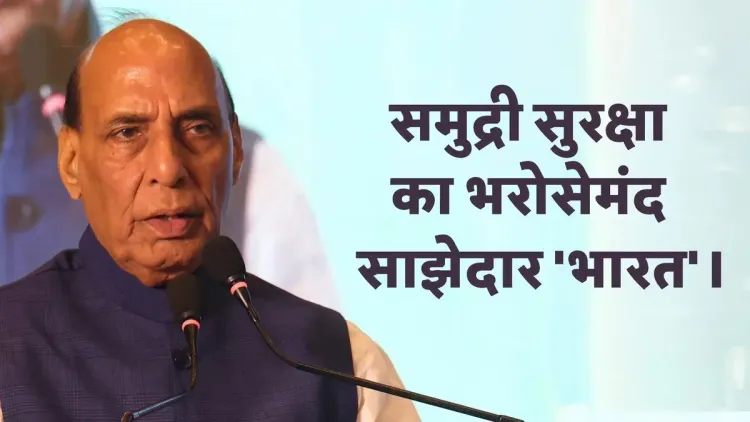
Writing in Hindi and English, Singh declared: 'India has, for decades, ensured the security of global maritime trade and critical Sea Lines of Communication through the Indian Navy. As a Trusted Net Security Provider, India is committed to a safe and stable Indo-Pacific with respect for Freedom of Navigation and International Maritime Law.'
What 'Net Security Provider' actually means for the Indian Ocean
The phrase is not diplomatic boilerplate — it carries operational weight. The Indian Navy has sustained anti-piracy patrols in the Gulf of Aden, conducted humanitarian evacuations across the Indian Ocean Region, and shadowed hostile vessels along trade corridors that carry a significant share of global energy exports. When Singh invokes 'decades' of this role, he is pointing to a sustained doctrine, not a seasonal posture.
That doctrine has a formal intellectual spine. In 2015, Prime Minister Narendra Modi articulated the SAGAR framework — Security And Growth for All in the Region — placing the Indian Navy at the centre of a cooperative maritime security architecture. Singh's statement lands squarely within that lineage, extending it into the broader Indo-Pacific frame that now encompasses the Pacific as well as the Indian Ocean.
Freedom of Navigation and UNCLOS — India's legal anchor
The explicit reference to International Maritime Law is a pointed signal. India has consistently aligned itself with UNCLOS provisions on freedom of navigation and the rights of coastal states — a position that implicitly pushes back against unilateral claims that restrict maritime passage in contested waters. For trading nations that depend on open sea lanes, India's public restatement of this principle carries reassurance value beyond South Asia.
The Indo-Pacific framing also situates India within multilateral security conversations — including QUAD maritime dialogues — where coordinated patrols, information-sharing, and interoperability with partner navies have become a live agenda. Singh's post arrives as the region watches for new deployments and diplomatic signals ahead of upcoming naval forums.
The strategic bet behind the public commitment
By repeatedly and publicly owning the 'net security provider' identity, India is staking a reputational claim: that its naval reach is a regional public good, not a projection of narrow national interest. That framing differentiates India from rival claimants in the Indo-Pacific and strengthens the diplomatic case for deeper partnerships with maritime democracies across Asia, Europe, and beyond.
The Indian Navy's consistent presence on these lanes is, in the end, both shield and calling card — and Rajnath Singh just reminded the world it is open for business.
Point of View
India differentiates its naval presence from that of revisionist powers and strengthens its hand in QUAD and Indian Ocean Naval Symposium diplomacy. The UNCLOS reference is pointed — it stakes a legal and normative position in contested waters without naming adversaries. Over the arc of the SAGAR doctrine, each such reaffirmation adds credibility to India's bid to be the default security partner of choice for littoral and trading states from the Persian Gulf to the Pacific, a posture with both strategic and economic dividends.
NationPress
29 Oct 2026
Frequently Asked Questions
What does India's 'Net Security Provider' role in the Indo-Pacific mean?
It means India commits its naval assets — through patrols, surveillance, and humanitarian response — to safeguard shared sea lanes, anti-piracy operations, and freedom of navigation across the Indian Ocean and broader Indo-Pacific, treating regional maritime security as a public good rather than purely a national interest.
What is the SAGAR doctrine and how does it relate to Rajnath Singh's statement?
SAGAR stands for Security And Growth for All in the Region, a framework articulated by PM Modi in 2015 that places the Indian Navy at the centre of cooperative Indian Ocean security. Singh's statement extends this doctrine into the wider Indo-Pacific frame.
Why does India reference International Maritime Law and Freedom of Navigation?
India's invocation of International Maritime Law and UNCLOS-based Freedom of Navigation signals alignment with open-sea principles and implicitly pushes back against unilateral territorial claims in contested waters, reassuring trading nations that depend on open sea lanes.
What is India's role in QUAD maritime security?
As a QUAD member alongside the United States, Japan, and Australia, India participates in coordinated naval exercises, information-sharing, and interoperability initiatives aimed at maintaining a free and open Indo-Pacific — a role Singh's statement reinforces.
Which sea lanes does the Indian Navy protect?
The Indian Navy operates across critical corridors including the Gulf of Aden, the Arabian Sea, the Strait of Hormuz approaches, and the Bay of Bengal — routes that carry a major share of global energy trade and container shipping.