Rajnath Singh at Navy Commanders' Conf: AI, MAHASAGAR, Op Urja Suraksha
Synopsis
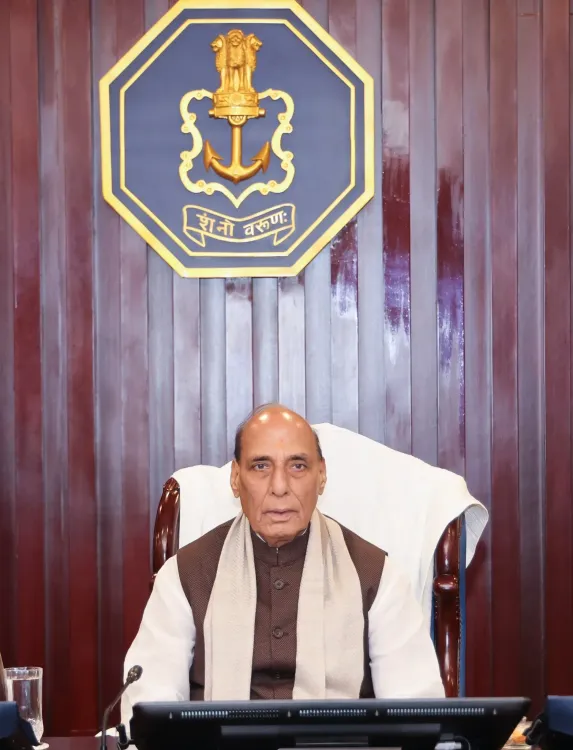
Union Defence Minister Rajnath Singh addressed the Indian Navy Commanders' Conference at Nausena Bhawan on 29 September 2026, highlighting the ongoing Operation Urja Suraksha, India's MAHASAGAR maritime vision, and a broad agenda to integrate AI, autonomous systems, and cyber capabilities into a future-ready naval force.
Key Takeaways
Operation Urja Suraksha is an active Indian Navy operation cited by Rajnath Singh as proof of the force's readiness to protect energy supply lines in the Indian Ocean Region .
The Navy's expanding IOR presence is framed as the operational expression of MAHASAGAR — India's vision for Mutual and Holistic Advancement for Security and Growth Across the Region.
MAHASAGAR builds on the SAGAR doctrine first articulated by PM Modi during his 2015 Mauritius visit.
The Commanders' Conference deliberations covered AI, Big Data, autonomous and uncrewed systems, cyber operations , logistics, and technology absorption.
The force-building framework is anchored in three principles: Jointness, Aatmanirbharta , and Innovation .
The Aatmanirbharta self-reliance push, launched in May 2020 , underpins the Navy's drive to absorb and indigenise emerging defence technologies.
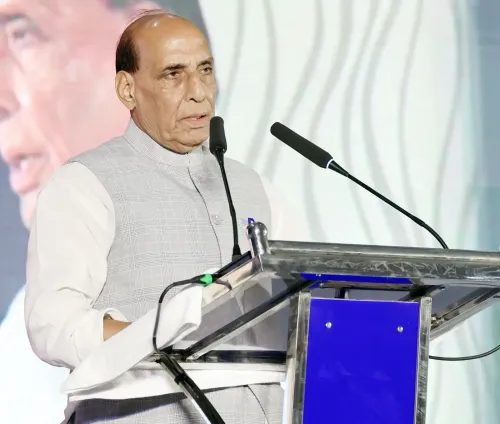
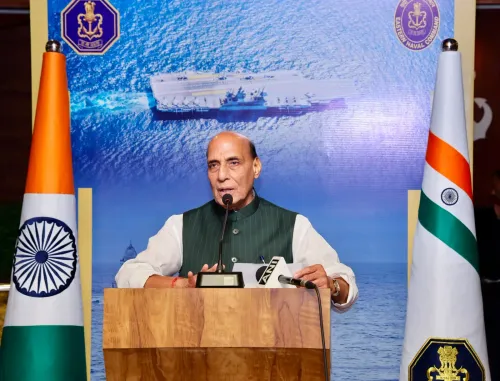
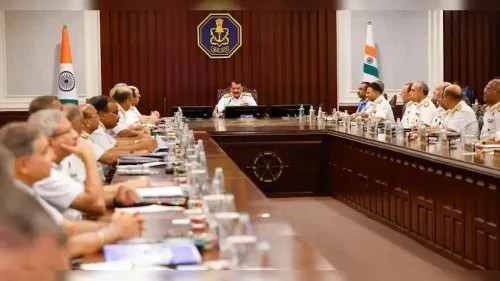
Energy routes in the Indian Ocean are not just trade corridors — they are strategic lifelines, and Union Defence Minister Rajnath Singh made that unmistakably clear on Tuesday, 29 September 2026, when he addressed the Indian Navy Commanders' Conference at Nausena Bhawan, New Delhi, spotlighting an active naval operation and a sweeping technology agenda for the force.
'Operation Urja Suraksha' and what it signals about India's energy calculus
At the heart of the minister's address was a pointed reference to the ongoing 'Operation Urja Suraksha' — an operation whose very name, translating to 'energy security,' signals its purpose. Singh said the operation has 'once again demonstrated the Indian Navy's professionalism and operational readiness to protect our energy supply lines and national interests.' The phrasing is deliberate: energy supply lines running through the Indian Ocean Region (IOR) are among India's most consequential strategic vulnerabilities, and the Navy's active posture there is now being cited at the highest ministerial level as proof of institutional readiness. Specific operational details of 'Operation Urja Suraksha' remain outside the public record.
MAHASAGAR: building on SAGAR, reaching further
Singh framed the Navy's expanding footprint in the IOR and beyond as the operational expression of MAHASAGAR — India's maritime vision for Mutual and Holistic Advancement for Security and Growth Across the Region. MAHASAGAR builds on the SAGAR (Security and Growth for All in the Region) doctrine that Prime Minister Narendra Modi first articulated during his 2015 visit to Mauritius, extending its ambition into a more structured regional framework. The Navy's sustained presence — not just reactive deployments — is now the visible instrument of that vision.
AI, autonomous systems, and the 'Future Ready' force blueprint
The Commanders' Conference deliberations ranged well beyond current operations. Singh outlined a technology integration agenda spanning Artificial Intelligence, Big Data, autonomous and uncrewed systems, cyber operations, logistics modernisation, and technology absorption — all directed toward building what he called a 'Combat Ready – Credible – Cohesive – Future Ready' force. Three governing principles were named explicitly: Jointness, Aatmanirbharta, and Innovation. The Aatmanirbharta (self-reliance) push, launched under the Aatmanirbhar Bharat initiative in May 2020, has been a consistent thread in India's defence modernisation narrative — the Navy's technology absorption agenda is its maritime chapter. Autonomous and uncrewed systems, in particular, represent the frontier where procurement decisions in the coming budget cycles will be watched most closely.
The four-pillar formulation — Combat Ready, Credible, Cohesive, Future Ready — is not decorative. It is the operating doctrine the Navy is being asked to build toward, with the minister's address serving as both a report card on current readiness and a directive for what comes next.
India's maritime ambitions are growing faster than the threats they are designed to answer. The question the Navy's commanders left Nausena Bhawan with is not whether to integrate AI and autonomous systems — that decision is made. It is how fast, and with how much of it built at home.
Point of View
Named operational priority for the Indian Navy. Invoking MAHASAGAR alongside Aatmanirbharta positions the Navy's modernisation not merely as a capability upgrade but as the institutional backbone of India's Indo-Pacific diplomacy. The explicit mention of AI and uncrewed systems at ministerial level typically precedes procurement and budgetary decisions, suggesting the upcoming defence budget cycle may carry significant naval technology allocations. Taken together, the address reinforces a pattern: India is seeking to convert its Indian Ocean geographic advantage into durable strategic depth, with the Navy as the primary instrument.
NationPress
29 Sept 2026
Frequently Asked Questions
What is Operation Urja Suraksha?
'Operation Urja Suraksha' is an ongoing Indian Navy operation focused on protecting India's energy supply lines and national interests in the Indian Ocean Region, referenced by Defence Minister Rajnath Singh at the Navy Commanders' Conference on 29 September 2026. Specific operational details are not in the public record.
What is MAHASAGAR and how is it different from SAGAR?
MAHASAGAR stands for Mutual and Holistic Advancement for Security and Growth Across the Region. It is India's expanded maritime vision that builds on the earlier SAGAR (Security and Growth for All in the Region) doctrine articulated by PM Modi in 2015, extending its scope and structural ambition across the Indian Ocean Region and beyond.
What was discussed at the Indian Navy Commanders' Conference 2026?
The conference at Nausena Bhawan on 29 September 2026 covered AI, Big Data, autonomous and uncrewed systems, cyber operations, logistics, training, and technology absorption, all aimed at building a Combat Ready, Credible, Cohesive, and Future Ready naval force guided by Jointness, Aatmanirbharta, and Innovation.
What is Aatmanirbharta in the context of the Indian Navy?
Aatmanirbharta refers to the self-reliance initiative launched under Aatmanirbhar Bharat in May 2020, which drives indigenous defence manufacturing and technology absorption. In the naval context, it means reducing import dependence by developing and integrating domestically produced systems, including emerging technologies like AI and autonomous platforms.
Where is Nausena Bhawan located?
Nausena Bhawan is the headquarters of the Indian Navy, located in New Delhi. It is the venue for major naval policy and command-level conferences, including the annual Navy Commanders' Conference.