Rajnath Singh at IAF Commanders' Conference: AI, Surprise, Readiness
Synopsis
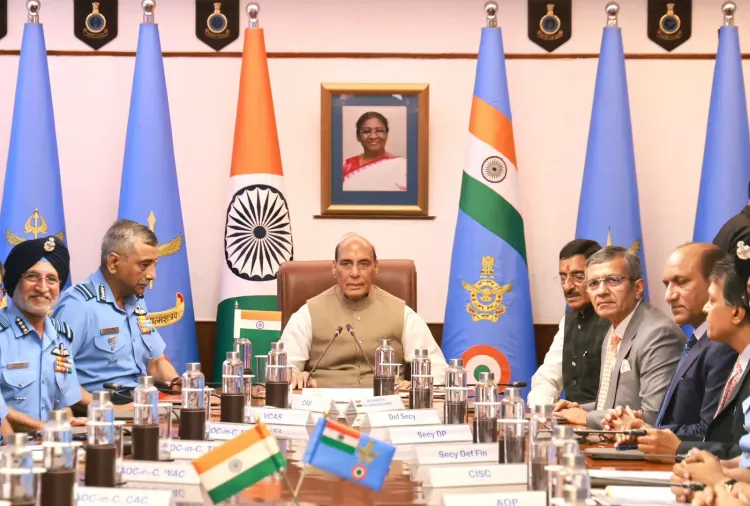
Defence Minister Rajnath Singh addressed the IAF Commanders' Conference in New Delhi on November 12, directing the IAF to sustain offensive and defensive surprise, strengthen intelligence and surveillance integration, and launching UDAAN's in-house AI applications for operations, administration and aerospace safety.
Key Takeaways
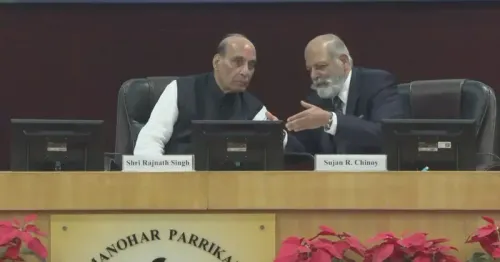
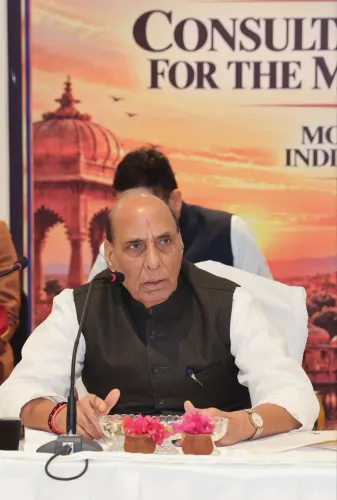
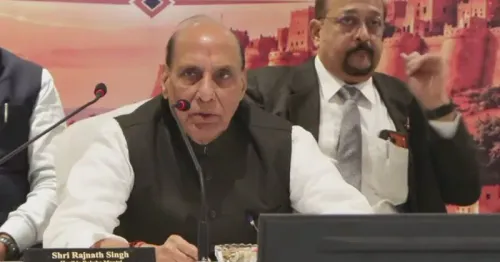
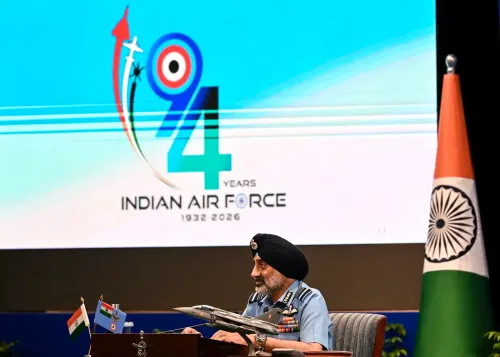
Rajnath Singh addressed the IAF Commanders' Conference in New Delhi on November 12, 2026 .
He urged the IAF to strengthen both offensive and defensive dimensions of the 'element of surprise' to maintain operational readiness.
Singh stressed the need to bolster intelligence and surveillance capabilities and enhance integration among systems to pre-empt threats.
He formally launched in-house AI applications developed by UDAAN covering operations, administration and aerospace safety .
The directive addresses both conventional threats and emerging threats arising from rapid technological advancements in modern warfare.
The launch reflects India's sustained push for self-reliant, internally developed defence technology under the Aatmanirbhar Bharat framework.
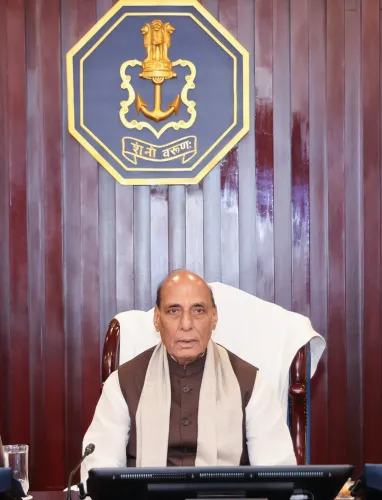
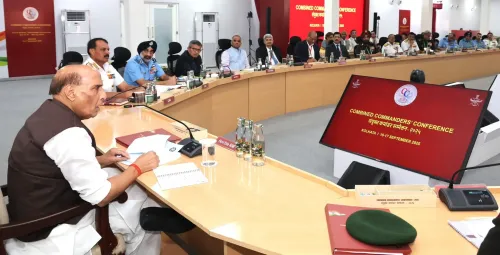
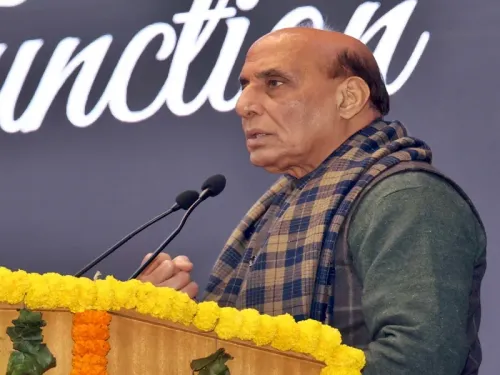
Operational surprise is not just a battlefield tactic — it is now a standing directive. Union Defence Minister Rajnath Singh addressed the Indian Air Force Commanders' Conference in New Delhi on Thursday, November 12, 2026, urging the IAF to sharpen both the offensive and defensive edges of what he called the 'element of surprise' — and to do it continuously, as modern warfare rewrites its own rules in real time.
Surprise as Strategy: What Rajnath Demanded of the IAF
The Defence Minister's address went well beyond ceremonial encouragement. Singh called on the forces to strengthen and sustain the element of surprise across both offensive and defensive dimensions — an explicit acknowledgement that adversaries are watching, adapting, and moving fast. He stressed the imperative to 'bolster intelligence and surveillance capabilities, enhance integration among systems and identify potential threats before they unfold.' That last phrase carries real weight: pre-emption, not just response, is the benchmark being set.
The framing is deliberate. Conventional threats and emerging threats — the two categories Singh named — represent very different problem sets. Conventional threats demand classic air-power readiness. Emerging threats, shaped by rapid technological advancements and the evolving nature of modern warfare, demand something harder: the agility to counter capabilities that may not yet fully exist. The Defence Minister placed both demands on the IAF simultaneously.
UDAAN's In-House AI Applications Go Live
The conference also marked a concrete milestone in the IAF's self-reliance push. Singh formally launched a suite of in-house artificial intelligence applications developed by UDAAN — an IAF internal development initiative — covering three distinct domains: operations, administration, and aerospace safety. The launch signals that the IAF is not waiting for external vendors to deliver AI tools; it is building them itself, inside the service.
India's armed forces have pursued technology integration as a strategic priority across successive defence budgets since the late 2010s. AI development inside a service branch — rather than procured off the shelf — fits squarely within the broader Aatmanirbhar Bharat (self-reliant India) defence framework that the government has championed. Aerospace safety as an application area is particularly notable: AI-assisted safety systems could directly reduce accident rates and improve maintenance decision-making across a large and operationally demanding fleet.
Intelligence, Surveillance and the Integration Imperative
Singh's emphasis on integration among systems points to a persistent structural challenge in India's defence apparatus — different platforms, sensors, and commands that have historically operated with limited data-sharing. Closing those gaps is not a software problem alone; it is a doctrine, training, and architecture challenge. The fact that the Defence Minister named it explicitly at a commanders' conference suggests it remains a live priority, not a solved one.
The IAF Commanders' Conference is one of the most senior internal forums in the Indian military calendar, bringing together top brass to align on operational direction. A Defence Minister's address at such a forum sets the political-strategic tone that filters down through every subsequent command decision. The message this year: watch everything, build it yourself, and strike — or absorb a strike — before the enemy expects it.
The next measure of these directives will come when UDAAN's AI tools see active deployment beyond their launch, and when the IAF's integration architecture is tested — not in a conference room, but in the sky.
Point of View
Build AI internally — frames the IAF's modernisation not as procurement but as doctrine. By placing the 'element of surprise' at the centre of readiness language, the Defence Minister signals an offensive orientation even within a defensive posture, a posture India has been calibrating since the 2020 Ladakh standoff accelerated technology-driven military thinking. The UDAAN AI launch is the tangible output of a years-long push to reduce dependence on foreign vendors for critical software, echoing similar moves across the other services. What bears watching is whether these tools scale beyond a single command — the gap between a conference-room launch and theatre-wide deployment is where most defence AI programmes stall.
NationPress
12 Nov 2026
Frequently Asked Questions
What did Rajnath Singh say at the IAF Commanders' Conference?
Rajnath Singh urged the Indian Air Force to strengthen both offensive and defensive dimensions of the 'element of surprise', bolster intelligence and surveillance capabilities, and enhance system integration to identify threats before they unfold.
What AI applications were launched at the IAF Commanders' Conference 2026?
In-house AI applications developed by UDAAN were launched, covering three areas: operations, administration, and aerospace safety.
What is UDAAN in the Indian Air Force context?
UDAAN is an in-house development initiative of the Indian Air Force that built AI-based tools for internal use. Its AI applications were officially launched by Defence Minister Rajnath Singh at the November 2026 commanders' conference.
When and where was the IAF Commanders' Conference 2026 held?
The IAF Commanders' Conference was held in New Delhi on November 12, 2026, and was addressed by Union Defence Minister Rajnath Singh.
Why is the Indian Air Force focusing on AI and system integration?
The IAF's focus reflects India's broader defence modernisation drive to counter rapid technological advancements and the evolving nature of modern warfare, including hybrid and emerging threats, while building self-reliant indigenous capabilities.