Drones evolutionary, not revolutionary for IAF: Air Chief Marshal AP Singh
Synopsis
India's top air force commander has drawn a clear doctrinal line: drones belong inside the IAF, not in a separate force. With F-35s flying over Jodhpur for the first time and 40 nations at Tarang Shakti, Air Chief Marshal AP Singh's pre-Air Force Day remarks reveal a force that is scaling up unmanned systems — but firmly on its own terms.
Key Takeaways
Air Chief Marshal A.P.
Singh ruled out a separate drone force for the IAF on 3 October 2026 , ahead of Air Force Day .
Singh described drones as 'evolutionary, not revolutionary' for the IAF, noting the force has operated such capabilities for decades.
He stressed that drones must operate in an integrated setup alongside other weapons, not as a standalone arm.
The IAF chief indicated that specialised drone units already exist and may be expanded if required.
The Tarang Shakti multilateral exercise at Jodhpur ( 26 September – 12 October ) features over 80 aircraft , 2,000+ personnel , and 40 nations — with F-35s joining a multilateral exercise on Indian soil for the first time.
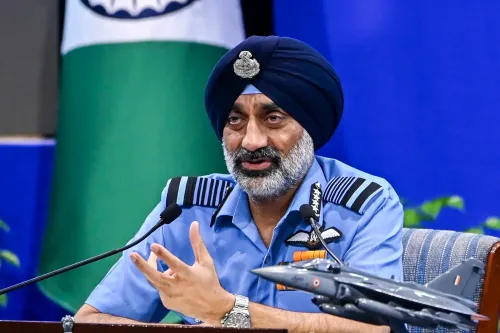
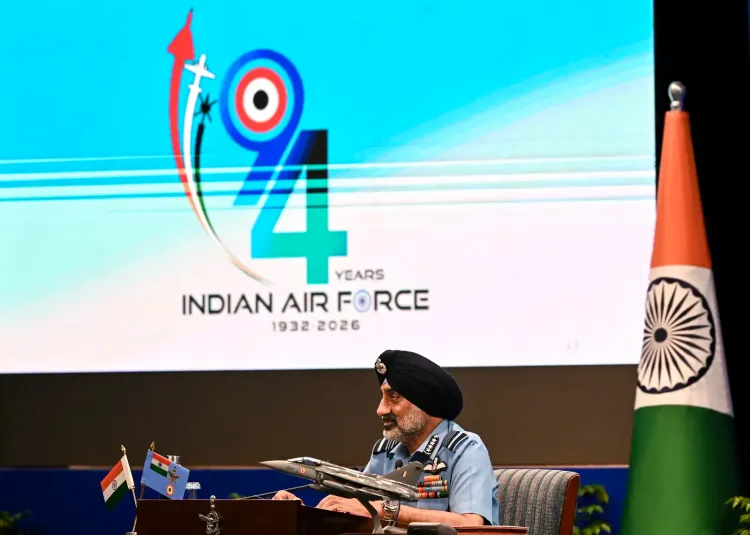
Air Chief Marshal A.P. Singh on Saturday, 3 October 2026, firmly ruled out establishing a separate drone force within the Indian Air Force (IAF), asserting that drone capabilities have been integral to the service for decades and represent an evolutionary — not revolutionary — development. His remarks came ahead of Air Force Day during an interaction with media in New Delhi.
What the IAF Chief Said on Drones
Speaking directly on the question of a dedicated drone arm, Singh stated, 'As far as a separate drone force is concerned, in the Indian Air Force, these things have existed for decades. These capabilities have been with us for decades. So, if I can say, drones are not revolutionary to the Indian Air Force. Yes, they are evolutionary.'
He acknowledged the battlefield utility of loitering ammunition — commonly known as kamikaze drones — noting their effectiveness in creating chaos and neutralising adversaries. However, he drew a clear line on organisational separation, adding, 'We are growing in drones; the number of drones, the number of munitions, and the types of drones and ammunition are increasing. Whether we need a separate drone force, I don't think so.'
Integrated Operations, Not Siloed Forces
Singh emphasised that drones must be embedded within the existing force structure rather than operate in isolation. 'These have to be together along with other weapons so that they bring in that effect. We cannot operate one type of weapon separately somewhere and another type of weapon separately. So, we have not thought of having a separate force, not at all,' he said.
Notably, the IAF chief did leave room for expansion of specialised drone units. 'We already have them. If needed, we need to increase the number of units for that force,' he added — signalling organic growth within the current framework rather than restructuring into a parallel branch.
Tarang Shakti Exercise: F-35s and 40 Nations at Jodhpur
Singh also spoke at length about the ongoing multilateral air exercise Tarang Shakti, being held at Jodhpur airbase from 26 September to 12 October. The exercise involves over 80 aircraft and more than 2,000 personnel from 40 nations, making it one of the largest of its kind hosted by India.
A significant first this edition: F-35 fighter jets are participating in a multilateral exercise on Indian soil for the very first time. Singh described the exercise's objectives as building interoperability, fostering mutual understanding of operational methods, and developing a common tactical communication framework. 'This Tarang Shakti Phase 2 will also bring in a lot of lessons for us so that we can improve ourselves, and I'm sure they also will take back,' he said.
Context and Strategic Significance
The IAF chief's remarks come at a time when drone warfare has reshaped battlefields globally — from the conflict in Ukraine to operations across West Asia. India's armed forces have faced increased pressure to modernise rapidly, with the Army and Navy also scaling up unmanned systems programmes. Singh's position reflects a deliberate doctrinal choice: absorb drone capabilities into existing multi-domain formations rather than create a standalone service, as some nations have considered. This approach prioritises joint operations and avoids the coordination friction that separate commands can introduce. The IAF's stance on drones will likely shape India's broader defence procurement and organisational strategy in the years ahead.
Point of View
Not battlefield advantage. Yet the real question is whether the IAF's existing multi-domain structures are agile enough to absorb fast-evolving drone technologies at pace — because the 'evolutionary' framing, while strategically sound, could also become a bureaucratic justification for slower institutional adaptation. With loitering munitions rewriting battlefield calculus from Ukraine to West Asia, the pressure on the IAF to prove that integration beats specialisation will only intensify.
NationPress
3 Oct 2026
Frequently Asked Questions
Why did Air Chief Marshal AP Singh rule out a separate drone force for the IAF?
Singh argued that drone capabilities have been part of the IAF for decades and must operate in an integrated manner alongside other weapons systems to be effective. He said creating a separate force would risk operational silos, adding that the IAF already has specialised drone units that can be expanded as needed.
What did Air Chief Marshal Singh mean by drones being 'evolutionary, not revolutionary'?
Singh used the phrase to convey that drone technology is a natural progression of existing IAF capabilities rather than a disruptive break from tradition. The IAF has operated unmanned systems for decades, so the current scale-up of drones and loitering ammunition is a continuation of that trajectory, not a structural transformation.
What is Tarang Shakti 2026 and what makes it significant?
Tarang Shakti is a major multilateral air exercise hosted by India at Jodhpur airbase from 26 September to 12 October 2026, involving over 80 aircraft and more than 2,000 personnel from 40 nations. This edition is notable for being the first time F-35 fighter jets have participated in a multilateral exercise on Indian soil.
Will the IAF expand its drone units?
Yes, according to Air Chief Marshal Singh, the IAF already has specialised drone units and is open to increasing the number of such units if operationally required. However, this expansion will occur within the existing force structure rather than as a separate branch.
What is loitering ammunition and why does it matter?
Loitering ammunition, also known as kamikaze drones, are unmanned systems that circle a target area and strike on command. Singh acknowledged their effectiveness in creating tactical chaos and taking down adversaries, reflecting their growing role in modern air operations and India's expanding inventory of such munitions.