IAF chief A.P. Singh: Air power is cutting edge of military strength ahead of Air Force Day
Synopsis
On the eve of Air Force Day, IAF chief Air Chief Marshal A.P. Singh made a pointed case: in an era of drone wars and precision strikes, aerospace is no longer a supporting arm — it is the sharp end of national power. And with a ₹3.25 lakh crore Rafale deal on the verge of closure, India is betting big on that doctrine.
Key Takeaways
Air Chief Marshal A.P.
Singh said on 3 October 2026 that military power is now concentrated around the aerospace domain .
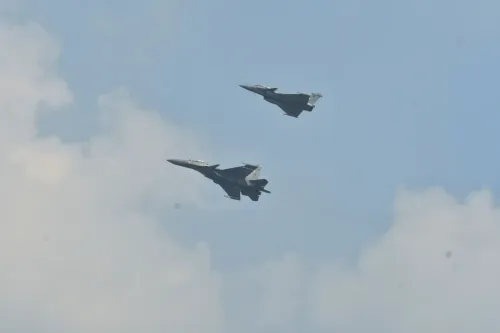
Singh cited recent global conflicts as evidence that air power is the cutting edge on which nations rely to meet strategic objectives.
He identified advanced fighter aircraft, long-range precision weapons, integrated air command and control, and unmanned aerial systems as the defining elements of modern military power.
India's Multi-Role Fighter Aircraft (MRFA) deal, estimated at ₹3.25 lakh crore , is likely to be finalised by the end of the current financial year.
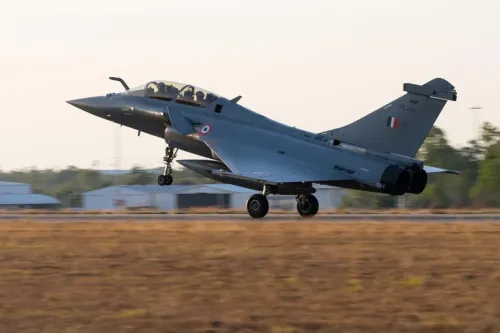
India cleared the proposal to procure 114 Rafale jets in February 2026 — the country's largest-ever defence acquisition — under a government-to-government framework with France .
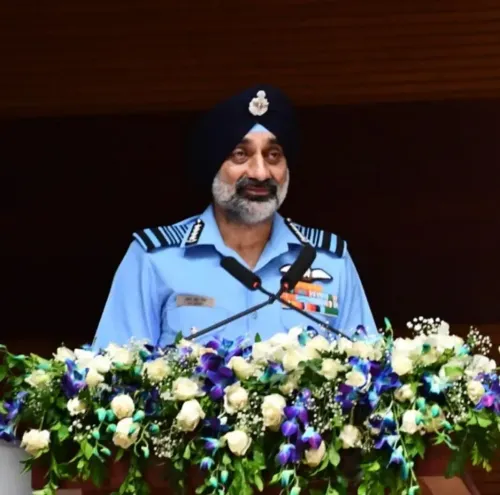
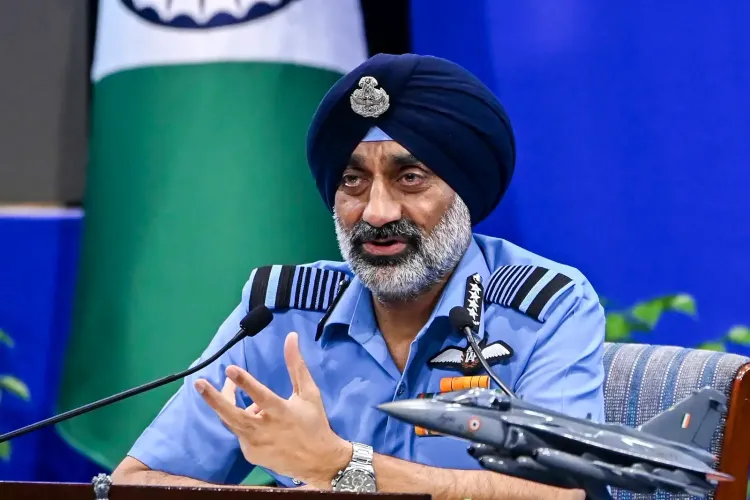
Air Chief Marshal A.P. Singh on Saturday, 3 October 2026, declared that military power today is fundamentally concentrated around the aerospace domain, citing ongoing global conflicts as evidence that air power has emerged as the decisive instrument nations rely on to achieve their strategic objectives. Singh made the remarks at a press conference in New Delhi ahead of Air Force Day.
Why Air Power Now Defines Military Strength
'As far as geopolitics is concerned, we all have seen the changes which are taking place in the world. From the conflicts which we see around, it is very clear that other elements of comprehensive national power of any nation rest on a strong military,' Singh said.
He went further, arguing that without adequate military capability, any state remains open to coercion. 'If we have to do things our way, if we have to follow the path that we want to follow, we have to have a strong military,' the IAF chief stated.
Singh specifically identified air power as the frontline instrument of modern warfare: 'In the recent conflicts we have seen that it is the air power which has come to the fore, which has come out as the cutting edge of military power, and it is one instrument on which any nation relies to meet its objectives.'
Aerospace Domain at the Centre of Global Defence Trends
The Air Chief Marshal pointed to global defence procurement patterns as a direct reflection of this strategic reality. 'Whether we look at defence transactions worldwide and strategic conversations that are taking place — whether it is advanced fighter aircraft, long-range precision weapons, integrated air command and control, or unmanned aerial systems — it is all very clear that they all reflect that military power is concentrated around the aerospace domain,' he said.
This assessment aligns with broader international trends, where countries have sharply accelerated spending on stealth fighters, drone warfare capabilities, and integrated air defence networks following recent large-scale conflicts in Europe and the Middle East.
India's ₹3.25 Lakh Crore Rafale Deal Moves Toward Closure
Singh also confirmed that India is likely to finalise the long-pending Multi-Role Fighter Aircraft (MRFA) deal by the end of the current financial year, if timelines hold. Price negotiations and other critical parameters on the acquisition — estimated at approximately ₹3.25 lakh crore — are currently under way, he said.
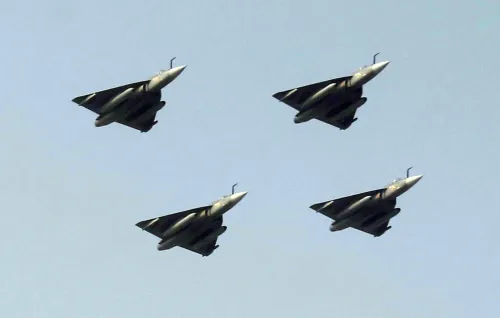
In February 2026, India cleared a proposal to procure 114 Rafale fighter jets in what would be the country's largest-ever defence acquisition. The deal is being structured under a government-to-government framework with France, nearly two decades after the plan was originally conceived to bolster the Indian Air Force's combat capability and expand its existing Rafale fleet.
What This Means for India's Defence Strategy
The remarks signal a deliberate doctrinal emphasis on aerospace as India's primary deterrence layer. Notably, the convergence of the MRFA's impending closure with Singh's public articulation of air power's centrality suggests the IAF is building a case — both internally and externally — for sustained capital allocation to the aerospace domain over the next decade.
With India navigating complex security environments on its western and northern flanks, Singh's comments carry weight beyond ceremonial Air Force Day messaging. All eyes will be on whether the MRFA deal crosses the finish line before the current financial year closes.
Point of View
The IAF chief is effectively making a claim on future defence capital in a system where the Army still dominates allocation. The timing, ahead of Air Force Day and with the ₹3.25 lakh crore MRFA deal in active negotiation, is unlikely to be coincidental. What the remarks do not address is the IAF's longstanding force depletion problem — the service has fallen well below its sanctioned squadron strength, and even a finalised Rafale deal will take years to translate into operational aircraft. The aerospace doctrine is sound; the execution timeline is the real question.
NationPress
3 Oct 2026
Frequently Asked Questions
What did IAF chief A.P. Singh say about air power ahead of Air Force Day 2026?
Air Chief Marshal A.P. Singh said that military power is now concentrated around the aerospace domain, and that recent global conflicts have demonstrated air power is the cutting edge on which any nation relies to meet its objectives. He made these remarks at a press conference in New Delhi on 3 October 2026, ahead of Air Force Day.
What is the MRFA deal and how much is it worth?
The Multi-Role Fighter Aircraft (MRFA) deal is India's proposal to procure 114 Rafale fighter jets in the country's largest-ever defence acquisition, estimated at approximately ₹3.25 lakh crore. It is being structured as a government-to-government agreement with France and was formally cleared in February 2026.
When is the Rafale MRFA deal expected to be finalised?
Air Chief Marshal Singh said India is likely to finalise the MRFA deal by the end of the current financial year, if plans materialise in time. Price negotiations and other critical issues are currently under way.
Why is India's focus on the aerospace domain significant?
Singh's emphasis reflects a broader global shift in military doctrine, where advanced fighter aircraft, unmanned aerial systems, long-range precision weapons, and integrated air command and control have become the primary instruments of national power. For India, this focus shapes procurement priorities and long-term defence strategy, particularly given its complex security environment.
What is India's existing Rafale fleet, and why is the new deal needed?
India already operates a fleet of Rafale jets acquired earlier from France. The new 114-jet MRFA deal is aimed at significantly expanding that fleet, boosting the Indian Air Force's combat strength and partially addressing a longstanding shortfall in operational squadron numbers. The plan was originally conceived nearly two decades ago.