CM Sukhu ends HP's 50% industrial plot discounts, bets on GST
Synopsis
CM Sukhvinder Singh Sukhu has announced Himachal Pradesh will end the practice of selling industrial plots at up to 50% below market value and will draft a new Industrial Policy focused on securing GST revenues without compromising state interests.
Key Takeaways
CM Sukhu has ended the practice of allotting industrial plots at up to 50 percent below market value in Himachal Pradesh.
Industrial plots will now be sold at full market rate , reversing a long-standing incentive used to attract manufacturers.
A new Industrial Policy is being drafted to ensure incoming units contribute to the state's GST pool.
Himachal Pradesh's earlier frameworks, including the 2019 policy , permitted deep land-price discounts in designated industrial zones.
The move aligns with a broader national shift by Indian states from upfront land subsidies to performance- and revenue-linked incentives post- GST 2017 .
The draft policy document and any associated investor outreach are yet to be publicly released.
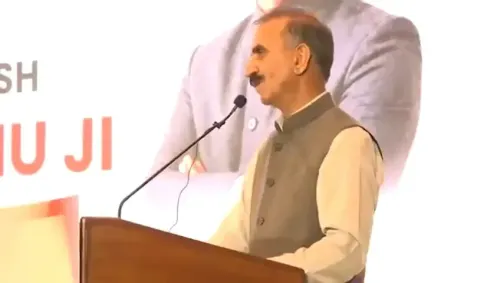
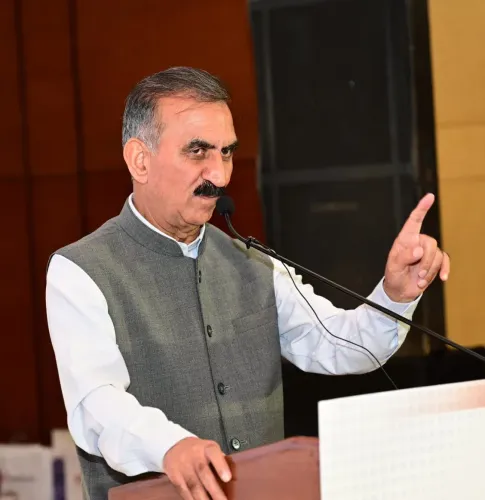
Himachal Pradesh Chief Minister Sukhvinder Singh Sukhu has drawn a sharp line under decades of discounted land giveaways to industry — announcing that the state will no longer sell industrial plots below market rate and will instead craft a new Industrial Policy designed to maximise GST revenues without compromising state interests.
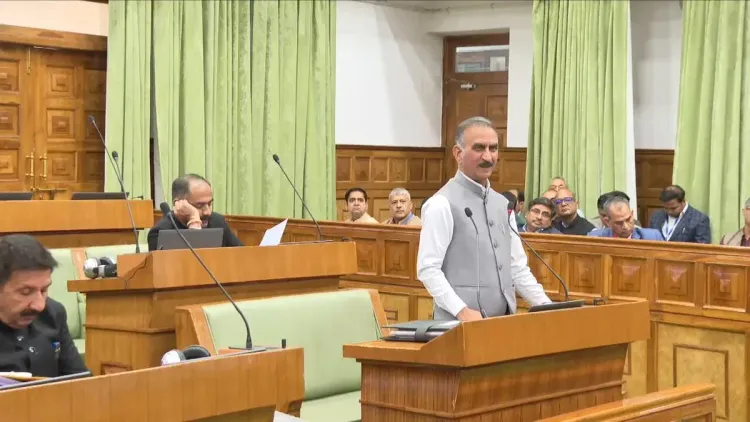
Speaking on Tuesday, November 17, 2026, Sukhu stated plainly: 'Plots that were earlier given at up to 50 percent below their value — I said they should be given at full rate. We have not given industrial plots cheaply.' He added that the new Industrial Policy will be framed to ensure the state earns GST from incoming units while not sacrificing broader public interests.
Why the 50% discount was the old normal
Himachal Pradesh's geography has long shaped its industrial bargaining position. As a hill state with limited flat land, high logistics costs, and thin infrastructure, it historically offered deep upfront concessions — including land at up to 50 percent below market value under frameworks such as the 2019 industrial policy — to persuade manufacturers to set up here rather than in better-connected plains states.
That model had a structural flaw: subsidised land meant immediate revenue foregone, and because GST — rolled out nationally in 2017 — is destination-based, the state's share of the tax pool depended heavily on how many units were actually producing and selling from Himachal Pradesh. A cheap plot handed to a dormant or paper unit yielded neither land revenue nor ongoing GST. The state bore the cost; the fiscal dividend never arrived.
The GST logic behind the new approach
Sukhu's pivot is rooted in a simple arithmetic: a unit paying full market rate for a plot but actively manufacturing generates far more for the state exchequer over time — through GST inflows, employment, and ancillary economic activity — than one that pocketed a land subsidy and stalled. The new policy, still being drafted, is intended to screen for genuine producers over land acquirers.
This shift mirrors a broader trend across Indian states that have moved away from heavy upfront subsidies toward performance-linked incentives and revenue-sharing arrangements since 2017. For a fiscally stretched hill state, the difference between a GST-generating cluster and a subsidised ghost unit is not marginal — it can mean hundreds of crores in annual devolution.
What investors and the exchequer are watching
The immediate question for industrial investors is what the revised framework will look like on the ground: will allotment criteria tighten, will sectoral preferences shift, and how will the state balance full-price land against competing offers from neighbouring states? Sukhu has signalled the policy will be comprehensive — but the draft is yet to be made public.
For the state exchequer, the stakes are direct. Himachal Pradesh is among the states that have leaned on central transfers and debt to fund welfare commitments. A self-sustaining industrial base that feeds the GST pool is not a luxury — it is a fiscal necessity. The CM has set the direction; the detail, and the credibility test, lies in the policy document that follows.
Point of View
This is as much a political statement on stewardship as it is an economic one: the CM is explicitly distancing himself from what he frames as a past practice of undervaluing public assets. The real test will be whether the new policy attracts quality investment at full price, or simply chills investor appetite — a tension every reform-minded state government must resolve.
NationPress
17 Nov 2026
Frequently Asked Questions
Why was Himachal Pradesh giving industrial plots at a discount?
Himachal Pradesh historically offered industrial land at up to 50 percent below market value to offset the state's geographical disadvantages — high logistics costs, limited flat terrain, and competition from better-connected plains states — in order to attract manufacturers.
What has CM Sukhu changed about industrial plot allotments in HP?
CM Sukhvinder Singh Sukhu has directed that industrial plots be sold at full market rate, ending the practice of discounted allotments that could reach 50 percent below value.
How does Himachal Pradesh earn GST from industries?
Under India's destination-based GST system, Himachal Pradesh receives a share of GST from goods produced and sold within the state. More active manufacturing units mean a larger GST pool for the state exchequer.
What will the new Himachal Pradesh Industrial Policy focus on?
According to CM Sukhu, the new Industrial Policy will be designed so that the state earns GST revenue from units that set up in Himachal Pradesh while also protecting broader state interests — the draft is yet to be publicly released.
Is Himachal Pradesh the only state moving away from industrial land subsidies?
No. Several Indian states have shifted from heavy upfront land and utility subsidies toward policies that secure ongoing tax revenues since the GST rollout in 2017, as destination-based tax sharing made recurring revenue more valuable than one-time asset concessions.