Army Chief Dwivedi: Every soldier must operate drones, NDA cadets trained for future war
Synopsis
India's Army Chief has put drone literacy at the heart of military doctrine — not just for specialists, but for every soldier. With live drones and simulators now deployed at the NDA and a theatreisation report already on the Defence Minister's desk, General Dwivedi is pushing the hardest modernisation reset the Indian Army has seen in a generation.
Key Takeaways
Army Chief General Upendra Dwivedi declared that every Indian soldier must be capable of operating drones, coining the phrase 'Eagle on the Arm' .
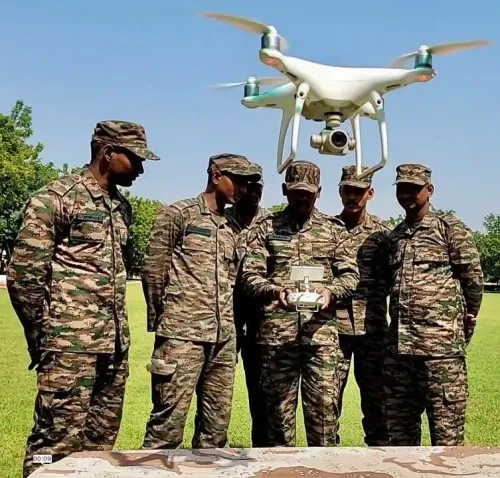
Cadets at the NDA, Pune are being trained on live drones and simulators ; General Dwivedi personally arranged four to six large drones for the academy during a December visit.
Training covers both drone operation and counter-drone systems to prepare soldiers for drone-saturated battlefields.
The theatreisation report has been completed by the Chiefs of Staff Committee and submitted to the Defence Minister for review.
Under the proposed structure, Service Chiefs will handle raising, training, and sustaining, while theatre commanders will manage operations.
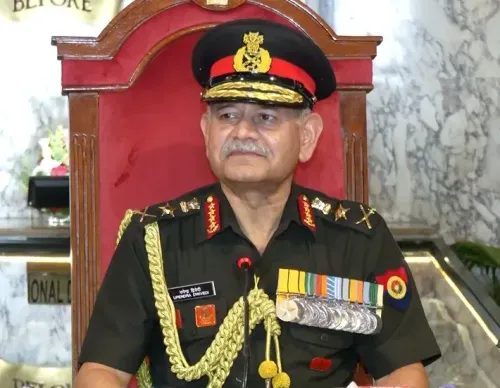
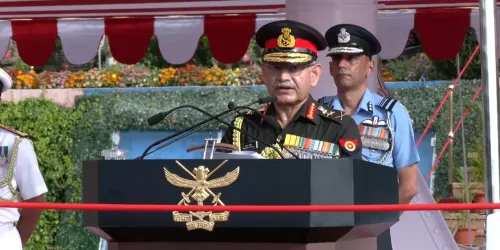
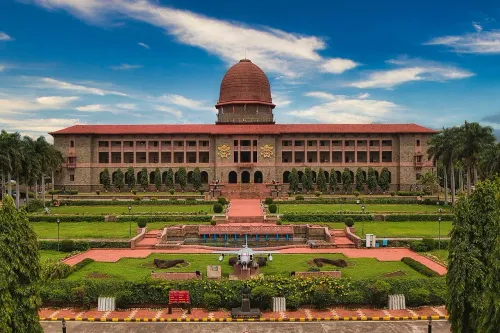
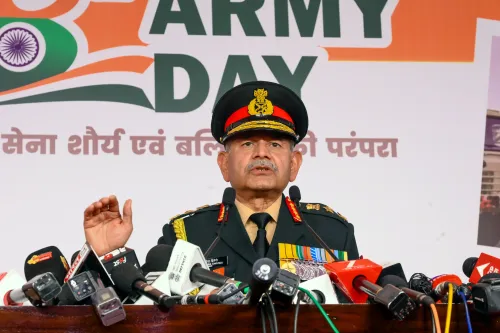
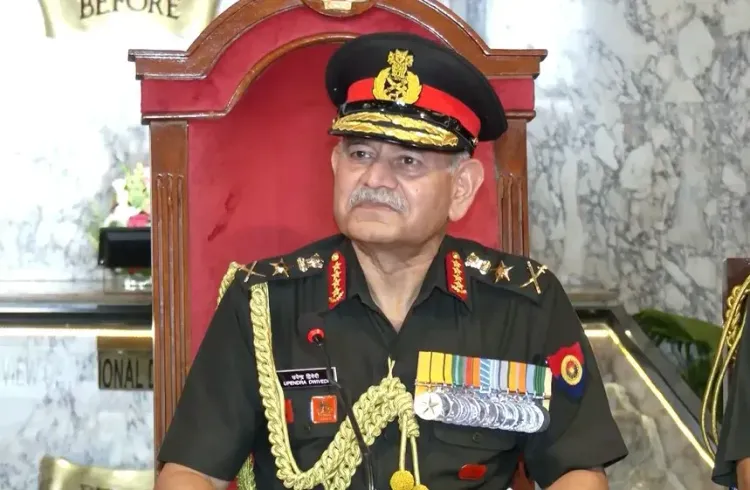
Indian Army Chief General Upendra Dwivedi on Saturday, 31 May 2025, declared that every soldier in the Indian armed forces must be capable of operating drones, outlining a sweeping transformation in how the military is preparing its personnel for next-generation warfare. His remarks came at a press conference following the Passing Out Parade (POP) of the 150th Course of the National Defence Academy (NDA) in Pune.
The 'Eagle on the Arm' Vision
General Dwivedi invoked a phrase he had introduced shortly after assuming office — 'Eagle on the Arm' — to articulate the urgency of drone proficiency across all ranks. 'After I took over as the army chief, I said ‘Eagle on the arm’. This means that every soldier should have an eagle in his hand. When I say this, I am not referring to a bird; I am talking about drones. This means that every soldier should have the capability to operate a drone,' he said.
The concept signals a fundamental shift in infantry doctrine: drones are no longer the preserve of specialised units but are being positioned as standard equipment for every combatant.
Training Infrastructure Being Scaled Up
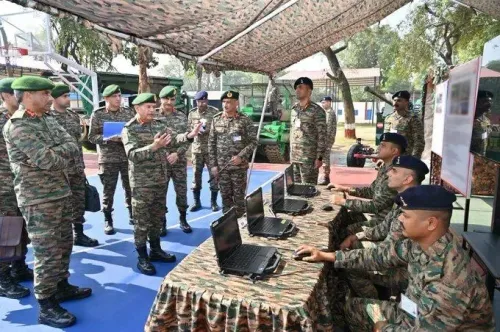
The Army Chief confirmed that drone training infrastructure is being steadily expanded across military academies and institutions. During a visit to the NDA in December, General Dwivedi personally coordinated the deployment of four to six large drones and simulators for the training team. He noted that the NDA Commandant subsequently took further steps, significantly increasing the drone inventory on campus.
'You may have seen that in our academies and other places, training is being conducted and simulators are available. After that, the Commandant took significant steps, and many more drones have been brought here,' he said. Cadets are now receiving hands-on exposure to both live drone systems and simulators as part of their standard curriculum.
Counter-Drone Skills Equally Critical
General Dwivedi stressed that drone literacy must extend beyond operation to include counter-drone capabilities — systems designed to detect, jam, or neutralise aerial threats. 'It is important for every soldier to have knowledge about drones and counter-drone equipment. This is because when a soldier goes onto the battlefield, drones will be used to such an extent that controlling and responding to them will require extensive knowledge,' he said.
This comes amid growing evidence from recent conflicts globally that drone swarms and first-person-view (FPV) attack drones have fundamentally altered battlefield dynamics, making counter-drone proficiency as vital as marksmanship.
Theatreisation Report Submitted to Defence Minister
General Dwivedi also addressed the long-pending restructuring of India's military commands under the theatreisation initiative, describing the process as being on the 'right track.' He confirmed that all internal deliberations within the Chiefs of Staff Committee have concluded and that a comprehensive report has been submitted to the Defence Minister for review.
'As of now, all discussions on theatreisation have been completed within the Chiefs of Staff Committee. The complete report has been submitted to the Defence Minister. It is currently undergoing review by various stakeholders,' he said. Under the proposed structure, Service Chiefs would retain responsibility for raising, training, and sustaining functions, while newly created theatre commanders would oversee operations and force orchestration. The Chief of Defence Staff (CDS) and all three Service Chiefs have collectively reviewed the proposal to ensure the core interests of each service are protected.
What Comes Next
General Dwivedi expressed confidence that the incoming CDS would carry the theatreisation reform forward. The drone integration programme, meanwhile, is expected to deepen across all arms and services as the army moves toward its stated goal of a fully drone-literate fighting force. How quickly that vision translates from academy training to frontline deployment will be the defining test of this modernisation push.
Point of View
But the gap between academy simulators and frontline integration remains wide. Meanwhile, the theatreisation report being 'under review' is a familiar holding pattern — the reform has been in motion for nearly a decade. The real question is whether the next CDS can convert committee consensus into an operational command structure before the next conflict makes the delay costly.
NationPress
13 Oct 2026
Frequently Asked Questions
What did Army Chief General Dwivedi mean by 'Eagle on the Arm'?
'Eagle on the Arm' is a phrase General Upendra Dwivedi introduced after assuming office to signify that every soldier should be capable of operating a drone. He clarified the term explicitly: 'I am not referring to a bird; I am talking about drones.'
How is the Indian Army training soldiers on drones?
The Army is providing cadets and personnel with hands-on training using live drone systems and simulators at military academies including the NDA in Pune. General Dwivedi personally arranged four to six large drones and simulators for the NDA during a December visit, after which the Commandant expanded the inventory further.
Why is counter-drone training important for Indian soldiers?
General Dwivedi stressed that future battlefields will see drones deployed at such scale that soldiers must be able to both operate and counter them. Counter-drone systems are designed to detect, jam, or neutralise aerial threats, making this knowledge as essential as conventional combat skills.
What is the current status of India's military theatreisation plan?
All internal discussions within the Chiefs of Staff Committee have been completed and the full report has been submitted to the Defence Minister for review. The CDS and three Service Chiefs have reviewed the proposal to ensure the interests of all three services are addressed.
How will theatreisation change the Indian military command structure?
Under the proposed structure, Service Chiefs will be responsible for raising, training, and sustaining their respective forces, while newly designated theatre commanders will be responsible for operations and the orchestration of forces across services.