Army Chief: AI, LLMs critical for faster decisions on complex battlefields
Synopsis
India's Army Chief has gone further than most senior military commanders in explicitly naming SLMs and LLMs as operational tools — not just research concepts. At NDA Pune, General Dwivedi framed AI not as a future aspiration but as a present necessity, driven by drone proliferation and the compounding complexity of multi-domain warfare.
Key Takeaways
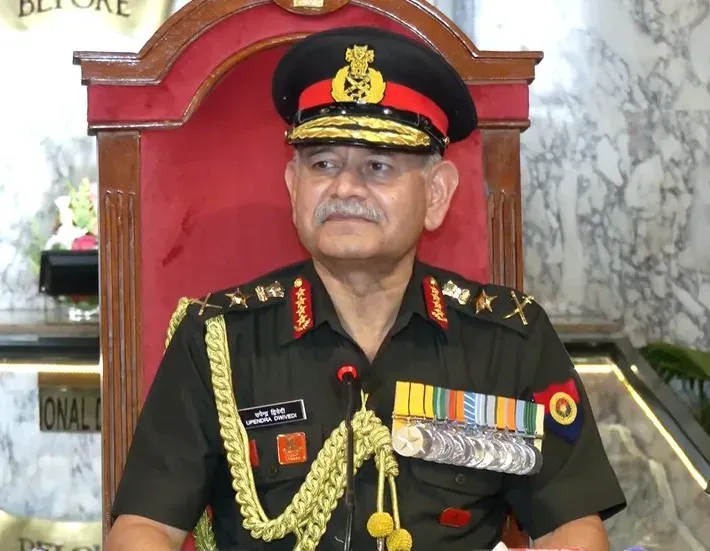
Army Chief General Upendra Dwivedi spoke on 30 May after reviewing the 150th Course Passing Out Parade at NDA, Pune .
He cited the OODA cycle — Observe, Orient, Decide and Act — to explain why AI support is essential when multiple operational loops overlap.
Small Language Models (SLMs) and Large Language Models (LLMs) were specifically named as tools accelerating military resource rationalisation.
General Dwivedi flagged drone proliferation as a key driver of battlefield complexity, calling for both offensive and counter-drone capabilities .
He described automation as a strategic necessity for managing the expanded ecosystem of drones, sensors, and surveillance platforms in real time.
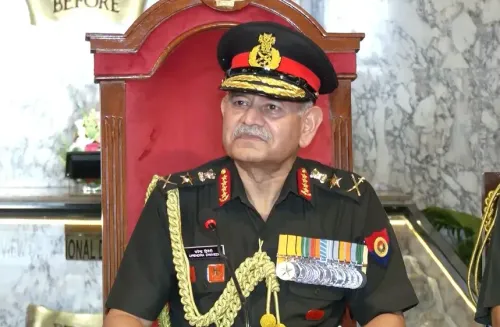
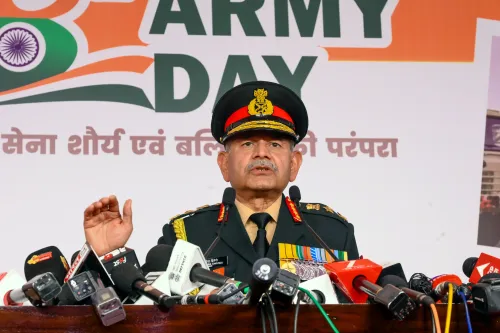
Indian Army Chief General Upendra Dwivedi on Saturday, 30 May underscored the growing centrality of Artificial Intelligence (AI) in modern warfare, asserting that emerging technologies have become indispensable for rapid decision-making and managing the escalating complexity of contemporary military operations. His remarks came after he reviewed the Passing Out Parade of the 150th Course at the National Defence Academy (NDA) in Pune.
Why AI Is Now a Battlefield Necessity
General Dwivedi explained that the sheer volume of information and the range of resources deployed on modern battlefields have outpaced traditional command structures. He invoked the OODA cycle — Observe, Orient, Decide and Act — to illustrate the challenge: when multiple OODA loops overlap simultaneously, commanders require technological support to stay ahead of the operational tempo.
'When you have resources which are beyond your control, you can't manage them all in one go... when the velocity of warfare is very high, you need additional support within your resources to make decisions faster,' General Dwivedi said, speaking to reporters after the parade.
Role of SLMs and LLMs in Military Decision-Making
The Army Chief specifically cited Small Language Models (SLMs) and Large Language Models (LLMs) as key AI tools being integrated into military frameworks. He noted that these technologies accelerate the rationalisation and application of resources — two functions that are critical when battlefield situations evolve across multiple domains simultaneously.
'The two languages help make the decision-making process fast... Rationalisation of resources and application of resources, all of this becomes much faster in today's world,' he said. This marks one of the most explicit acknowledgements by a sitting Indian Army chief of the operational role of language model-based AI in defence planning.
Drone Proliferation and the Counter-Drone Imperative
General Dwivedi also flagged the rapid proliferation of drones as a defining feature of the evolving battlefield. He stressed that armed forces must build both offensive drone capabilities and robust counter-drone systems to neutralise aerial threats.
'In today's environment, we also have numerous drones coming. Now, you need counter-drone equipment, and you need to apply your own drones. Therefore, the resources present on the battlefield are enormous,' he said. The growing deployment of drones, surveillance platforms, and sensors has, according to him, significantly expanded the scale of assets that commanders must manage in real time.
Automation as the Strategic Enabler
Addressing the systemic challenge of managing this expanded technological ecosystem, General Dwivedi argued that a high degree of automation is no longer optional — it is a strategic requirement. 'To handle such resources, you need some kind of automation, and AI plays a very pivotal role,' he added.
His comments come amid a broader global shift in defence doctrines, with major militaries — including those of the United States, China, and Israel — accelerating AI integration into command-and-control systems. India's Army appears to be aligning its modernisation roadmap with this trajectory, particularly in the context of its operational requirements along the northern and western borders.
The NDA Passing Out Parade Context
The remarks were made on the sidelines of a significant institutional milestone — the 150th Course Passing Out Parade at the NDA, one of India's premier tri-services training academies. The occasion provided General Dwivedi a platform to signal the Indian Army's technological direction to the next generation of officers entering service.
As AI-driven warfare transitions from concept to operational reality, the Army's articulation of a clear doctrinal stance on SLMs, LLMs, and autonomous systems will be closely watched by both strategic analysts and India's defence industry.
Point of View
Which is precisely where language models offer asymmetric advantage. What remains unaddressed is the question of adversarial AI — if India's command systems rely on LLM-assisted decisions, they also inherit LLM vulnerabilities, including prompt manipulation and data poisoning. That gap deserves as much doctrinal attention as the offensive upside.
NationPress
21 Sept 2026
Frequently Asked Questions
What did Army Chief General Upendra Dwivedi say about AI in warfare?
General Dwivedi stated that AI has become indispensable for faster decision-making and managing the complexity of modern battlefields. He specifically cited Small Language Models (SLMs) and Large Language Models (LLMs) as tools that help rationalise and apply military resources more rapidly.
What is the OODA cycle and why did General Dwivedi reference it?
The OODA cycle stands for Observe, Orient, Decide and Act — a framework describing the decision loop in combat. General Dwivedi used it to explain that when multiple OODA loops overlap simultaneously at high operational tempo, human commanders need AI support to process information and act in time.
Why is drone proliferation a concern for the Indian Army?
General Dwivedi highlighted that modern battlefields now involve large numbers of drones alongside sensors and surveillance platforms, vastly expanding the resources commanders must manage in real time. He said the Army needs both offensive drone capabilities and counter-drone systems to address this challenge.
Where did General Dwivedi make these remarks?
He spoke to reporters on 30 May after reviewing the Passing Out Parade of the 150th Course at the National Defence Academy (NDA) in Pune.
How does India's AI-in-defence stance compare globally?
Major militaries including those of the United States, China, and Israel have been accelerating AI integration into command-and-control systems. General Dwivedi's remarks suggest India's Army is aligning its modernisation roadmap with this global shift, particularly given its operational requirements along the northern and western borders.