Rajnath Singh hails IAF as inspiration, champions women's role
Synopsis
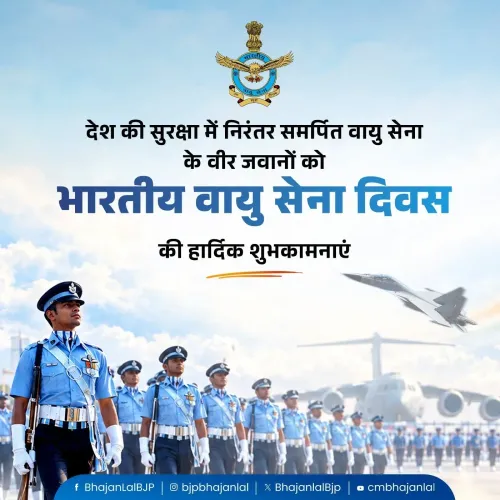
Union Defence Minister Rajnath Singh on 13 June 2026 hailed the Indian Air Force as a wellspring of inspiration for crores of youth and said the growing participation of women is making the service stronger, more balanced, and more empowered — reinforcing the government's Nari Shakti emphasis in defence.
Key Takeaways
Rajnath Singh on 13 June 2026 publicly praised the Indian Air Force as a major source of inspiration for crores of young Indians.
He described the IAF as embodying Indian culture and ethos that transcends nationality, language, and borders.
The Minister highlighted rising women's participation as making the Air Force stronger, more balanced, and more empowered.
The IAF inducted its first three women fighter pilots in 2016 , the first service to open the fighter stream to women officers.
The Air Force has the highest share of women officers among India's three armed services.
The remarks reinforce the government's sustained Nari Shakti policy emphasis within the defence establishment.
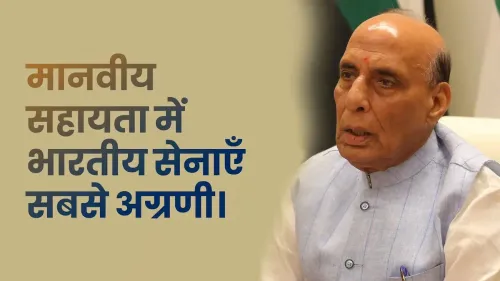
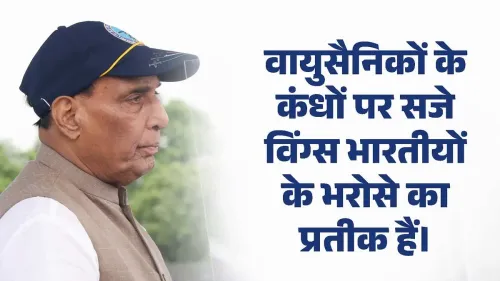
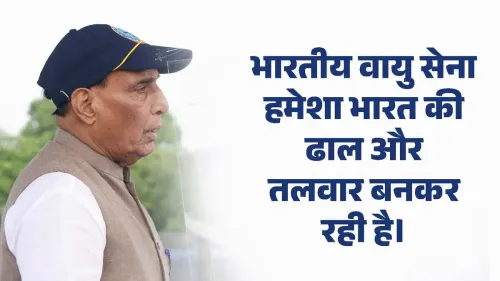
Union Defence Minister Rajnath Singh on Saturday, 13 June 2026 praised the Indian Air Force as a towering source of inspiration for crores of young Indians, and highlighted the growing participation of women as a force-multiplier for the service. Posting on X, the Minister underscored that the IAF embodies values that transcend nationality, language, and borders in service of all humanity.
Context
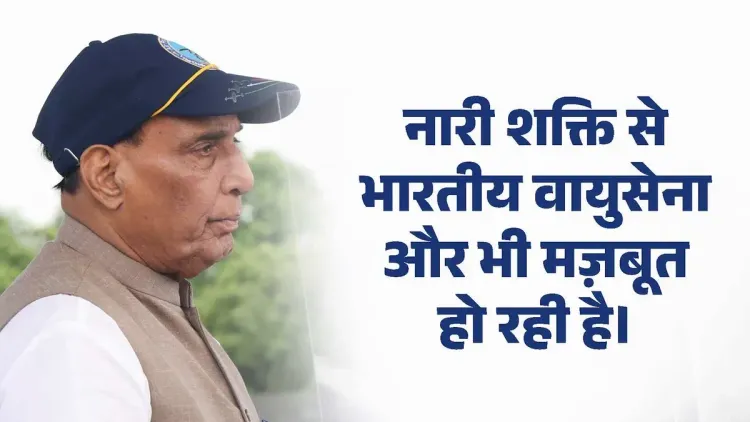
In his post, Rajnath Singh wrote that the Indian Air Force is 'करोड़ों युवाओं के लिए प्रेरणा का एक बड़ा स्रोत' ('a great source of inspiration for crores of young people'). He described the service as a true reflection of Indian culture and ethos — one that rises above nationality, language, and borders to believe in serving all of humanity. The Minister added: 'नारी शक्ति की बढ़ती भागीदारी से हमारी वायु सेना और भी मज़बूत, संतुलित और सशक्त बन रही है' — 'With the increasing participation of women power, our Air Force is becoming even stronger, more balanced, and more empowered.'
The remarks signal the government's continued emphasis on broadening the IAF's recruitment base, with particular attention to the role of women officers in shaping a more inclusive and capable force.
Policy Backdrop
The integration of women into frontline roles in the Indian Armed Forces has been a gradual but consistent policy trajectory. The Indian Air Force inducted its first three women fighter pilots in 2016, after the government opened the fighter stream to women officers — a landmark shift that followed earlier inductions in transport and helicopter streams.
Among the three services, the Air Force has consistently recorded the highest proportion of women officers, a trend aligned with expanding squadron requirements and the push to leverage a wider talent pool. The policy emphasis on Nari Shakti — women's empowerment — has been a recurring theme across defence policy statements, with permanent commissions and combat-stream eligibility progressively extended to women officers over successive years.
Stakeholders and Impact
The Minister's remarks carry weight for two key groups: serving and aspiring women officers in the armed forces, and the millions of young Indians — particularly women — who look to the IAF as a career and inspiration. Statements of this nature from the Defence Ministry typically precede or accompany policy announcements on officer recruitment or strength reviews.
For women aspirants, the IAF remains the most accessible of the three services in terms of combat-stream opportunities. The framing of women's participation as a source of institutional strength — rather than a concession — marks a rhetorical shift that advocates of gender integration in the military have long sought from the political establishment.
What's Next
Attention will now turn to the next annual officer-entry recruitment notification from the Indian Air Force, and whether the government announces any revision to the sanctioned strength of women officers in combat units. Rajnath Singh's public affirmation of Nari Shakti in the IAF context is likely to reinforce institutional momentum toward broader inclusion, even as specific numerical targets remain to be formally declared.
The broader arc points toward an Air Force that is not only expanding its technological and operational footprint but also deepening its social contract with a generation of young Indians who see the service as a symbol of national aspiration without barriers.
Point of View
Not merely a social obligation. Coming from the Defence Minister, the framing of Nari Shakti as a source of operational strength for the IAF aligns with a broader effort to consolidate the party's credentials on both nationalism and women's empowerment simultaneously. The Air Force's lead position among the services on gender inclusion gives the government a concrete record to point to, even as critics note that absolute numbers of women in combat roles remain modest. The statement is likely to set the tone for upcoming recruitment cycles and any policy announcements on expanding women's sanctioned strength in frontline units.
NationPress
28 Oct 2026
Frequently Asked Questions
What did Rajnath Singh say about the Indian Air Force?
On 13 June 2026, Defence Minister Rajnath Singh said the Indian Air Force is a great source of inspiration for crores of young Indians and that it embodies values that transcend nationality, language, and borders. He also said growing women's participation is making the IAF stronger and more balanced.
When did the Indian Air Force first induct women fighter pilots?
The Indian Air Force inducted its first three women fighter pilots in 2016, after the government opened the fighter stream to women officers — a historic first for the Indian Armed Forces.
What is Nari Shakti in the context of the Indian armed forces?
Nari Shakti, meaning women's power, refers to the policy emphasis on expanding women's roles across combat and support functions in the Indian Armed Forces. The IAF has been the most progressive of the three services in this regard.
How many women officers does the Indian Air Force have compared to the Army and Navy?
The Indian Air Force has the highest share of women officers among India's three armed services, consistent with its earlier and broader opening of combat and support streams to women candidates.
What is the significance of Rajnath Singh's statement on IAF and women's participation?
As Union Defence Minister, Rajnath Singh's statement reinforces government policy on gender inclusion in the military and is likely to influence upcoming officer recruitment notifications and any review of sanctioned strength for women in IAF combat units.