Is India Set to Forge a Fair Maritime Order?
Synopsis
Defence Minister Rajnath Singh highlights India's commitment to establishing a just maritime order, urging global cooperation to tackle maritime threats. With the inauguration of MILAN 2026, he emphasizes the need for collaboration among navies to address emerging challenges and enhance maritime security across nations.
Key Takeaways
India aims for equitable maritime order based on international law.
Collaboration among navies is essential to tackle maritime threats.
UNCLOS serves as a robust legal framework for international waters.
MILAN 2026 showcases India's commitment to global maritime cooperation.
Climate change increases the frequency of maritime challenges.
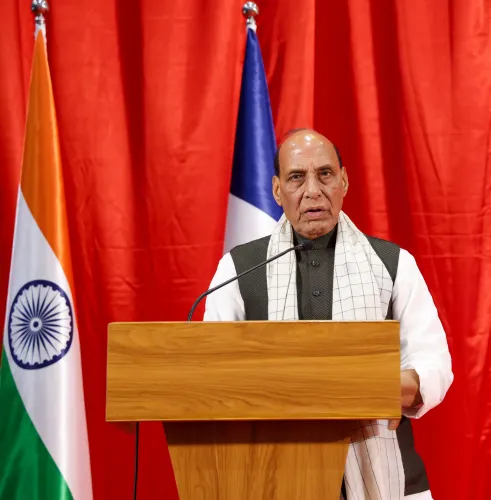
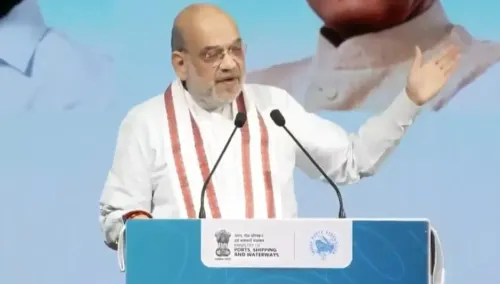
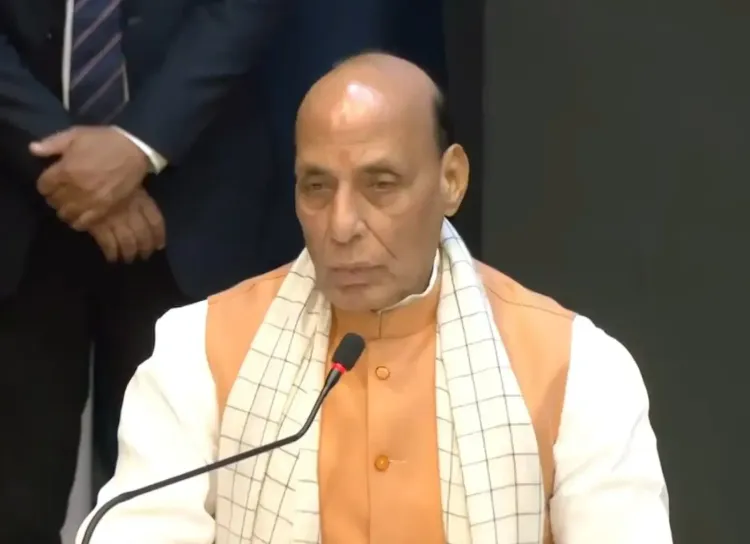
Visakhapatnam, Feb 19 (NationPress) Defence Minister Rajnath Singh emphasized on Thursday that India aims to create a just maritime order grounded in international norms and the freedom of navigation, all in accordance with global laws.
He stressed the urgency for the global community to unite in addressing maritime issues.
While inaugurating the multilateral naval drill MILAN 2026 here, he pointed out that traditional threats are intertwined with new-age challenges. "Piracy, maritime terrorism, illegal fishing, trafficking, cyber vulnerabilities, and interruptions to critical supply chains are all pressing concerns. The impact of climate change is exacerbating natural disasters, thus increasing the frequency and complexity of humanitarian and disaster relief efforts. No single navy, no matter how capable, can tackle these challenges in isolation. Hence, collaboration among navies has become a necessity rather than an option," he stated.
The Defence Minister highlighted that the unique responsibilities demand the global community to work together to manage these challenges in a harmonious manner, guided by mutual respect.
He remarked that the United Nations Convention on the Law of the Sea (UNCLOS) offers a solid legal framework for addressing issues related to international waters, serving as a comprehensive and established mechanism for dispute resolution and peaceful coexistence among nations.
"I believe that this legal foundation can be further fortified through a comprehensive global naval architecture that promotes information sharing, secures communication links, and curtails criminal activities, including high seas terrorism, while also safeguarding national borders on a worldwide scale," he asserted.
He observed that platforms like MILAN foster professional expertise, build mutual trust, increase interoperability, and facilitate coordinated responses to shared challenges.
He emphasized that India has a long-standing recognition of the need for cooperation.
"In line with this, our maritime strategy, inspired by the vision of SAGAR, which stands for Security and Growth for All in the Region, has evolved into the vision of MAHASAGAR, symbolizing Mutual and Holistic Advancement for Security and Growth Across Regions. This transition from SAGAR, meaning seas, to 'MAHASAGAR', or oceans, signifies India's deepening commitment to engage with allies in the region and beyond," he stated.
The Defence Minister assured participants that as a genuine ‘Vishwa-Mitra’ or trusted global friend, India will persist in playing a constructive and reliable role in the region. He stated that comprehensive maritime security and mutual prosperity are interlinked and can only be realized through collaboration, trust, and shared dedication among like-minded nations.
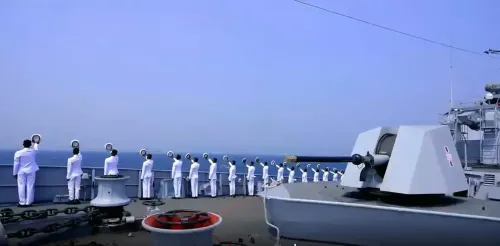
He noted the continuous growth of MILAN in both scope and significance. Thanks to the dedicated efforts of all partners, MILAN has transformed from a regional gathering into one of the world's most notable multinational naval exercises. It has established itself as one of India's most credible and consistent maritime engagements, the Defence Minister remarked.
This year's MILAN 2026, featuring participants from 74 nations, is the largest and most inclusive edition to date, reflecting the confidence the global maritime community places in India as a trusted and responsible maritime partner.
Point of View
The emphasis on maritime security and collaboration underscores India's strategic intent to position itself as a responsible global player. The evolving maritime landscape necessitates a concerted effort among nations, reinforcing the importance of engagement, trust, and shared commitment within the international community.
NationPress
3 Oct 2026
Frequently Asked Questions
What is the purpose of MILAN 2026?
MILAN 2026 aims to foster collaboration among navies worldwide, enhancing interoperability and coordinated responses to shared maritime challenges.
What role does UNCLOS play in maritime order?
UNCLOS provides a robust legal framework for managing international waters, facilitating peaceful coexistence and dispute resolution among nations.
How does climate change affect maritime security?
Climate change amplifies natural disasters, increasing the complexity of humanitarian efforts and maritime challenges, necessitating collaborative responses.
What is India's vision for maritime security?
India's vision, evolving from SAGAR to MAHASAGAR, focuses on mutual advancement and security, promoting collaboration with regional and global partners.
How many nations are participating in MILAN 2026?
This year, 74 nations are participating in MILAN 2026, making it the largest and most inclusive edition of the exercise to date.