CM Yogi Pledges Stronger UP-Japan Tourism Ties
Synopsis
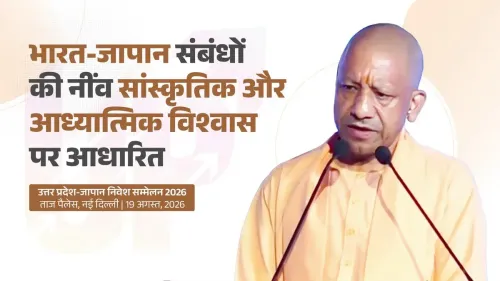
Chief Minister Yogi Adityanath, speaking on 19 August 2026, invoked the shared solar tradition of India and Japan to declare Uttar Pradesh's commitment to stronger tourism and people-to-people ties with Tokyo — a rare subnational diplomatic assertion by an Indian state government.
Key Takeaways
CM Yogi Adityanath declared on 19 August 2026 that Uttar Pradesh is committed to deepening tourism and people-to-people exchange with Japan .
The CM invoked the shared tradition of sun worship — central to Hinduism and embedded in Japan's identity as the 'Land of the Rising Sun' — as a civilisational bond.
Uttar Pradesh is positioning itself as an active player in subnational diplomacy, targeting Japan as a high-value tourism source market.
Key UP heritage destinations relevant to Japanese visitors include Varanasi , Ayodhya , and the Taj Mahal in Agra .
No specific bilateral mechanism — such as an MoU or tourism corridor — has been announced alongside the commitment.
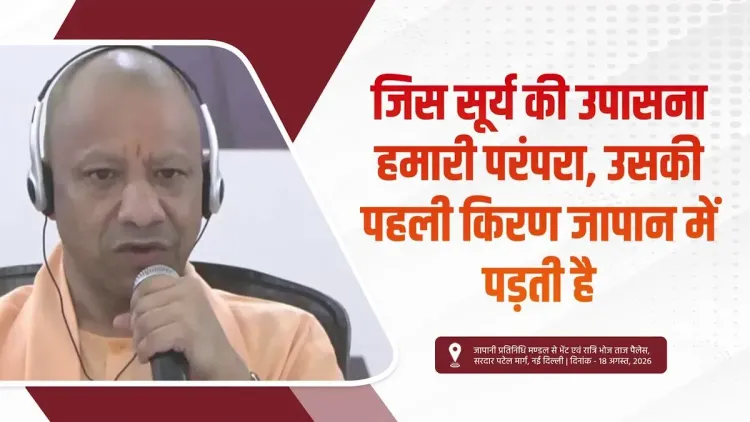
The first rays of the sun, as ancient Indian tradition holds, touch Japanese soil — and now Chief Minister Yogi Adityanath is using that poetic bridge to build a real one. The Chief Minister's Office of Uttar Pradesh posted on Wednesday, 19 August 2026, quoting CM Yogi's commitment to deepening tourism and people-to-people exchange between Uttar Pradesh and Japan.
In his words: 'जिस सूर्य की उपासना हमारी परंपरा करती आई है, उसकी पहली किरण जापान की धरती पर पड़ती है' — 'The first ray of the sun, which our tradition has always worshipped, falls on the land of Japan.' It is a striking invocation: the shared reverence for the sun as a civilisational thread stitching two ancient cultures together, deployed here as the opening argument for a bilateral relationship.
A Cultural Thread, a Policy Commitment
The statement signals that Uttar Pradesh is actively positioning itself as a destination for Japanese visitors and as a partner in cultural diplomacy — not merely a passive beneficiary of India's broader foreign-policy outreach to Tokyo. People-to-people exchange programmes typically encompass student delegations, cultural festivals, heritage tourism circuits, and business familiarisation visits, though the specific mechanisms under discussion have not been detailed in the post.
For Uttar Pradesh, a state that houses some of India's most iconic pilgrimage and heritage sites — from Varanasi to Ayodhya to the Taj Mahal in Agra — Japan represents a high-value tourism source market. Japanese travellers are known for their interest in spiritual and heritage destinations, making the cultural framing of CM Yogi's statement a deliberate pitch.
Why Japan, Why Now
India-Japan relations have been on a sustained upswing across trade, defence, and infrastructure. For a state government to articulate a bilateral tourism agenda with a specific country is an assertive step — it plants Uttar Pradesh's flag in subnational diplomacy, a space increasingly occupied by ambitious Indian states competing for foreign investment and visitor footfall.
The sun metaphor is not incidental. Japan's identity as the 'Land of the Rising Sun' and Hinduism's deep solar worship tradition — embodied in festivals like Chhath Puja, which holds particular resonance in Uttar Pradesh — give the framing genuine cultural weight. CM Yogi is not reaching for a metaphor; he is pointing to one that already exists.
Whether this commitment translates into a formal memorandum of understanding, a dedicated tourism corridor, or joint cultural programming will be the measure of its seriousness. The intent, at least, has been stated at the highest level of the state government.
Point of View
Positioning Uttar Pradesh as an active player in India's foreign-policy outreach rather than a passive recipient. By anchoring the pitch in civilisational symbolism — solar worship shared by Hindu and Japanese traditions — the CM frames tourism not as a commercial transaction but as a cultural reunion, a register that tends to resonate strongly with Japanese audiences. The move also fits a broader pattern of UP aggressively marketing its heritage circuit — Varanasi, Ayodhya, Agra — to high-spending international visitors. The real test will be whether this statement is backed by a structured bilateral mechanism or remains an aspirational gesture.
NationPress
3 Oct 2026
Frequently Asked Questions
What did CM Yogi Adityanath say about Japan?
CM Yogi Adityanath stated that Uttar Pradesh is committed to strengthening tourism and people-to-people exchange with Japan, invoking the shared tradition of sun worship as a cultural bond between the two.
Why is Uttar Pradesh reaching out to Japan for tourism?
Uttar Pradesh houses major heritage and pilgrimage sites like Varanasi, Ayodhya, and the Taj Mahal in Agra. Japanese travellers have a strong interest in spiritual and heritage destinations, making Japan a high-value tourism source market for the state.
What is people-to-people exchange between UP and Japan?
People-to-people exchange typically includes student delegations, cultural festivals, heritage tourism circuits, and business familiarisation visits aimed at building grassroots ties between the two regions.
What is the connection between India and Japan's sun tradition?
CM Yogi referenced the fact that the first rays of the sun fall on Japan, while Hinduism — particularly in UP — holds deep solar worship traditions including Chhath Puja, creating a shared civilisational thread.
Is there a formal UP-Japan tourism agreement?
No formal agreement has been announced yet. CM Yogi's statement on 19 August 2026 expresses a commitment to strengthen ties, but specific mechanisms such as an MoU or tourism corridor have not been detailed.