Is the Indian Navy the ‘Preferred Security Partner’ and ‘First Responder’ in the Indo-Pacific?
Synopsis
A new report reveals how the Indian Navy has transformed into a key player in the Indo-Pacific, establishing itself as a 'preferred security partner' and 'first responder' through strategic collaborations and humanitarian efforts.
Key Takeaways
Enhanced Collaboration: The Indian Navy is fostering partnerships across the Indo-Pacific.
Proactive Humanitarian Role: Swift response during disasters is a hallmark of the Navy's operations.
Naval Diplomacy: Engaging in exercises strengthens bilateral relations.
Trust-Building: Cooperation with regional allies enhances security.
Strategic Shift: From coastal defence to comprehensive maritime engagement.
Male, Jan 30 (NationPress) A recent report highlights that the Indian Navy has strategically adopted a collaborative approach to foster a shared regional space, which has cultivated mutual trust and recognition as a “preferred security partner” and a “first responder” in the Indo-Pacific.
The report emphasizes that the Indian Navy's influence now extends from the North Arabian Sea to the expansive South China Sea, marking a significant transition from mere coastal defence to a robust role as a “Preferred Security Partner” throughout the Indo-Pacific.
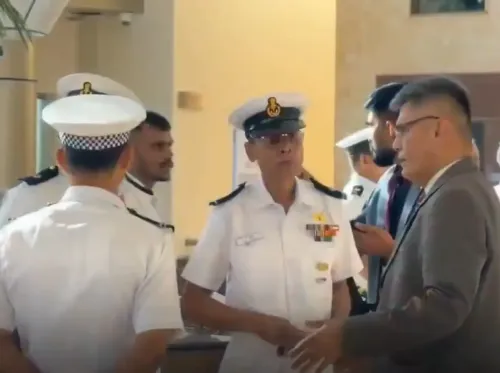
According to the Eurasia Review, “Naval diplomacy” has emerged as one of India's vital strategies to safeguard its interests and enhance stability within the Indian Ocean Region (IOR). With China’s increasing maritime presence, the Indian Navy has opted for cooperation rather than confrontation, focusing on building strength through engagement and trust.
The report outlines three key trends defining this approach: first, an expanded maritime outlook that encourages collaboration with regional allies; second, enhanced bilateral naval cooperation through regular exercises and practical support; and third, proactive involvement in humanitarian assistance and disaster relief.
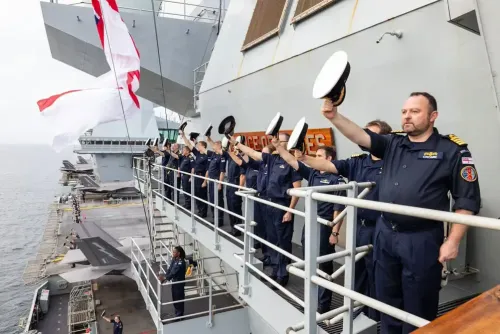
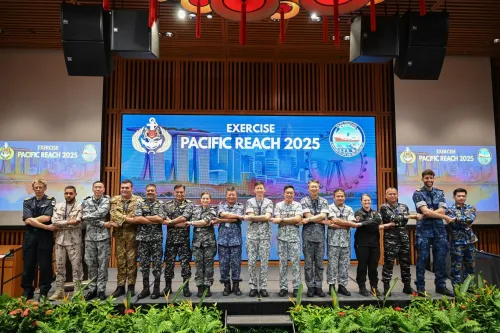
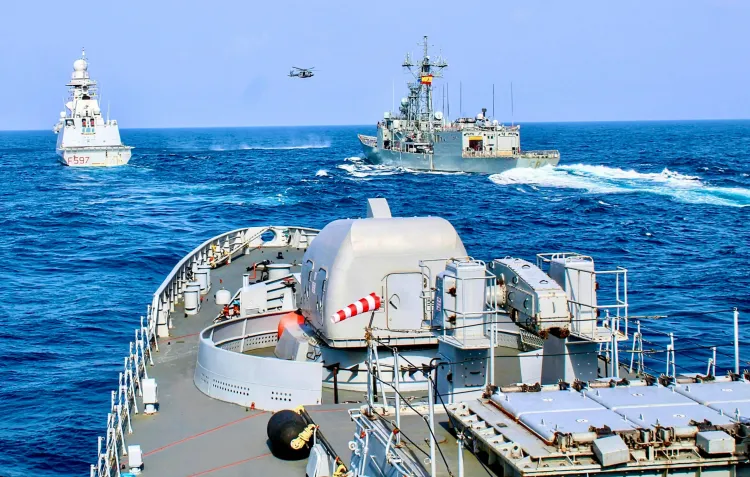
In 2025 alone, the Indian Navy participated in over 18 bilateral and 8 multilateral exercises, alongside 31 maritime partnership drills, 4 Coordinated Patrols (CORPAT), and 12 Joint Exclusive Economic Zone (EEZ) surveillance missions, deploying Indian Naval Ships across various nations.
These operations are far from symbolic. Ships like INS Shakti, Satpura, Delhi, and Kiltan sailing to Singapore, Vietnam, or the Philippines embody reassurance and commitment. Similarly, INS Imphal and INS Kadmatt participated in national celebrations in Mauritius and Papua New Guinea, respectively, serving as ambassadors of India's goodwill.
The report further notes that the Indian Navy has transitioned from a conventional military entity to the most trusted first responder in the region.
In times of disaster, Indian warships do not wait for orders; they respond swiftly. This was evident during the 2025 earthquake in Myanmar and the cyclone crisis in Sri Lanka, where operations such as Operation Brahma and Operation Sagar Bandhu saw the Indian Navy deliver hundreds of tons of essential aid.
“In contemporary times, true influence is determined by who responds first,” the report asserts. “The Indian Navy has evolved by prioritizing speed, reliability, and sincere compassion over mere posturing, thereby redefining what diplomacy signifies across the world’s oceans.”
Point of View
It is evident that the Indian Navy's evolution into a reliable first responder reflects a significant shift in regional dynamics. By fostering collaboration and trust within the Indo-Pacific, India not only secures its interests but also positions itself as a leader in promoting stability in the region.
NationPress
19 Sept 2026
Frequently Asked Questions
What is the role of the Indian Navy in the Indo-Pacific?
The Indian Navy plays a crucial role as a 'preferred security partner' and 'first responder' in the Indo-Pacific, engaging in naval diplomacy and humanitarian efforts.
How has the Indian Navy evolved in recent years?
The Indian Navy has transitioned from a traditional military force to a proactive first responder, focusing on collaboration and trust-building with regional partners.
What types of exercises does the Indian Navy participate in?
In 2025, the Indian Navy took part in over 18 bilateral and 8 multilateral exercises, enhancing its operational readiness and cooperation with other nations.
What humanitarian efforts has the Indian Navy undertaken?
The Indian Navy has been involved in various humanitarian missions, delivering essential aid during disasters such as the 2025 earthquake in Myanmar and the cyclone crisis in Sri Lanka.
How does the Indian Navy contribute to regional stability?
The Indian Navy contributes to regional stability through naval diplomacy, cooperative engagements, and providing humanitarian assistance in times of crisis.