CM Bhajan Lal Hails India's First Naxal-Free Diwali in 2026
Synopsis
Rajasthan CM Bhajan Lal Sharma amplified PM Narendra Modi's historic declaration that Diwali 2026 is India's first with every district free from Naxal-Maoist terror, marking the declared end of a decades-long internal security campaign.
Key Takeaways
PM Modi declared Diwali 2026 as the first Diwali with every Indian district free from Naxalism and Maoist terror.
Rajasthan CM Bhajan Lal Sharma amplified the statement on November 8, 2026 , attaching a video to the post.
The Ministry of Home Affairs has tracked year-on-year reductions in LWE-related incidents since 2014 through a dual kinetic-and-development strategy.
The former 'Red Corridor' spanned districts across Chhattisgarh, Jharkhand, Odisha, Maharashtra, Telangana, Andhra Pradesh, Bihar, and Madhya Pradesh .
Tribal communities and security forces bore the heaviest costs of the decades-long insurgency.
Official confirmation is expected via the MHA's annual LWE-affected district classification and parliamentary statements.
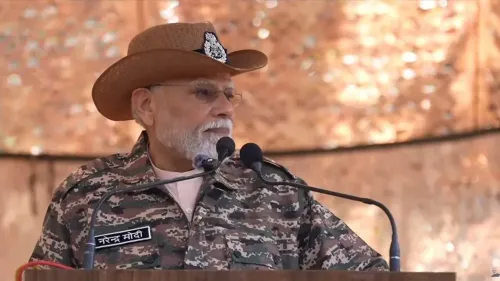
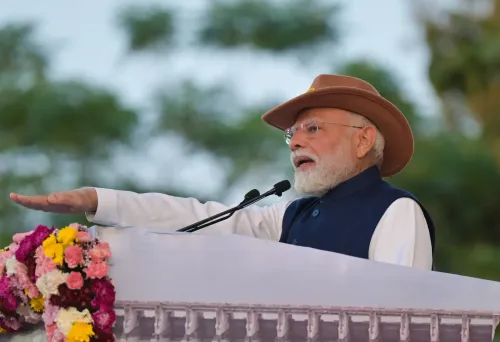
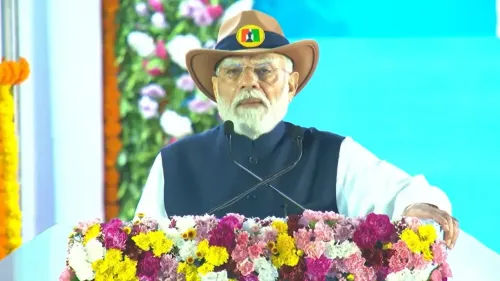
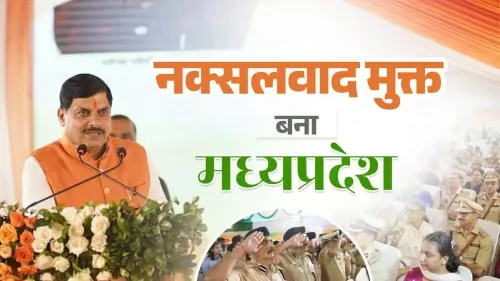
For the first time in decades, Diwali 2026 arrives without a single district in India under the shadow of Naxal or Maoist violence — and Rajasthan Chief Minister Bhajan Lal Sharma marked the moment by amplifying a landmark declaration from Prime Minister Narendra Modi on Sunday, November 8, 2026.
Modi's Declaration: Every District Free, Every Fear Defeated
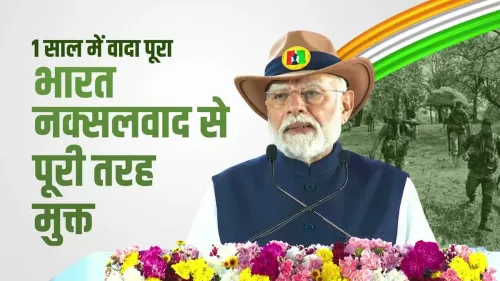
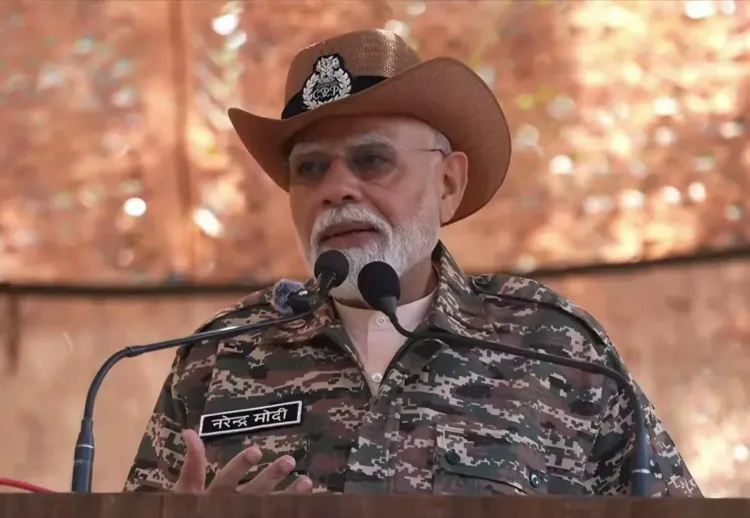
Quoting the Prime Minister directly, CM Sharma shared a statement that framed this Diwali in historic terms: 'यह पहली दिवाली है- जब देश का हर जिला नक्सलवाद से मुक्त है' — 'This is the first Diwali when every district of the country is free from Naxalism.' The message carried three successive 'firsts': the country has won its decades-old battle against Naxal-Maoist terror; every district is now free; and crores of citizens have defeated the fear itself.
The phrasing was deliberate. Three parallel declarations, each building on the last — from military victory, to territorial clearance, to the psychological liberation of ordinary people living in areas that once saw regular ambushes and extortion.
A Campaign Built Over More Than a Decade
The road to this moment stretches back well over a decade. Since 2014, the Ministry of Home Affairs documented year-on-year reductions in Left Wing Extremism (LWE)-related incidents and deaths. The strategy was twin-tracked: intensified security operations — including central paramilitary deployments and state police modernisation — paired with an aggressive infrastructure push into historically neglected tribal heartlands.
Roads, mobile connectivity, banking access, and rehabilitation packages were pushed into districts across Chhattisgarh, Jharkhand, Odisha, Maharashtra, Telangana, Andhra Pradesh, Bihar, and Madhya Pradesh — the core of what the government called the 'Red Corridor'. Official data over the past decade showed a progressive contraction of the most-affected districts, from over 90 districts at peak designation to a steadily shrinking list.
What 'Naxal-Free' Means for Tribal Communities
The human stakes are sharpest for tribal communities and residents of former LWE districts — people who for generations navigated a dangerous middle ground between Maoist cadres and security forces. Schools that shut at dusk, roads that couldn't be built, government schemes that couldn't be delivered: the costs of the insurgency were always borne most heavily by the poorest citizens in India's most resource-rich terrain.
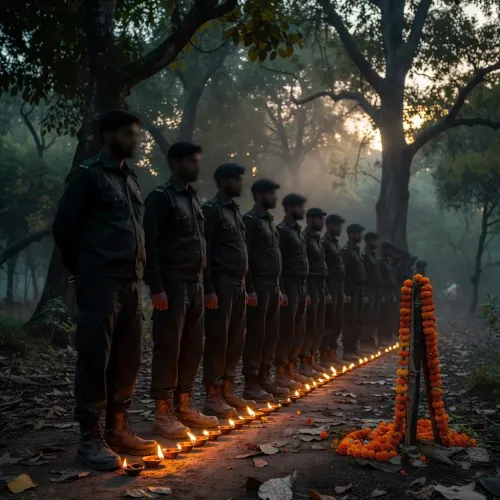
Security forces — including personnel from the CRPF, BSF, ITBP, and multiple state police units — paid an enormous price over the decades, with hundreds of personnel killed in ambushes and IED blasts. The 2026 claim of nationwide clearance, if confirmed through the MHA's annual district classification, would mark the stated endpoint of that long, costly campaign.
BJP Amplification and the Political Moment
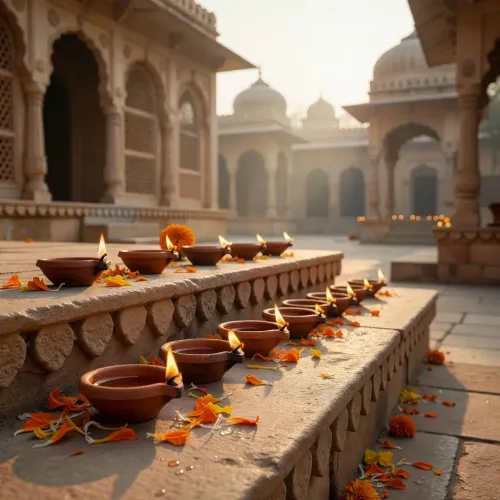
CM Sharma's decision to broadcast the Prime Minister's words on the occasion of Diwali was pointed. The festival of lights, long a cultural metaphor for the victory of light over darkness, provided the government a natural frame to declare the end of an insurgency that cast a literal shadow of fear over vast swathes of central and eastern India. The post carries a video — signalling a fuller communication push timed to the holiday.
The Ministry of Home Affairs annual report and any parliamentary confirmation of the final cleared-district list will be the authoritative measure of how complete this achievement is. But politically, the government has planted its flag: Diwali 2026 is the moment India officially turns the page on its longest internal security challenge.
Fifty years of a movement that the state once struggled to even map, now declared extinguished — on the festival of lights. The kicker writes itself.
Point of View
Tethered to India's most resonant festival, maximises cultural impact. However, the durability of this claim will be tested by the MHA's formal district classification process and by whether development gains in former LWE areas take root sustainably enough to prevent ideological re-emergence. The amplification by state-level BJP leaders like CM Sharma signals a coordinated effort to nationalise the achievement beyond the central government alone.
NationPress
8 Nov 2026
Frequently Asked Questions
What does 'Naxal-free India' mean in 2026?
It means the government has declared that every district in India has been cleared of active Naxal or Maoist insurgent presence, ending a campaign of Left Wing Extremism that lasted several decades.
Which states were most affected by Naxalism in India?
The core 'Red Corridor' included districts in Chhattisgarh, Jharkhand, Odisha, Maharashtra, Telangana, Andhra Pradesh, Bihar, and Madhya Pradesh.
What strategy did India use to eliminate Naxalism?
The government used a two-pronged approach: intensified security operations with central paramilitary and state police forces, combined with infrastructure development, banking access, and rehabilitation packages in affected districts.
Why did CM Bhajan Lal Sharma post about Naxalism?
CM Bhajan Lal Sharma, the Rajasthan Chief Minister and BJP leader, amplified PM Modi's statement to mark Diwali 2026 as a historic milestone in India's internal security history.
How long did India's fight against Naxalism last?
The Left Wing Extremism movement in India persisted for several decades, with the government tracking significant year-on-year reductions in violence since 2014 before the 2026 declaration of full clearance.