CM Bhajan Lal Hits Out at Past Govts Over Naxal Neglect
Synopsis
Rajasthan CM Bhajan Lal Sharma quoted PM Modi to accuse past governments of treating Naxalism as incurable and abandoning tribal communities, contrasting their record with the BJP's SAMADHAN-led dual security-and-development strategy against Left Wing Extremism.
Key Takeaways
Rajasthan CM Bhajan Lal Sharma posted on November 8, 2026 , quoting PM Modi to attack past governments over their handling of Naxal violence.
The post accuses leaders of that era of living in 'palaces' while remaining indifferent to civilian and security-force deaths caused by Naxalism.
Naxal violence has historically been concentrated in Chhattisgarh, Jharkhand, Odisha, Bihar and Maharashtra , with central paramilitary forces absorbing heavy casualties.
The BJP's current counter-Naxal framework is the SAMADHAN doctrine , introduced in 2017 , combining security operations with development delivery in LWE-affected districts.
Sharma has consistently aligned Rajasthan's political messaging with New Delhi's positions on internal security and tribal welfare since taking office in December 2023 .
Annual Ministry of Home Affairs data on LWE incidents and fatalities is expected to become a key metric in the ongoing political debate over anti-Naxal policy effectiveness.
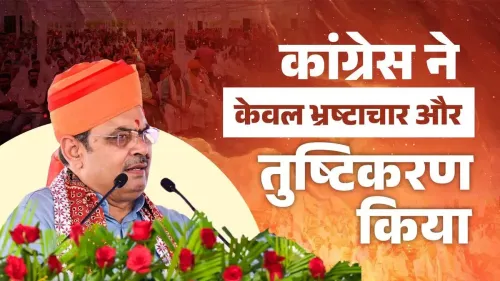
For decades, innocent civilians and brave security personnel lost their lives to Naxal violence — yet, Rajasthan Chief Minister Bhajan Lal Sharma argued on Sunday, November 8, 2026, the governments of that era treated the insurgency as incurable and abandoned tribal families to fend for themselves. Quoting Prime Minister Narendra Modi, Sharma launched a pointed political broadside against what he called leaders who lived in 'palaces' while remaining unmoved by the bloodshed.
Sharma's post, shared in Hindi on X, quotes PM Modi directly: 'दशकों तक नक्सलवाद के आतंक में निर्दोष नागरिकों और वीर जवानों ने अपने प्राण गंवाए' — 'For decades, innocent citizens and brave soldiers lost their lives to the terror of Naxalism, but the sympathies of the privileged leaders living in palaces never awakened.' The passage goes on to accuse past administrations of writing off Naxalism as unsolvable and leaving tribal communities without support or protection.
The 'Palace-Dwellers' Charge and Who It Targets
The phrase 'महलों में रहने वाले नामदार' — 'the privileged dynasts living in palaces' — is a well-worn BJP rhetorical device, most often aimed at the Gandhi family and Congress-led governments that held power at the Centre through much of the period of peak Naxal violence in Chhattisgarh, Jharkhand, Odisha, Bihar and Maharashtra. The charge is not new, but the framing here is deliberate: by attributing the words to Modi, Sharma amplifies the Centre's narrative and anchors it to the state-level BJP platform in Rajasthan.
Naxal-related violence exacted its heaviest toll through the 2000s and into the early 2010s, with security force casualties and civilian deaths concentrated in what the government designated Left Wing Extremism (LWE) affected districts. Central paramilitary units — primarily the CRPF — bore a disproportionate share of fatalities in ambushes across forested terrain.
The SAMADHAN Doctrine and the BJP's Dual-Track Claim
The current government's answer to the critique embedded in Sharma's post is the SAMADHAN doctrine, introduced by the Ministry of Home Affairs in 2017. The framework combines kinetic security operations with accelerated development delivery — road connectivity, banking access, mobile coverage and welfare scheme penetration — specifically targeting LWE-affected districts. The BJP has consistently argued that this dual-track approach, security dominance plus socio-economic integration, is what previous governments refused to attempt seriously.
Successive administrations — including those led by the Congress — did pursue dialogue and development in tribal belts, but critics within the security establishment long argued that half-measures allowed Naxal networks to regenerate. The Ministry of Home Affairs has periodically released data showing a declining trend in LWE incidents since the mid-2010s, though ground conditions in the most remote districts remain contested.
Sharma's Role: Amplifying the Centre's Security Narrative
As Rajasthan's Chief Minister since December 2023, Bhajan Lal Sharma has consistently aligned state-level communication with New Delhi's positions on national security and tribal welfare — a pattern visible across BJP-governed states ahead of electoral cycles. By quoting Modi rather than speaking in his own name, Sharma elevates the message to a national register while lending it state-level reach.
The timing matters. With the Ministry of Home Affairs expected to release updated annual LWE incident and fatality data, the political ground is being prepared: declining violence statistics, when they arrive, will be presented as evidence that the current approach works where its predecessors failed. The families of security personnel killed in Naxal ambushes — and the tribal communities still navigating the aftermath of decades of conflict — remain the human stakes at the centre of this long, unfinished argument.
Point of View
Rather than an intractable fact of Indian life. By attributing the words directly to Modi, Sharma fuses state and central messaging at a moment when LWE-related data is likely to be refreshed. The 'palace-dweller' construction is a durable, low-cost rhetorical device that simultaneously targets dynastic politics and projects empathy with tribal and security-force communities — two constituencies the BJP has actively courted since 2014. Whether the SAMADHAN doctrine's real-world outcomes in the most remote LWE districts match the political claim is the analytical question neither this post nor its amplifiers invite.
NationPress
8 Nov 2026
Frequently Asked Questions
What did Rajasthan CM Bhajan Lal Sharma say about Naxalism?
Sharma quoted PM Modi to argue that past governments treated Naxalism as incurable and abandoned tribal families, while leaders lived in 'palaces' unmoved by decades of civilian and security-force deaths.
What is the SAMADHAN doctrine on Naxalism?
SAMADHAN is a multi-dimensional framework introduced by the Ministry of Home Affairs in 2017 that combines security operations with development delivery — roads, banking, welfare schemes — in Left Wing Extremism affected districts.
Which states are most affected by Naxal violence in India?
Naxal-related violence has historically been concentrated in Chhattisgarh, Jharkhand, Odisha, Bihar and Maharashtra, with central paramilitary forces and state police bearing the highest share of casualties.
Who is Bhajan Lal Sharma and why is he speaking on Naxalism?
Bhajan Lal Sharma is the BJP Chief Minister of Rajasthan since December 2023. As a BJP state leader, he regularly amplifies the central government's positions on national security and tribal welfare, aligning state messaging with New Delhi's narrative.
Has Naxal violence decreased under the current government?
The Ministry of Home Affairs has periodically reported a declining trend in LWE incidents since the mid-2010s, attributing it to the SAMADHAN strategy, though conditions in the most remote tribal districts remain a subject of ongoing assessment.