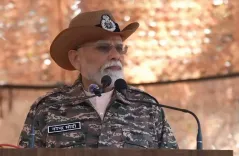
CM Bhajan Lal: PM Modi Celebrates Diwali with Forces in Bastar
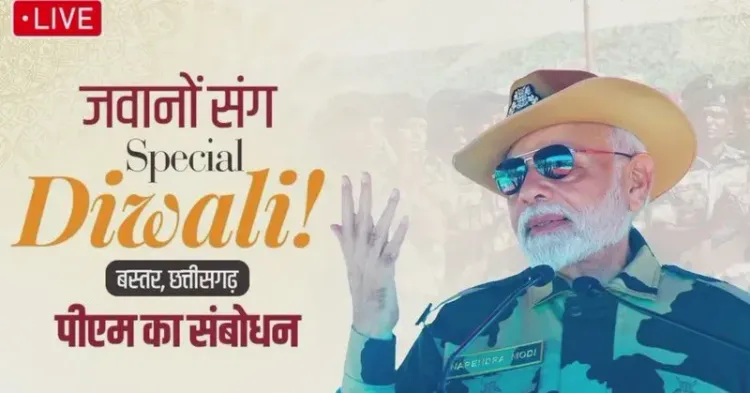
Synopsis
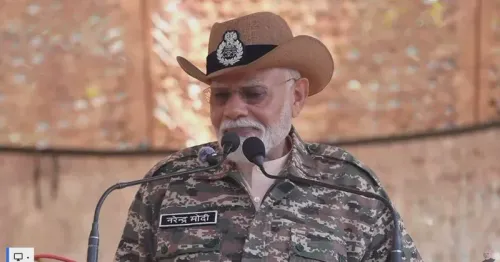
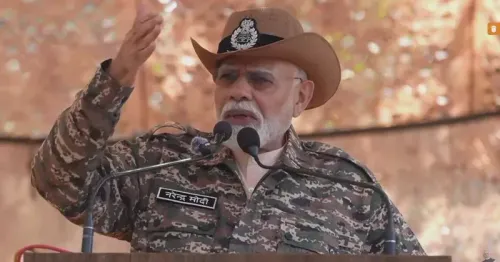
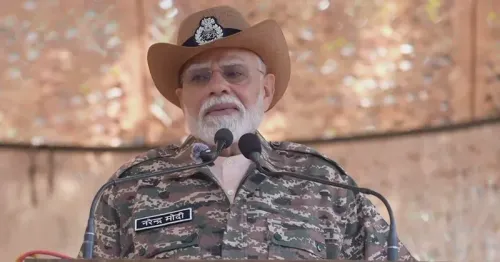
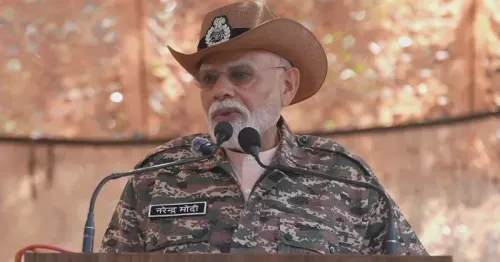
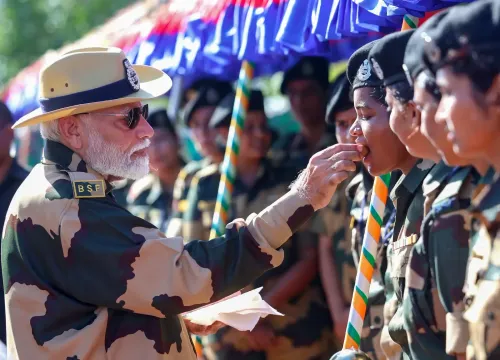
Prime Minister Narendra Modi celebrated Deepawali 2026 with security forces in Bastar, Chhattisgarh, continuing his tradition of spending the festival at forward deployments. Rajasthan CM Bhajan Lal Sharma amplified the live broadcast, spotlighting India's sustained counter-insurgency focus in one of its most conflict-affected districts.
Key Takeaways
PM Narendra Modi celebrated Deepawali 2026 with security forces in Bastar, Chhattisgarh on November 8, 2026 .
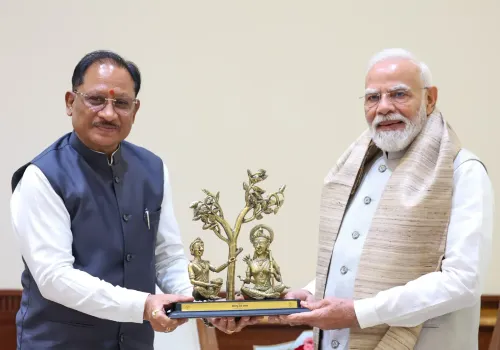
Rajasthan CM Bhajan Lal Sharma shared the live broadcast of the event on his official X account.
PM Modi has maintained a tradition of marking Diwali with deployed troops and paramilitary units since 2014 .
Bastar is a focal point for counter-insurgency operations against Left-Wing Extremism (LWE) in central India.
High-level visits to LWE-affected districts signal the central government's sustained focus on internal security and boost force morale.
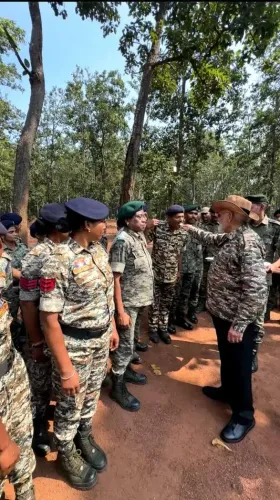
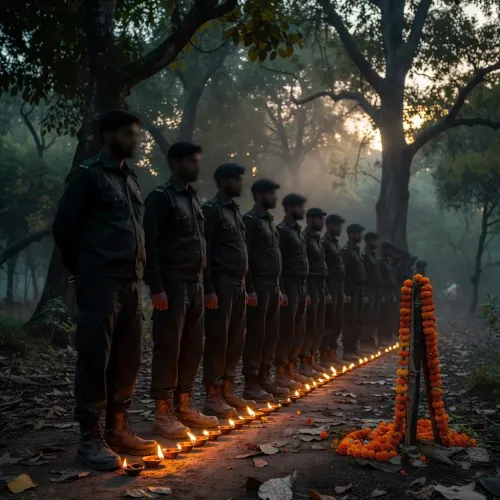
In one of India's most conflict-tested districts, Prime Minister Narendra Modi marked Deepawali 2026 alongside security forces deployed in Bastar, Chhattisgarh — a region where paramilitary personnel spend festival nights not with family, but on counter-insurgency duty. Rajasthan Chief Minister Bhajan Lal Sharma shared a live broadcast of the event on Sunday, November 8, 2026, drawing attention to the gesture from his own social media platform.
A Festival on the Frontline of LWE Country
Bastar is not a ceremonial backdrop. It sits at the heart of India's decades-long battle against Left-Wing Extremism (LWE), where central paramilitary forces conduct sustained anti-Naxal operations in dense forest terrain under constant operational pressure. For the men and women stationed there, a Prime Ministerial visit on Diwali carries a weight that goes beyond politics — it is a signal that the nation sees them.
PM Modi has built a consistent practice of spending Diwali with deployed troops and paramilitary units at forward locations since 2014. Bastar, given its strategic and symbolic significance in India's internal security landscape, represents one of the sharpest possible choices of venue — a deliberate statement about where the government's attention is anchored.
Bastar's Security Stakes and What the Visit Signals
Chhattisgarh has been the most active theatre for anti-Naxal operations among all LWE-affected states. High-level visits to this region have consistently served a dual purpose: reinforcing the morale of forces engaged in prolonged, grinding duty far from home, and communicating to the broader public — and to adversaries — that central focus on internal security has not wavered.
The choice of a live-streamed format, amplified by state leaders like CM Bhajan Lal Sharma, extends the reach of that message well beyond the immediate audience in Bastar. What happens on a jungle outpost on Diwali night becomes national prime time.
Why the Diwali-with-Troops Tradition Resonates
There is a reason this annual ritual commands attention: it inverts the conventional image of a festival. Where Diwali is about homecoming, the visit goes outward — to the most difficult postings, to the people who cannot come home. That inversion is the entire point. It transforms a political gesture into something that lands as human. Whether it also translates into tangible outcomes — force modernisation, faster infrastructure in Bastar's development corridors, expanded welfare for paramilitary families — will be the harder question to track in the weeks ahead.
Point of View
Amplifying such moments on social media ties Rajasthan's political identity to the broader national-security messaging of the central leadership. The choice of Bastar specifically, rather than a border posting, underscores a continued emphasis on LWE as a primary internal security priority. The real policy test, however, lies in whether such visits are followed by measurable progress on force welfare and Bastar's development backlog.
NationPress
8 Nov 2026
Frequently Asked Questions
Where did PM Modi celebrate Diwali in 2026?
PM Modi celebrated Diwali 2026 with security forces in Bastar, Chhattisgarh, one of India's most active counter-insurgency zones.
Why does PM Modi spend Diwali with security forces?
PM Modi has maintained a tradition since 2014 of celebrating Diwali with deployed troops and paramilitary personnel at forward locations to boost morale and signal national support for forces on difficult postings.
What is the security situation in Bastar, Chhattisgarh?
Bastar is a focal point for India's counter-insurgency operations against Left-Wing Extremism (LWE), where central paramilitary forces conduct sustained anti-Naxal operations in challenging forest terrain.
Why did CM Bhajan Lal Sharma post about PM Modi's Diwali visit?
Rajasthan CM Bhajan Lal Sharma shared a live broadcast link of PM Modi's Diwali celebration with Bastar security forces on November 8, 2026, amplifying the event to his followers as a show of solidarity.
What is Left-Wing Extremism (LWE) in India?
Left-Wing Extremism refers to the Naxalite-Maoist insurgency in central and eastern India. Chhattisgarh, particularly Bastar, remains the most active theatre for security operations against LWE groups.