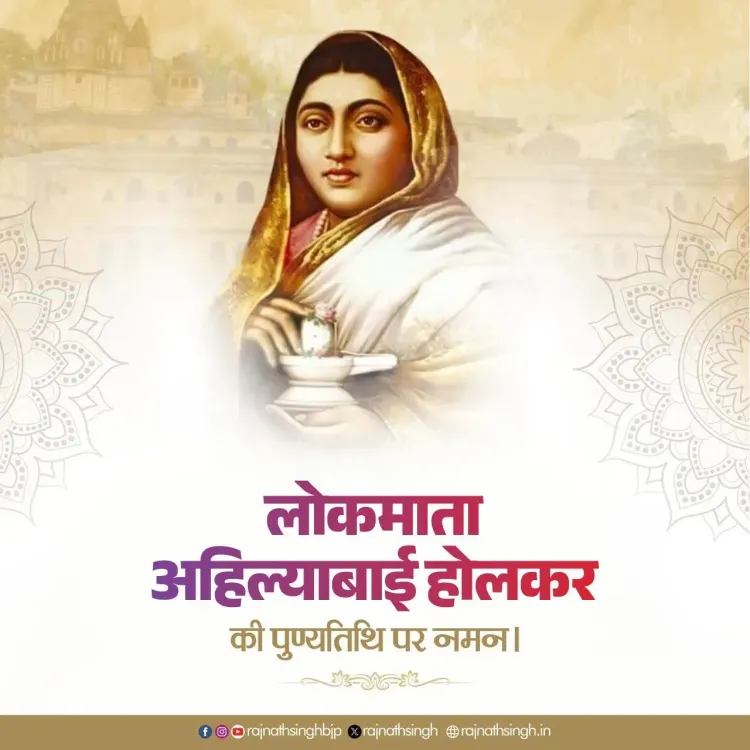
Rajnath Singh pays tribute to Ahilyabai Holkar on her punyatithi
Synopsis
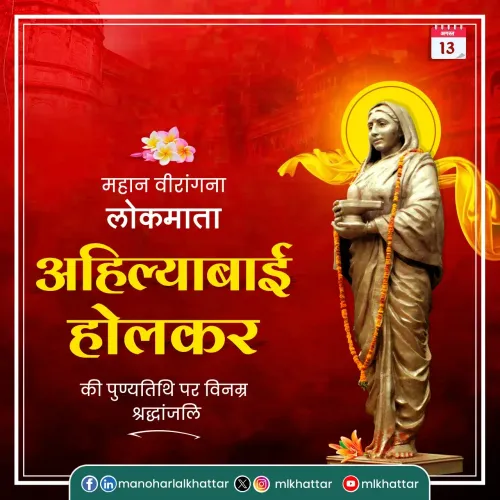
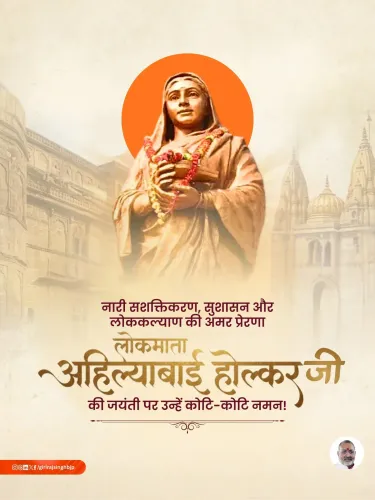
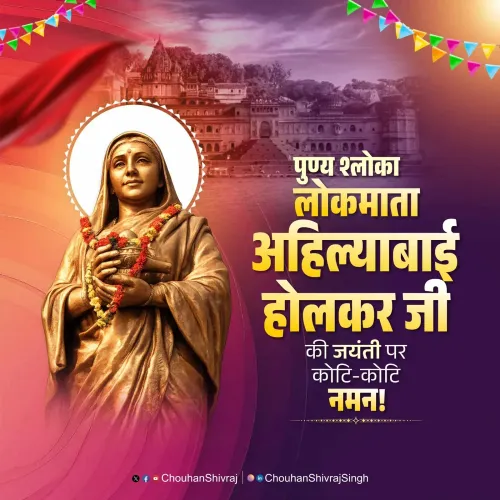
Union Defence Minister Rajnath Singh on 13 August 2026 paid tribute to Lokamata Ahilyabai Holkar on her death anniversary, honouring the 18th-century Malwa ruler's legacy of temple restoration, public welfare works, and women's empowerment — ideals he called a guide for governance today.
Key Takeaways
Rajnath Singh offered tribute to Ahilyabai Holkar on her punyatithi on 13 August 2026 .
Ahilyabai Holkar ruled the Malwa kingdom from 1767 to 1795 , renowned for public welfare works across India.
She is credited with restoring the Kashi Vishwanath Temple in Varanasi , along with building ghats, wells, ponds, and dharamshalas nationwide.
Singh highlighted her efforts for marginalised and tribal communities and her initiatives for women's self-reliance, calling them 'far ahead of her time.' Her legacy is frequently invoked in Indian political discourse as a model of just governance and cultural patronage.
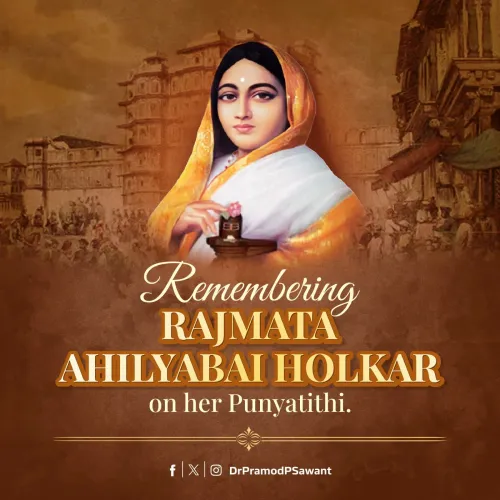
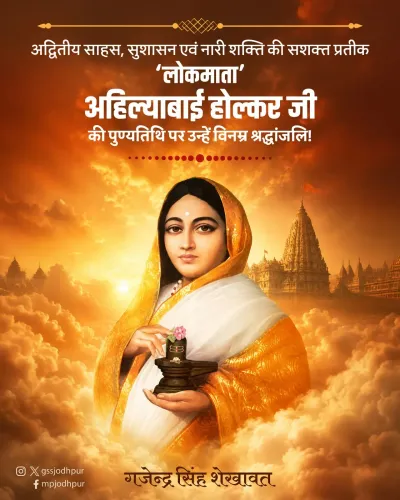
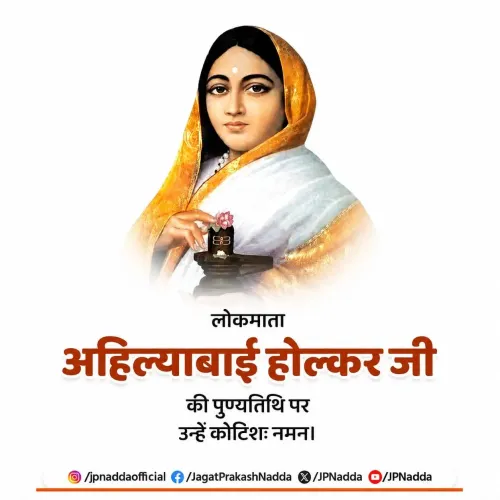
She ruled without a crown of conquest — and yet built more than most kings ever did. On the death anniversary of Lokamata Ahilyabai Holkar, Union Defence Minister Rajnath Singh offered his reverence to the 18th-century Malwa queen on Thursday, 13 August 2026, calling her life an inspiring saga of justice, good governance, and the preservation of India's cultural heritage.
In his post, Singh wrote: 'Lokmata Ahilyabai Holkar ji ki punyatithi par unhe sadar naman evam vinamra shraddhanjali' — 'Respectful salutations and humble tribute to Lokamata Ahilyabai Holkar on her death anniversary.' He highlighted her 'extraordinary example of welfare-oriented governance, indomitable courage, and skilled administration.'
The queen who rebuilt Kashi Vishwanath
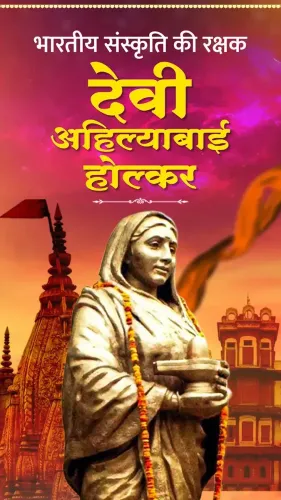
Ahilyabai Holkar ruled the Malwa kingdom from 1767 to 1795, a reign remembered less for military conquest and more for an unmatched record of public works. Her most celebrated act remains the restoration of the Kashi Vishwanath Temple in Varanasi — the ancient Shiva shrine that she rebuilt and endowed after it had fallen into disrepair. Singh specifically named this contribution in his tribute.
Beyond Varanasi, her patronage extended across the subcontinent: ghats, wells, ponds, and dharamshalas built and maintained at her direction. These were not vanity projects — they were functional infrastructure for pilgrims and ordinary people alike, a philosophy of governance that placed welfare at the centre of statecraft.
A ruler ahead of her era on women's empowerment
Singh also underscored Ahilyabai's efforts for marginalised and tribal communities, noting that she took 'many important steps for the livelihood and welfare of the deprived and tribal sections of society.' Her initiatives to make women self-reliant and empowered, he wrote, 'were far ahead of her time.'
For a ruler governing in the late 18th century, the emphasis on women's agency was remarkable by any standard — a point that resonates in contemporary conversations about women's leadership and heritage stewardship in India.
Why her legacy surfaces in modern politics
Indian political leaders across the spectrum regularly invoke pre-colonial regional rulers on their birth or death anniversaries, drawing a line between historical ideals of just governance and present-day policy priorities. Ahilyabai Holkar occupies a singular place in that tradition — her documented record of temple restoration, water-body conservation, and community welfare makes her a figure both culturally resonant and historically verifiable.
Singh closed his tribute by noting that 'her ideals continue to inspire us to move forward on the path of public service and national interest' — a closing that frames a medieval queen's legacy as a living guide for governance, not merely a chapter in a history textbook.
Nearly two and a half centuries after her reign ended, Ahilyabai Holkar remains the standard against which welfare governance in India is quietly measured.
Point of View
Lending the tribute a dual function: historical reverence and contemporary signalling. The framing of Ahilyabai's ideals as a 'living guide' rather than a museum piece is the sharper political move.
NationPress
27 Sept 2026
Frequently Asked Questions
Who was Ahilyabai Holkar?
Ahilyabai Holkar was the ruler of the Malwa kingdom from 1767 to 1795, celebrated for her welfare-oriented governance, restoration of temples including the Kashi Vishwanath Temple in Varanasi, and extensive public works such as ghats, wells, and dharamshalas across India.
Why is Ahilyabai Holkar called Lokamata?
Ahilyabai Holkar is called 'Lokamata' — meaning 'Mother of the People' — in recognition of her deep commitment to public welfare, her care for marginalised communities, and her role as a benevolent and just ruler who prioritised the well-being of ordinary citizens.
What did Ahilyabai Holkar do for the Kashi Vishwanath Temple?
Ahilyabai Holkar funded the restoration and rebuilding of the Kashi Vishwanath Temple in Varanasi in the 18th century, when the ancient Shiva shrine had fallen into disrepair, making it one of her most celebrated acts of cultural patronage.
When is Ahilyabai Holkar's punyatithi observed?
Ahilyabai Holkar's punyatithi, or death anniversary, is observed annually and was marked on 13 August 2026 by Union Defence Minister Rajnath Singh with a tribute on social media.
What did Rajnath Singh say about Ahilyabai Holkar?
Rajnath Singh called Ahilyabai Holkar's life 'an inspiring saga of justice, good governance, women's empowerment, public welfare, and preservation of Indian cultural heritage,' and said her ideals continue to inspire service to the nation.