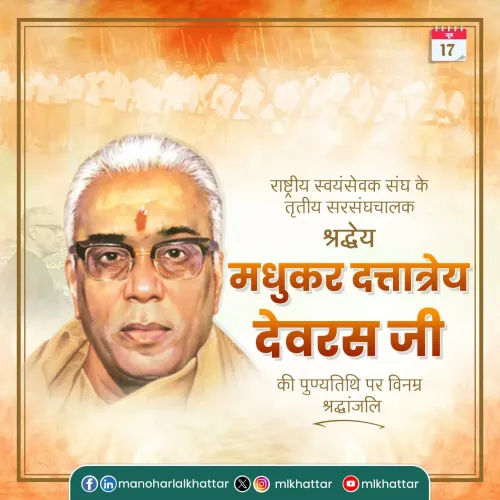
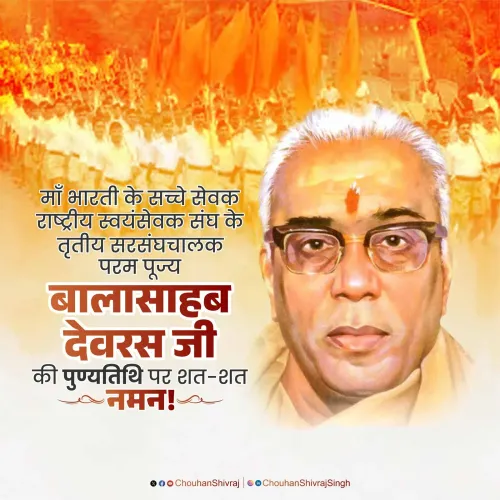
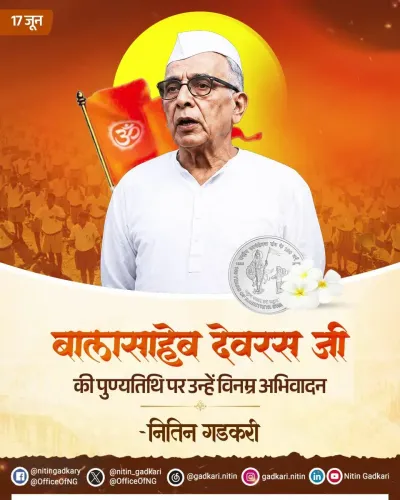
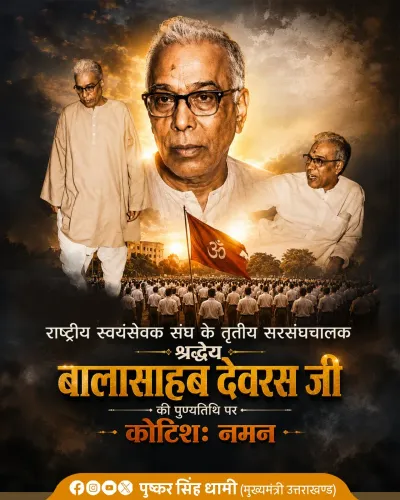
Amit Shah Pays Tribute to RSS Chief Balasaheb Deoras on Death Anniversary
Synopsis
Union Home Minister Amit Shah on June 17, 2026, paid a bilingual Hindi-Marathi tribute to RSS third Sarsanghchalak Balasaheb Deoras on his death anniversary, citing Deoras's opposition to untouchability, his role during the Emergency, and his inspiration to youth for democracy's defence.
Key Takeaways
Union Home Minister Amit Shah posted a tribute on June 17, 2026 , marking the death anniversary of Balasaheb Deoras , third Sarsanghchalak of the RSS.
Deoras served as RSS chief from 1973 to 1994 and was a vocal opponent of untouchability, initiating outreach to Scheduled Castes and Scheduled Tribes.
Shah highlighted Deoras's role in steering the RSS during the Emergency (1975–77) when the organisation was banned and many leaders were imprisoned.
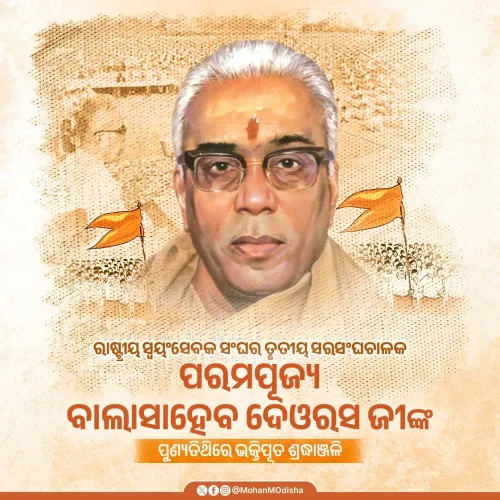
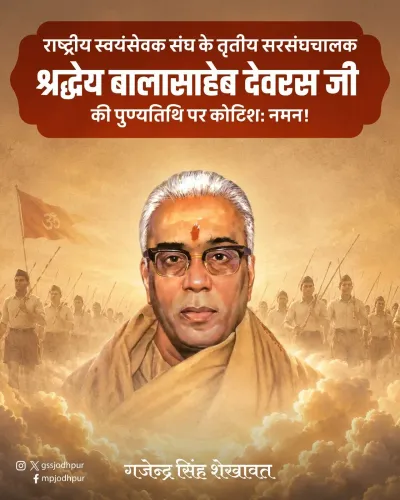
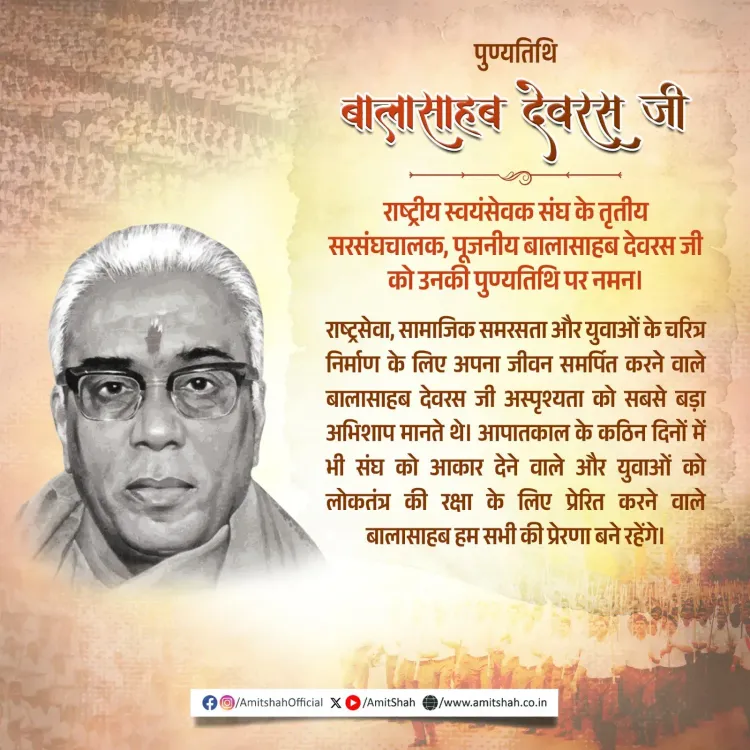
The tribute was posted in both Hindi and Marathi , with two images attached, signalling outreach to audiences in Maharashtra and Hindi-speaking states.
The post fits a broader BJP pattern of marking Sangh anniversaries to affirm ideological continuity between the RSS and the current government.
Union Home Minister Amit Shah on Wednesday, June 17, 2026, paid tribute to Balasaheb Deoras, the third Sarsanghchalak of the Rashtriya Swayamsevak Sangh (RSS), on his death anniversary, honouring the leader's lifelong commitment to national service, social harmony, and youth character-building.
Context
Posting in both Hindi and Marathi, Shah described Deoras as an enduring source of inspiration. 'राष्ट्रीय स्वयंसेवक संघ के तृतीय सरसंघचालक, पूजनीय बालासाहब देवरस जी को उनकी पुण्यतिथि पर नमन' — 'I bow in reverence to the revered Balasaheb Deoras, third Sarsanghchalak of the RSS, on his death anniversary' — Shah wrote. He added that Deoras considered untouchability the greatest curse, and that the leader had shaped the RSS even during the difficult days of the Emergency while inspiring youth to defend democracy.
The tribute was accompanied by two images, and the bilingual post — covering both Hindi and Marathi — signals outreach to audiences across Hindi-speaking states as well as Maharashtra, Deoras's home state and the RSS's founding ground.
Policy Backdrop
Balasaheb Deoras served as the RSS's third Sarsanghchalak from 1973 to 1994, succeeding M.S. Golwalkar. Under his tenure, the organisation undertook significant social outreach, publicly opposing untouchability and launching targeted programmes for Scheduled Castes and Scheduled Tribes from the mid-1970s onward.
The Emergency period (1975–77), during which the RSS was banned and many of its leaders were imprisoned or operated underground, is a defining chapter invoked frequently in BJP and Sangh circles as evidence of the organisation's democratic credentials. Deoras's role in steering the RSS through that period remains central to the Sangh's institutional memory.
Stakeholders and Impact
Shah's tribute carries weight beyond ceremonial remembrance. Senior BJP office-bearers regularly mark RSS anniversaries and death anniversaries of Sangh figures to reaffirm the ideological continuity between the RSS and the party in government. The reference to anti-untouchability work is consistent with the BJP's long-standing outreach narrative toward Dalit and Adivasi communities.
For RSS pracharaks, BJP karyakartas, and youth volunteers associated with the Sangh Parivar, such tributes from a sitting Union Minister reinforce the organisational lineage that connects the current government to the RSS's foundational mission.
What's Next
The RSS organisational calendar in June–July typically sees a cluster of commemorative events, and parallel statements from other BJP and Sangh Parivar leaders on this anniversary are expected. The emphasis on Deoras's anti-untouchability stand and his defence of democracy during the Emergency is likely to recur in party messaging as the BJP continues its outreach to Scheduled Caste voters and positions itself as the guardian of democratic values against what it frames as authoritarian precedents.
Point of View
Not merely a ceremonial gesture. By foregrounding Deoras's opposition to untouchability, Shah connects the RSS's social reform legacy to the BJP's ongoing outreach to Dalit and Adivasi communities — a constituency the party has courted aggressively. The invocation of the Emergency frames the Sangh as democracy's defender, a counter-narrative the BJP deploys repeatedly against opposition charges of authoritarianism. Taken together, the tribute reinforces the BJP's argument that its governance is rooted in a decades-old, socially inclusive, and constitutionally committed tradition.
NationPress
17 Sept 2026
Frequently Asked Questions
Who was Balasaheb Deoras?
Balasaheb Deoras was the third Sarsanghchalak (chief) of the Rashtriya Swayamsevak Sangh (RSS), serving from 1973 to 1994. He was known for expanding the RSS's social outreach, opposing untouchability, and steering the organisation through the Emergency period of 1975–77.
Why did Amit Shah pay tribute to Balasaheb Deoras?
Amit Shah paid tribute on Deoras's death anniversary, honouring his contributions to national service, social harmony, and youth character-building. Shah specifically cited Deoras's opposition to untouchability and his role in defending democratic values during the Emergency.
What is the RSS Emergency connection?
During the Emergency (1975–77) declared by Prime Minister Indira Gandhi, the RSS was banned and many of its leaders were imprisoned or operated underground. Deoras is credited with keeping the organisation intact during this period, which the Sangh cites as evidence of its democratic commitment.
Why did Amit Shah post the tribute in Hindi and Marathi?
Posting in both Hindi and Marathi signals outreach to audiences across Hindi-speaking states as well as Maharashtra, which is the RSS's founding ground and Deoras's home state.
What was Balasaheb Deoras's stand on untouchability?
Deoras considered untouchability the greatest curse afflicting Indian society. Under his leadership, the RSS publicly opposed the practice and initiated targeted outreach programmes for Scheduled Castes and Scheduled Tribes from the mid-1970s onward.