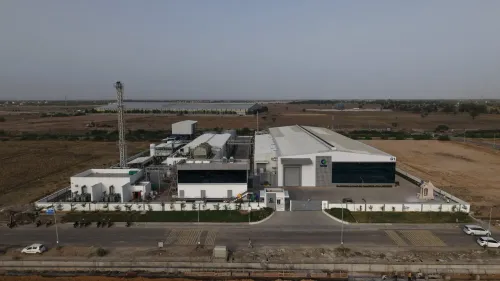
CM Bhupendra Patel: Gujarat to Get New OSAT Plant at Sanand on July 4

Synopsis
Gujarat CM Bhupendra Patel announced that PM Modi will inaugurate a mega OSAT semiconductor facility at Sanand on 4 July 2026. The plant advances India's semiconductor self-reliance push under the Rs 76,000 crore India Semiconductor Mission and positions Gujarat as the country's leading chip-packaging hub.
Key Takeaways
PM Narendra Modi will inaugurate a new mega OSAT facility at Sanand, Gujarat on 4 July 2026 .
CM Bhupendra Patel described the event as 'a moment of pride for Gujarat' and highlighted new high-tech engineering and employment opportunities.
The plant is part of the India Semiconductor Mission , backed by a Rs 76,000 crore Union Cabinet outlay approved in 2021 .
Gujarat's Semiconductor Policy (2022) offers capital subsidies and land incentives complementing central government support.
Sanand already hosts Micron Technology's assembly and test facility commitment from 2023 , making it Gujarat's flagship semiconductor corridor.
The operating company's identity and investment size are expected to be officially announced at the 4 July inauguration event.
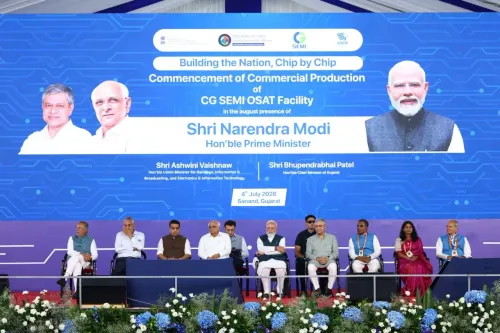
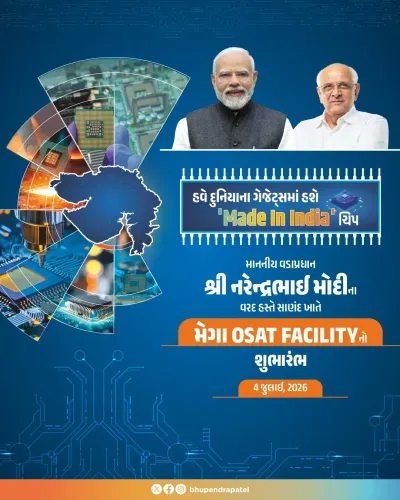
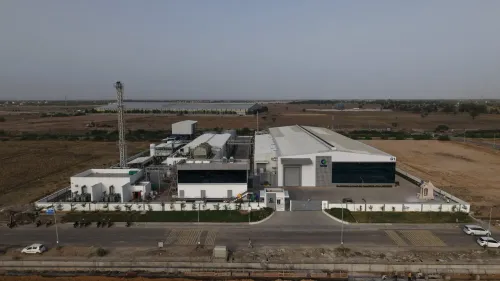
Gujarat Chief Minister Bhupendra Patel on Thursday, 2 July 2026, announced that Prime Minister Narendra Modi will inaugurate a new mega OSAT (Outsourced Semiconductor Assembly and Test) facility at Sanand on 4 July 2026, further cementing Gujarat's position as India's emerging semiconductor hub.
Posting in Gujarati, CM Patel wrote that under PM Modi's global vision, 'ભારત આજે વિશ્વભરમાં સેમિકંડક્ટર પાવરહાઉસ બનીને ઉભરી રહ્યું છે' ('India is today emerging as a semiconductor powerhouse across the world'). He described the upcoming inauguration as 'a moment of pride for Gujarat,' adding that the new plant will bring high-tech engineering opportunities and several new employment avenues.
Context
The Sanand industrial corridor in Ahmedabad district has steadily transformed into a focal point for electronics and semiconductor investments in India. The upcoming OSAT plant will join a growing cluster of advanced manufacturing units in the region, following the landmark commitment by Micron Technology in 2023 to set up an assembly and test facility at the same location — Gujarat's first major semiconductor investment.
OSAT facilities specialise in the packaging and testing of chips after fabrication, a critical step in the semiconductor supply chain that demands highly skilled engineering talent. Their establishment in India is seen as a strategic move to reduce dependence on overseas chip-packaging hubs concentrated in Taiwan, South Korea, and Malaysia.
Policy Backdrop
The inauguration builds directly on the India Semiconductor Mission, approved by the Union Cabinet in 2021 with an outlay of Rs 76,000 crore to attract semiconductor fabrication, assembly, and design investments. The mission is a pillar of the broader Atmanirbhar Bharat and Production Linked Incentive (PLI) framework aimed at building domestic chip capacity.
Gujarat reinforced this with its own Semiconductor Policy in 2022, offering capital subsidies and land incentives to complement central government support. The state has leveraged its existing automotive and chemical manufacturing clusters, along with strong port connectivity, to position itself ahead of rival states such as Tamil Nadu and Karnataka in the race for semiconductor investments.
Stakeholders and Impact
The new OSAT plant is expected to generate employment for semiconductor engineers, technicians, and local workers in the Sanand region. High-tech engineering roles associated with chip packaging and testing typically command premium salaries, making such facilities significant contributors to skilled-job creation in the state.
Electronics manufacturers sourcing chips domestically stand to benefit from reduced lead times and logistics costs as India's assembly and test capacity expands. The facility also strengthens India's pitch to global chipmakers seeking to diversify supply chains beyond East Asia in the post-pandemic era.
What's Next
The 4 July 2026 inauguration at Sanand, to be presided over by PM Modi, is expected to formally reveal the operating company behind the facility along with details of the investment size and projected job creation — figures that have not yet been officially disclosed. Observers will also watch for any fresh memoranda of understanding or policy announcements that could follow at the next Vibrant Gujarat summit, which traditionally serves as a platform for large-scale investment commitments to the state.
Point of View
The BJP reinforces a political narrative that links national industrial ambition directly to Gujarat's governance record. The OSAT segment — packaging and testing rather than fabrication — is a pragmatic entry point for India, requiring less capital and time than a full-scale fab while still building critical supply-chain depth. How quickly the state can scale from OSAT to upstream wafer fabrication will determine whether Gujarat's semiconductor story becomes a genuine industrial transformation or remains a high-profile assembly operation.
NationPress
1 Oct 2026
Frequently Asked Questions
What is an OSAT facility and why is it important for India?
An OSAT (Outsourced Semiconductor Assembly and Test) facility packages and tests chips after they are fabricated. It is important for India because it builds domestic capacity in a critical step of the semiconductor supply chain, reduces dependence on overseas hubs, and creates high-skill engineering jobs.
Where is the new semiconductor plant being inaugurated in Gujarat?
The new mega OSAT facility is located at Sanand in Ahmedabad district, Gujarat, which is an established industrial corridor and India's emerging semiconductor manufacturing cluster.
When will PM Modi inaugurate the Sanand OSAT plant?
PM Narendra Modi is scheduled to inaugurate the OSAT facility at Sanand on 4 July 2026 , as announced by Gujarat CM Bhupendra Patel on 2 July 2026.
What is the India Semiconductor Mission and how much has the government allocated?
The India Semiconductor Mission is a central government programme approved in 2021 with an outlay of Rs 76,000 crore to provide financial support and incentives for semiconductor fabrication, assembly, and design units across India.
Which company is setting up the OSAT plant at Sanand in July 2026?
The identity of the operating company behind the July 2026 OSAT plant has not been officially disclosed ahead of the inauguration. Details are expected to be announced at the 4 July 2026 event.