PM Modi to Inaugurate CG Semi OSAT Facility in Sanand
Synopsis
Prime Minister Narendra Modi will inaugurate the CG Semi OSAT semiconductor assembly and test facility in Sanand, Gujarat, advancing India's push for domestic chip supply-chain capabilities under the India Semiconductor Mission.
Key Takeaways
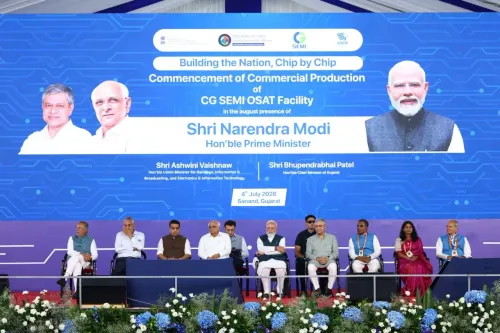
PM Modi will inaugurate the CG Semi OSAT facility in Sanand, Gujarat on 4 July 2026 .
The facility handles semiconductor assembly, packaging, and testing — a critical gap in India's domestic supply chain.
Sanand has evolved from the site of the Tata Nano plant into a major electronics and semiconductor investment hub.
The project falls under the India Semiconductor Mission , launched in 2021 with fiscal incentives for OSAT and fabrication units.
Gujarat is one of three focal states for semiconductor investment alongside Tamil Nadu and Assam .
The inauguration is expected to boost skilled employment in the region and strengthen India's pitch as a global semiconductor hub.
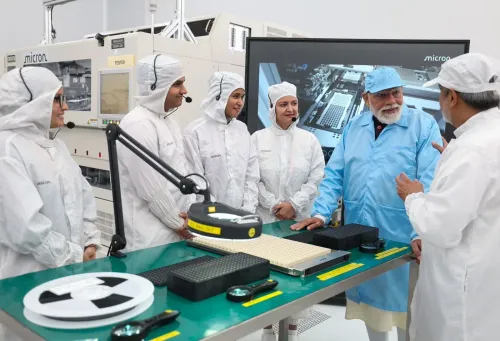
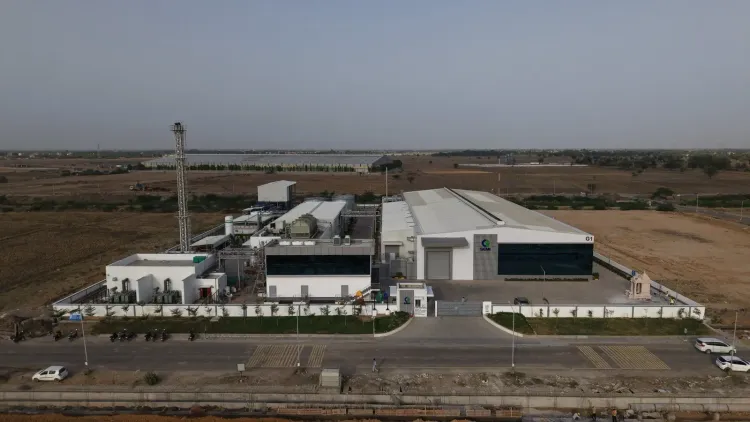
Prime Minister Narendra Modi announced on Friday, 4 July 2026, that he will travel to Sanand, Gujarat, to inaugurate the CG Semi Outsourced Semiconductor Assembly and Test (OSAT) facility, marking a significant milestone in India's push to build domestic semiconductor capabilities.
Context
Posting on X, Prime Minister Modi described Sanand as a town that 'has made a place for itself on the world map, synonymous with cutting-edge innovation and growth.' He called the upcoming inauguration 'a momentous occasion for India,' signalling the government's view of the event as a landmark in the country's industrial journey.
Sanand is an industrial town in Gujarat that rose to national prominence first as the site of the Tata Nano plant and subsequently as a hub attracting major electronics manufacturers. Its transformation into a semiconductor destination reflects a deliberate state and central government effort to cluster high-technology investment in the region.
Policy Backdrop
The CG Semi OSAT facility is part of India's broader semiconductor localisation drive anchored by the India Semiconductor Mission, launched in 2021, which provides fiscal incentives for fabrication, assembly, and design units across the country. The accompanying Production Linked Incentive (PLI) scheme for semiconductors and electronics, also notified in 2021, was specifically designed to attract investment in OSAT and fabrication plants.
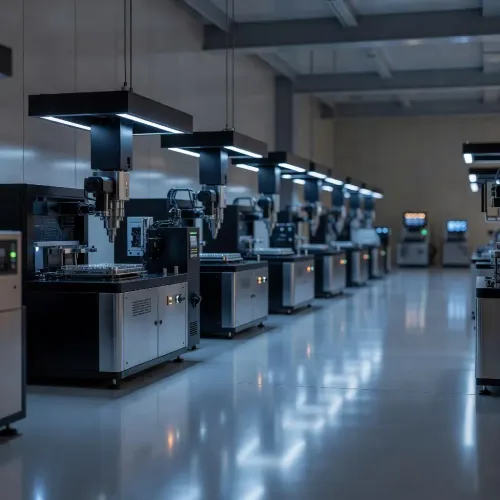
An OSAT facility handles the assembly, packaging, and testing of semiconductor chips after wafer fabrication — a critical link in the global supply chain that India has historically relied on foreign players to fulfil. Establishing domestic OSAT capacity directly supports the government's Atmanirbhar Bharat goal of reducing import dependence in strategic technology sectors.
Gujarat has emerged alongside Tamil Nadu and Assam as one of the focal states for semiconductor investment under the Mission, with multiple projects at various stages of approval and commissioning.
Stakeholders and Impact
The inauguration is expected to benefit Gujarat's industrial workforce directly, creating skilled employment in semiconductor assembly and testing — disciplines that require specialised training and carry higher wage premiums than conventional manufacturing roles. Electronics manufacturers operating downstream in India's supply chain stand to gain from locally available testing and packaging services, reducing lead times and logistics costs.
For the broader electronics ecosystem, a functioning OSAT unit in Sanand signals to global chipmakers and original equipment manufacturers that India can offer end-to-end services beyond mere assembly, strengthening the country's pitch as an alternative node in diversified semiconductor supply chains.
What's Next
Attention will now turn to the commissioning timelines and capacity utilisation of other approved semiconductor projects under the India Semiconductor Mission, as the government seeks to demonstrate that the policy framework can translate approvals into operational facilities at scale. The Sanand inauguration is likely to serve as a reference point for evaluating progress across the pipeline of OSAT and fabrication investments approved since 2021.
With Prime Minister Modi personally presiding over the event, the inauguration is expected to draw renewed investor attention to India's semiconductor ambitions and may accelerate decision-making among companies still evaluating entry into the domestic market.
Point of View
Elevating what is technically an industrial commissioning into a political statement about India's technology ambitions. The choice of Gujarat — the Prime Minister's home state — as the venue for a landmark semiconductor milestone is consistent with a pattern of high-profile industrial inaugurations that reinforce the state's image as a model investment destination. More substantively, an operational OSAT facility shifts India's semiconductor story from policy announcements to physical infrastructure, a transition the government needs to sustain investor confidence. The event will be watched closely by global chipmakers assessing whether India's incentive architecture can deliver on-the-ground results at the pace required to compete with established hubs in Taiwan, South Korea, and Vietnam.
NationPress
2 Oct 2026
Frequently Asked Questions
What is the CG Semi OSAT facility in Sanand?
The CG Semi OSAT (Outsourced Semiconductor Assembly and Test) facility in Sanand, Gujarat, is a plant dedicated to the assembly, packaging, and testing of semiconductor chips — services that form a critical link between chip fabrication and end-product manufacturing.
What is India's Semiconductor Mission?
The India Semiconductor Mission is a central government programme launched in 2021 to develop domestic semiconductor fabrication, assembly, and design capabilities through fiscal incentives including the Production Linked Incentive scheme for electronics.
Why is Sanand important for India's semiconductor industry?
Sanand has grown from a conventional manufacturing hub — originally home to the Tata Nano plant — into a major electronics investment cluster in Gujarat, making it a natural location for high-technology semiconductor facilities under India's industrial policy push.
What is an OSAT facility and why does India need one?
An OSAT (Outsourced Semiconductor Assembly and Test) facility handles the post-fabrication stages of chip production. India has historically depended on foreign OSAT providers, so building domestic capacity reduces import reliance and strengthens the local electronics supply chain.
When will PM Modi inaugurate the Sanand semiconductor plant?
Prime Minister Narendra Modi announced on 4 July 2026 that he would travel to Sanand the following day — 5 July 2026 — for the inauguration of the CG Semi OSAT facility.